Chisekela: Chiredzi’s hidden treasure
I am always fascinated by stories reflecting nature and culture, and especially Snail Shells!
Here is one:
Text By Tatenda Chitagu
https://thestandard.newsday.co.zw/2017/06/19/chisekela-chiredzis-hidden-treasure
A hot spring replete with a unique sprawling salt garden is going to waste in a former conservancy in Chiredzi.
The twin tourist attraction with a massive potential to draw visitors to the Lowveld is known as Chisekela (pool of salt) to a few Shangani speaking people aware of its existence.
It remains a puzzle why the pool of salt, which is in grave danger of being buried by growing shrubs around it, has not been preserved and officially recognised as a natural wonder by the government of Zimbabwe, 37 years after independence.
An explanation for that could be the fact that it has remained unknown to authorities, as it is located in Buffalo Ranch, a former white-owned conservancy, which was home to dangerous wild animals.
Entry into the conservancy without permission amounted to trespassing, and was only accessible to foreign tourists on guided tours and hunters who coughed up huge sums of money to kill the Big Five.
However, this is now history as Shangani and Shona families that benefitted from the land resettlement programme are now the new owners of the area.
Ex-Buffalo ranch workers say whites in the area knew about the natural wonder and they frequented the area.
This is confirmed by the presence of many exotic palm trees that were planted around the area, creating a lovely mini rainforest, mostly in a gully above the hot spring.
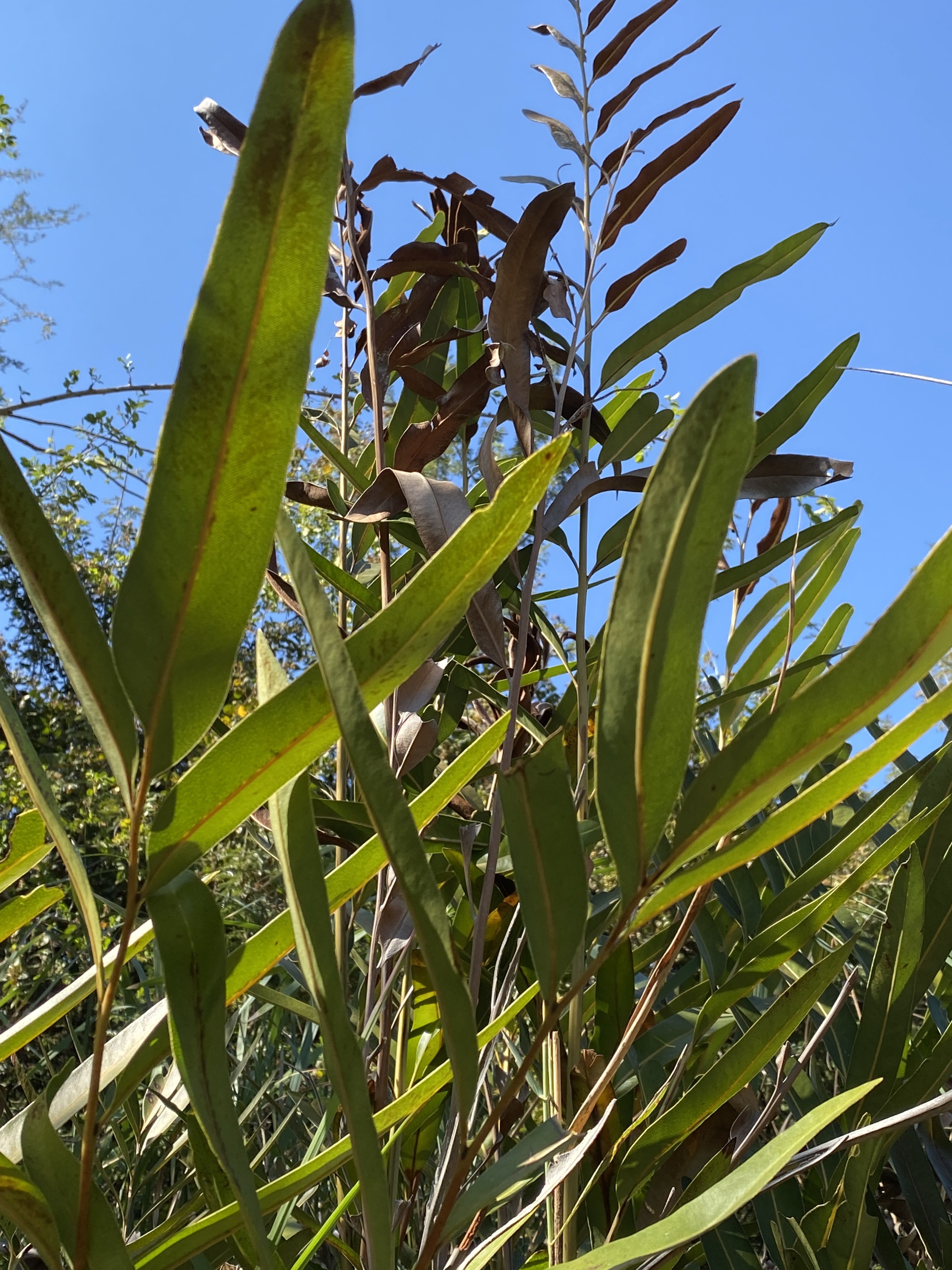
PS by Lin, “A unique fern in the area, usually inhabiting mangrove ecosystems on the Indian ocean….its presence here could indicate the traffic of man along the old traditional trade routes from the Indian ocean deep into the interior of Zimbabwe, in days gone by”
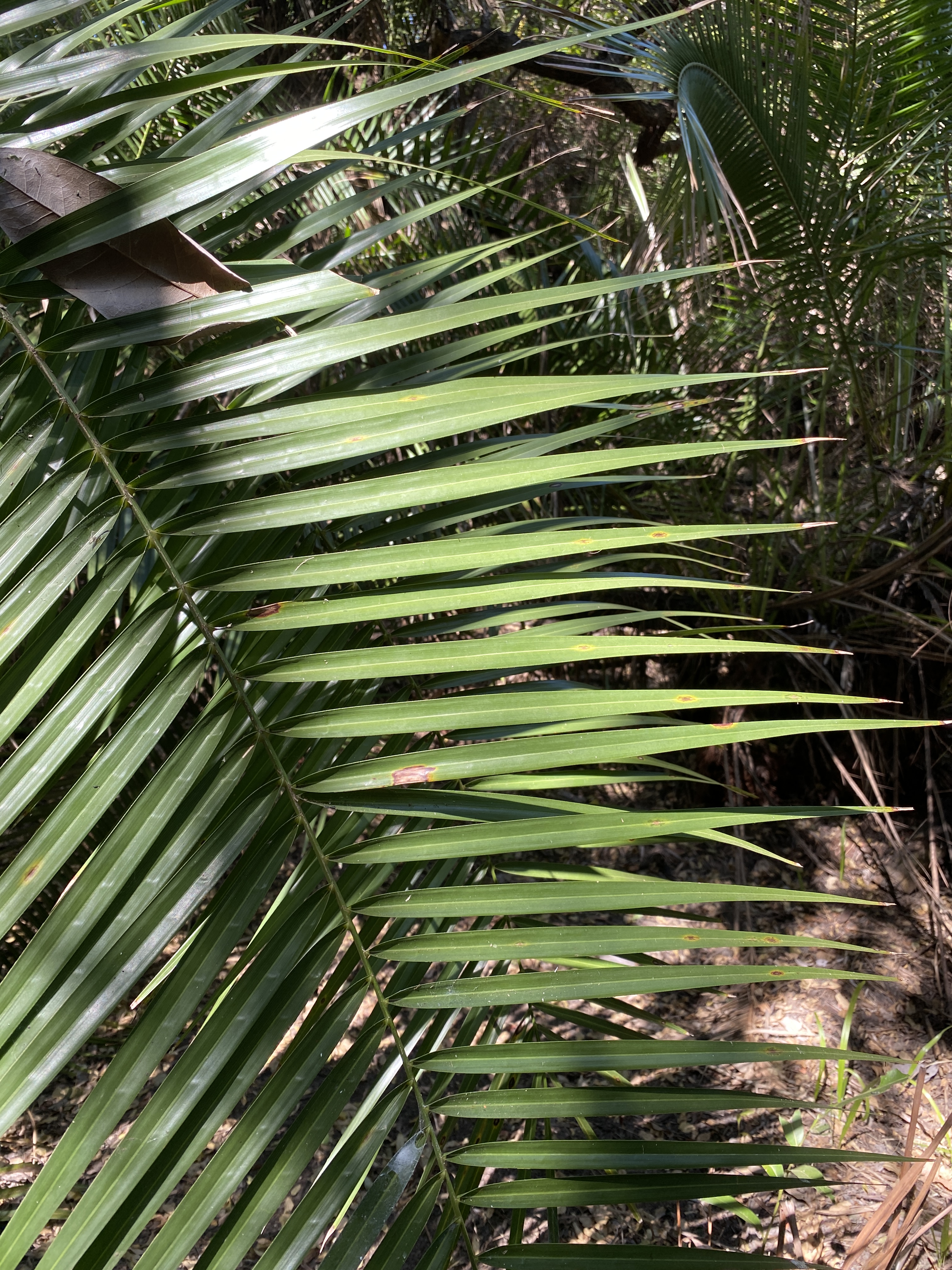
PS by Lin, “the palm trees are not exotics, but are Phoenix reclinata, indigenous to our river systems in Zimbabwe…..”
This particular spot could have served as a picnic site, lovers’ paradise, or a sanctuary for those hiding away from the searing Lowveld sun or meditating, far from the madding crowds.
Shangani people who resided in the area long before they were pushed out of the place that was reserved for wildlife by the colonial government, knew about Chisekela and they treated it as a sacred place.
They also harvested salt there for domestic consumption and for sale.
When the land reform exercise began in the late 90s, locals requested through the Lands ministry to be returned to their ancestral home, knowing this would bring them closer to the prized hot spring.
“Years ago, there were no shrubs here. Boiling water gushed out of the earth at Chisekela and you could see steam from a distance.
“Now these shrubs have taken over, if nothing is done about it, this spectacle will be buried,” said Muhlava Nyumani, who was appointed the custodian of the hot spring by Chief Tshovani.
Nyumani can all but watch as the weeds and shrubs lay siege to the hot spring because the ground around it is so water-logged that treading on it to remove the thicket can be fatal.
Villagers say an elephant that strayed to the hot spring sunk as soon as it landed its feet on the ground and was never seen again.
This reporter, determined to get a closer look at the natural wonder masked by the vegetation growing wildly around it had a frightful experience akin to a scene from a horror movie when he sunk knee deep, about five metres from the spring.
Extricating himself from the mud was nothing short of a heroic act.
Like many other natural wonders, there are several myths and legends associated with Chisekela which is revered by the Shangani people.
Not so long ago, a young man took his girlfriend (names supplied) and tried to fornicate in the vicinity of the hot spring. Bees emerged from nowhere and feasted on the delinquent couple before anything untoward happened.
A young girl urinated on the site and her urine is said to have followed her.
Another man who tried to answer the call of nature, sprinted from the scene with his trousers precariously hanging onto his knees when he saw a huge tree appearing to fall on him.
These are just a few of the narratives told by grey-haired Shangani men who warn visitors against trying to engage in activities that desecrate the place.
Admittedly, in urban areas such as Harare, tales like this would appear like cock and bull stories, but there is something eerie about a place where shrubs thrive on salty boiling water and where a stream from the spring disappears into the ground a few metres from the source and then emerges as a salt garden about 100m on the banks of the crocodile infested Chiredzi river.
It could not be established if the Zimbabwe Parks and Wildlife Authority or the Meseums and Monuments were aware of the existence of Chisekela as efforts to contact them were futile by the time of going to print.
Nyumani concurred that the hot spring was a sacred place and any activities that defiled the place were forbidden.
She expressed serious concern about the activities of some members of a religious sect that don red garments that tried to build a shrine, just a few metres from the boiling water that gushes out of the annals of the earth.
“They came uninvited and started clearing the area. I told them never to do such a thing,” she said, pacing up and down at the site where the invaders left a heap of stones that resembles an unmarked grave.
“I was so disappointed by their behaviour,” she said.
The Chisekela keeper said these were not the first people who tried to make Chisekela their playground.
“Some white people who stayed at Buffalo Ranch at one time built a concrete basin about 15 metres away from the spring, but their joy was short-lived as it mysteriously cracked into pieces, prompting them to abandon it,” she claimed.
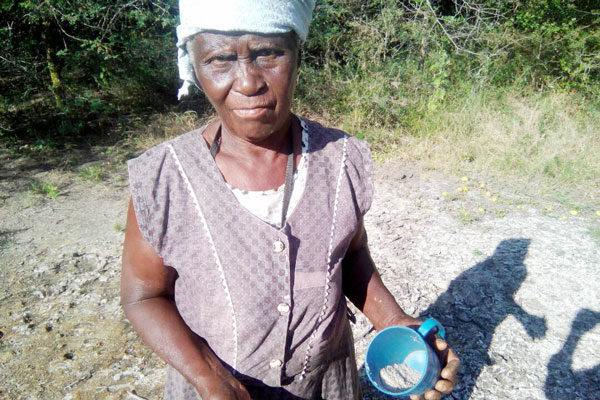
The elderly woman who drinks water from the hot spring and uses it to bathe said Chisekela was a special place and she would do all it takes to protect it. However, she could not disclose whether the water had medicinal properties.
“We used to derive our livelihood here,” said Nyumani.
“Now salt is too cheap and very few bother to buy this salt anymore.”
What sets Chisekela apart from other hot springs is that the water here is high in potassium chloride, a key ingredient in the production of salt.
No wonder the soils around the spring, distinct by their whitish colour, are laden with salt.
June is the ideal time to harvest salt from the rich loam soils.
Nyumani and few Shangani women who are experts in salt panning collect this soil using a snail’s shell, an object that has been used since time immemorial but which may be frowned upon by people of the 21st century.
They load the black soil in sacks and carry it to their homes where they mix it with water.
Brownish water then drips from the sacks into buckets and it is this substance that is boiled in large pots until all the water evaporates leaving salt granules.
The salt is brownish in colour and could generate income for Nyumani and other women, if it is packed and sold in shops and supermarkets.
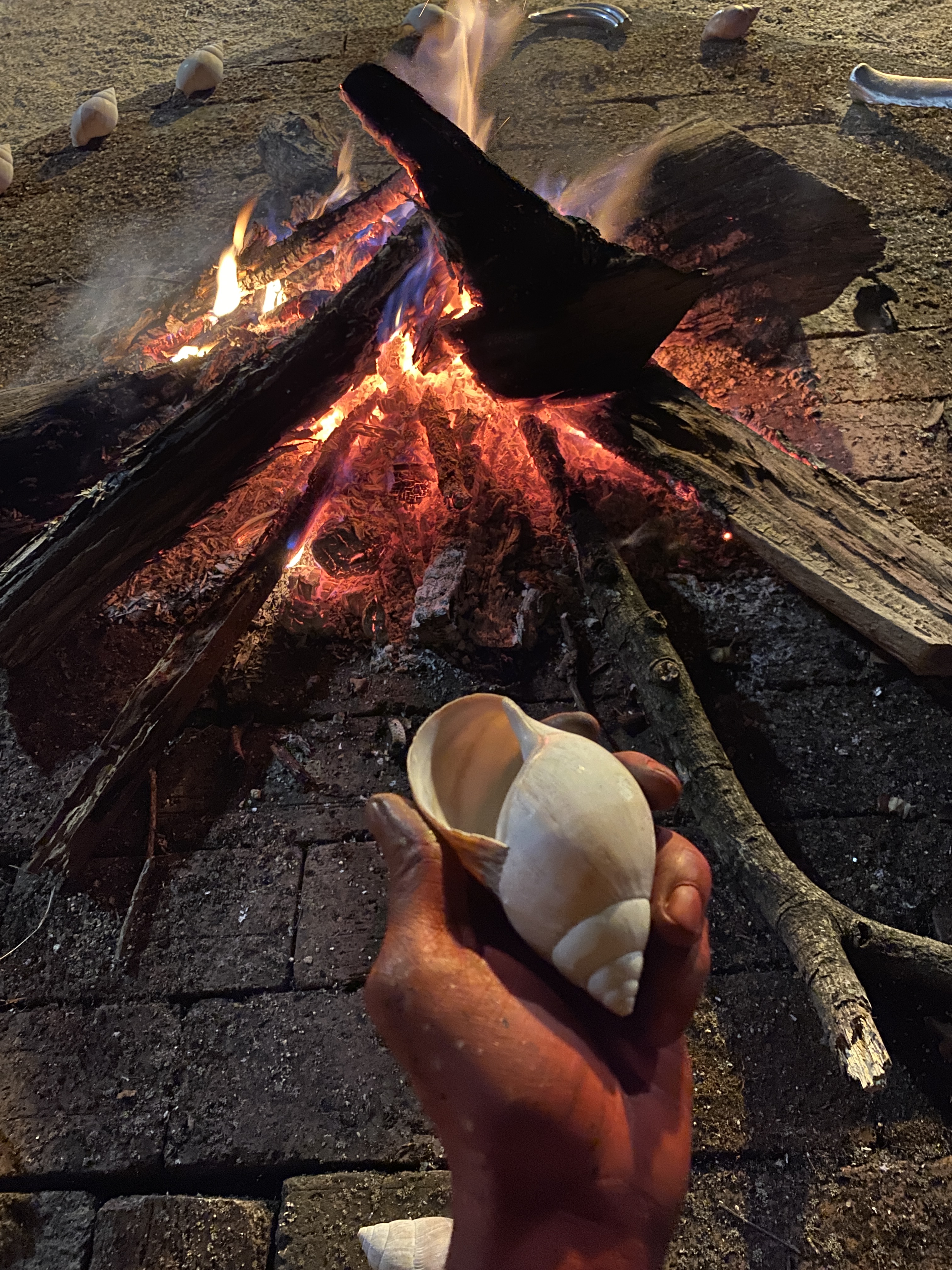
PS by Lin, “I find this collection of salty soil in empty snail shells fascinating, entranced as I am by the use of giant african snail shells, and storytelling that abounds around the giant african land snail…. revered by the Chauke clan of Chief Mahenye’s village….”
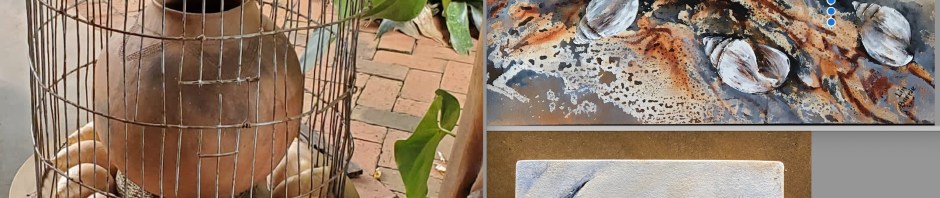
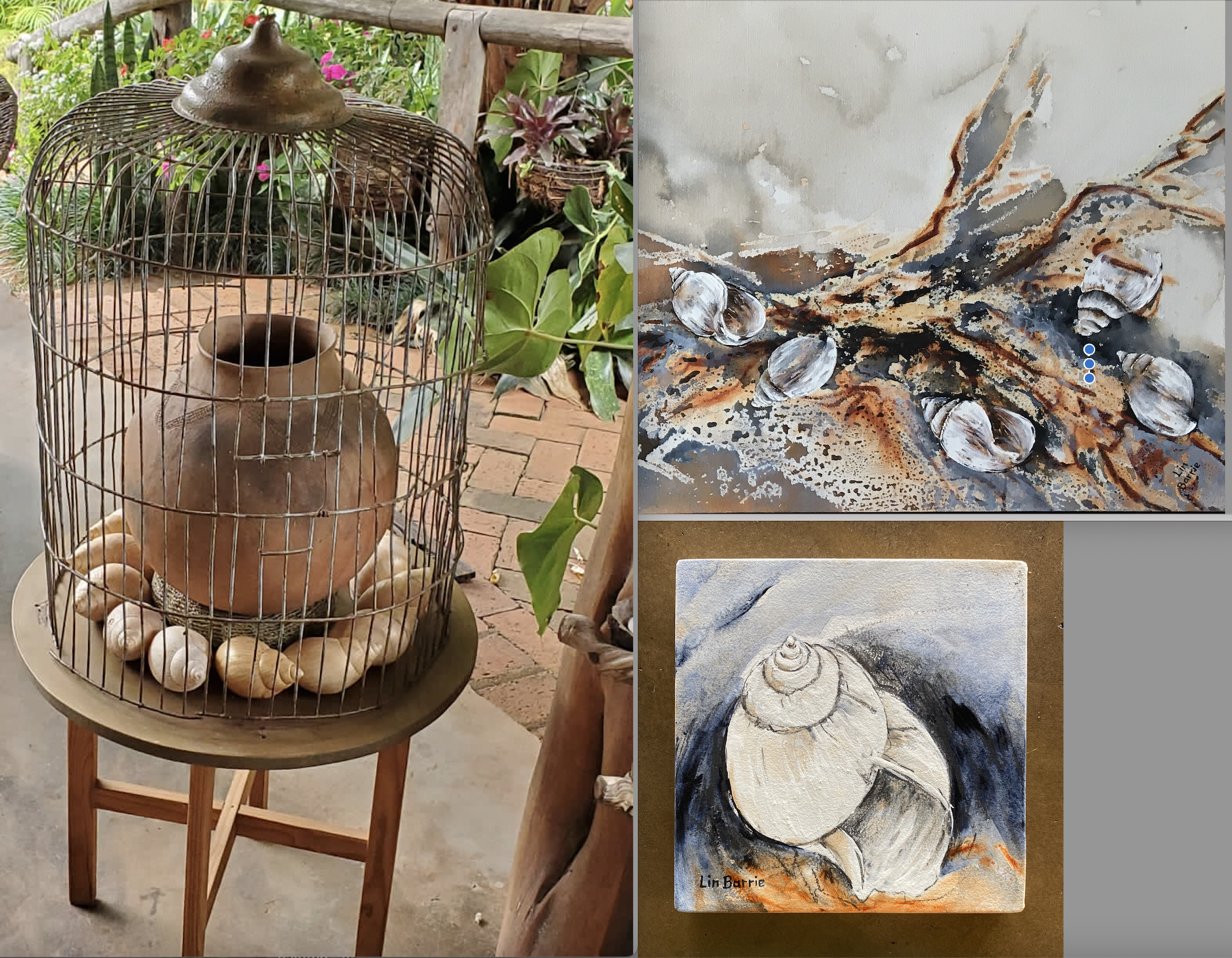
PS by Lin “My art installation at our group exhibition “Burnt Offerings” at Pikicha Gallery in Harare exhibits one of my art installations, aptly titled ‘Caged Culture’…”


 wine and wild dogs