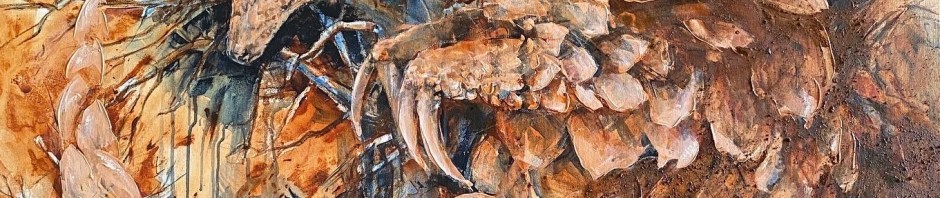
Red Earth, Red Wine; Pangolin Protection…

My passion for Art, Community and Conservation, my long and happy association with Tusk Trust and Painted Wolf Wines, has borne the fruit of many fundraising events, and this is the latest…
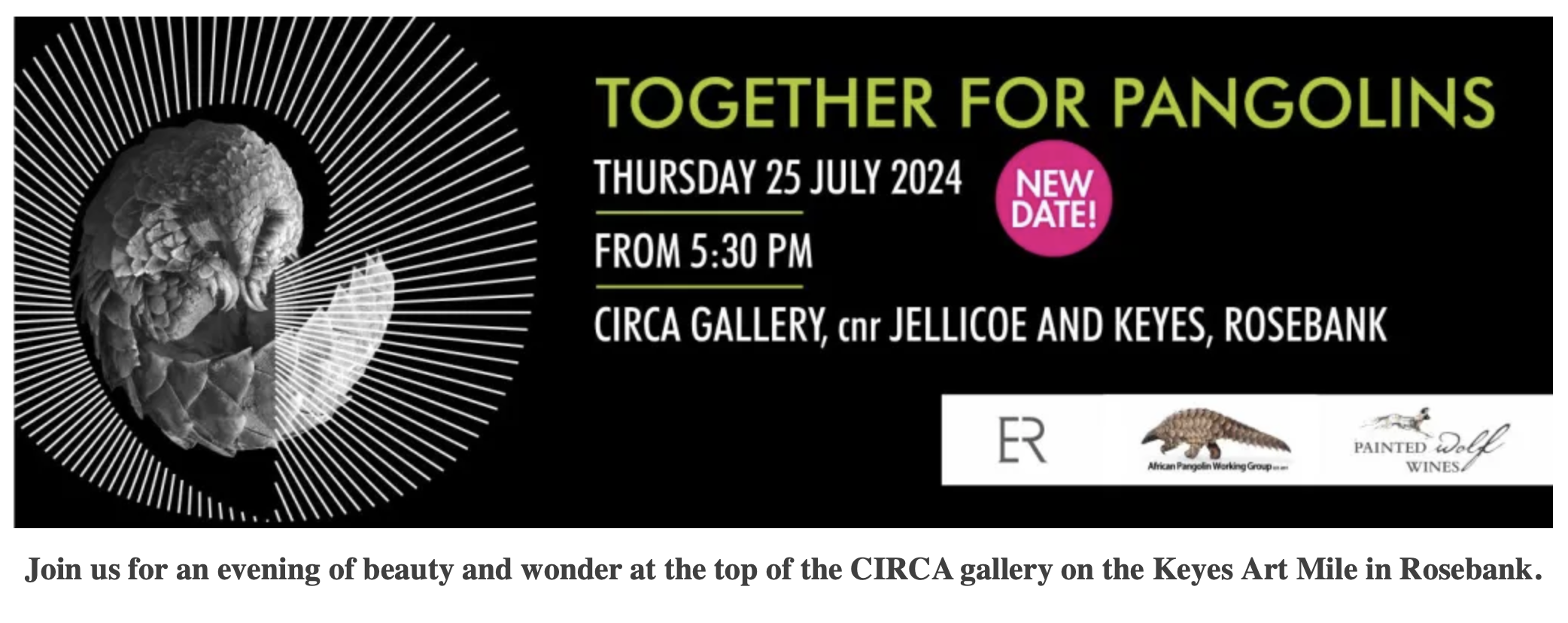
Together with many other artists, I have contributed my art to the African Pangolin Working Group, for “Together for Pangolins”, a pangolin fundraising at Circa Gallery, in association with Everard Read Gallery, Johannesburg.

Strauss & Co. Auctioneers are the purveyors of the artworks- so exciting!

Pippa Ehrlich, who directed the film My Octopus Teacher, will be the guest speaker,…
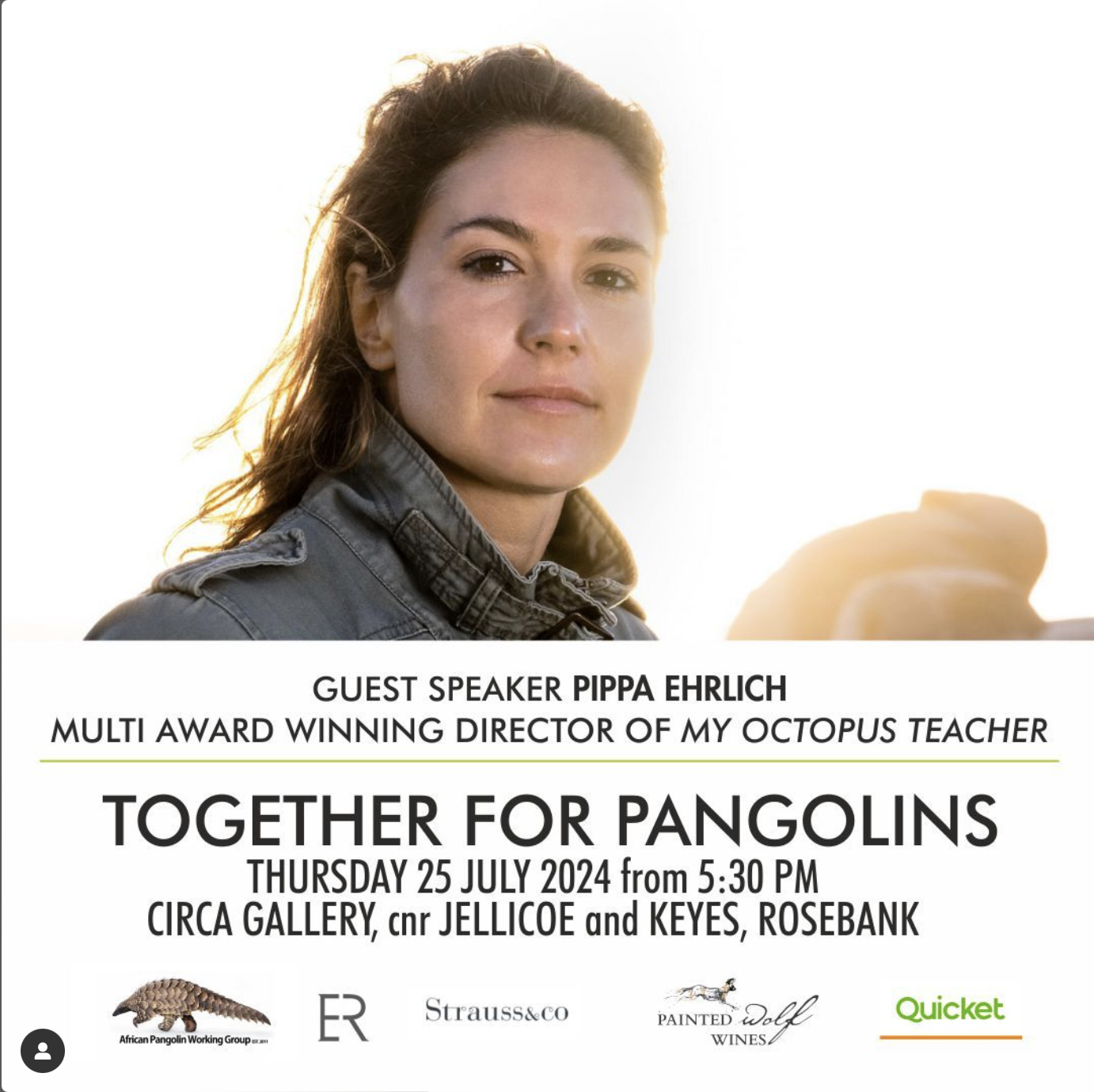
and Painted Wolf Wines will be standouts at the event!…
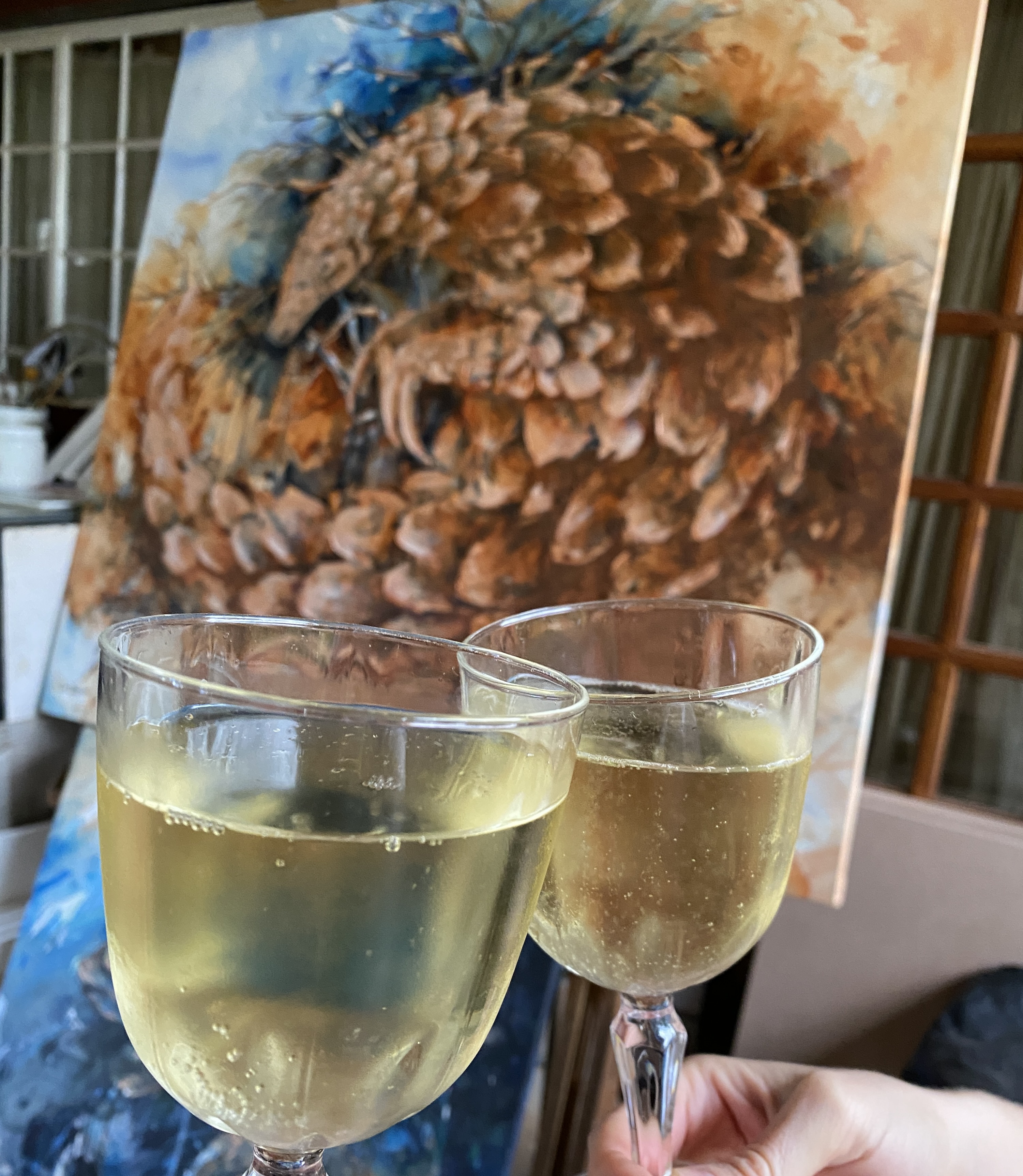
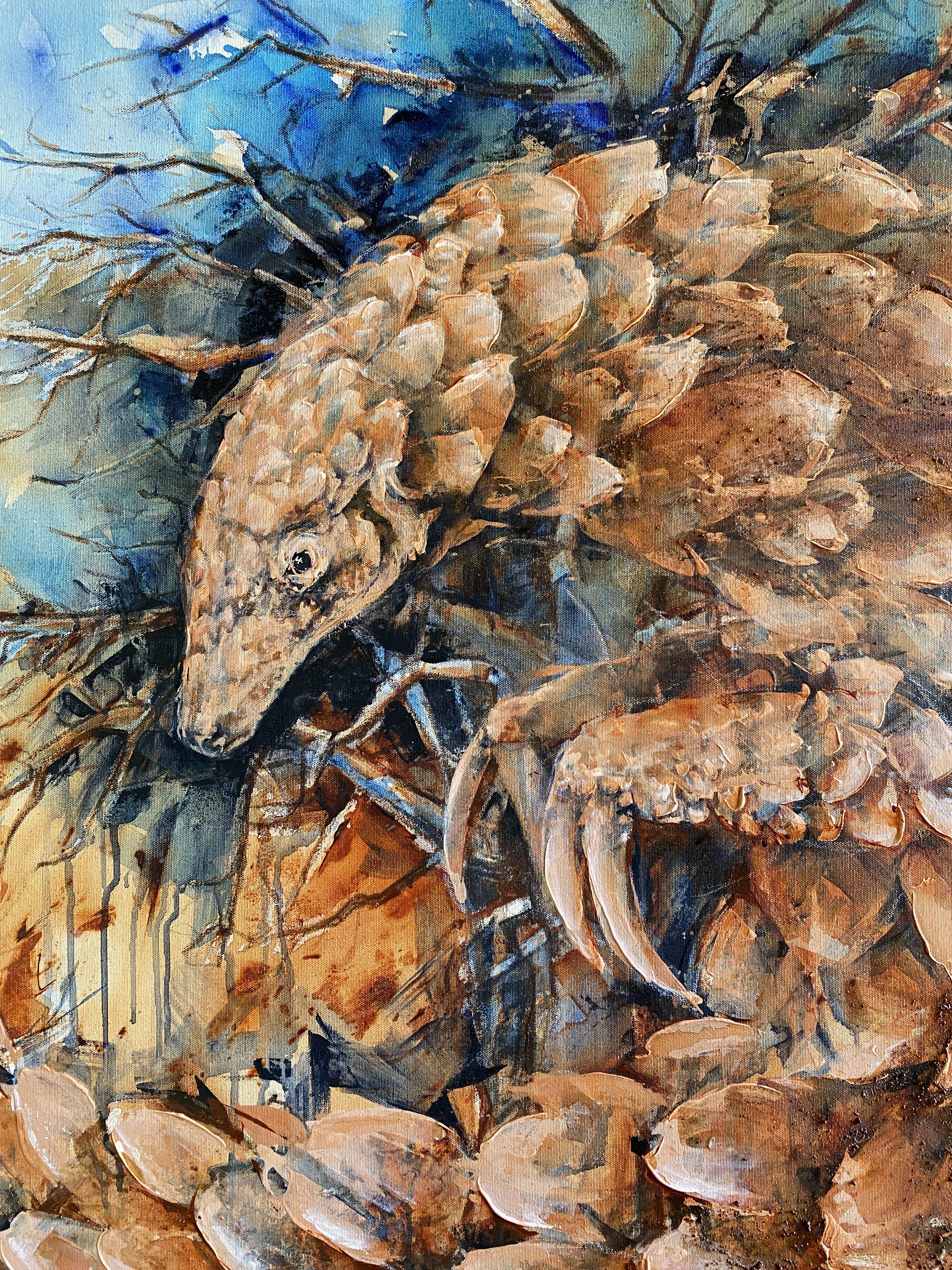
Lin Barrie, “Red Earth Pangolin” mixed media on canvas, with real red mahenye earth pigment, 110 x 120 cm, 2024
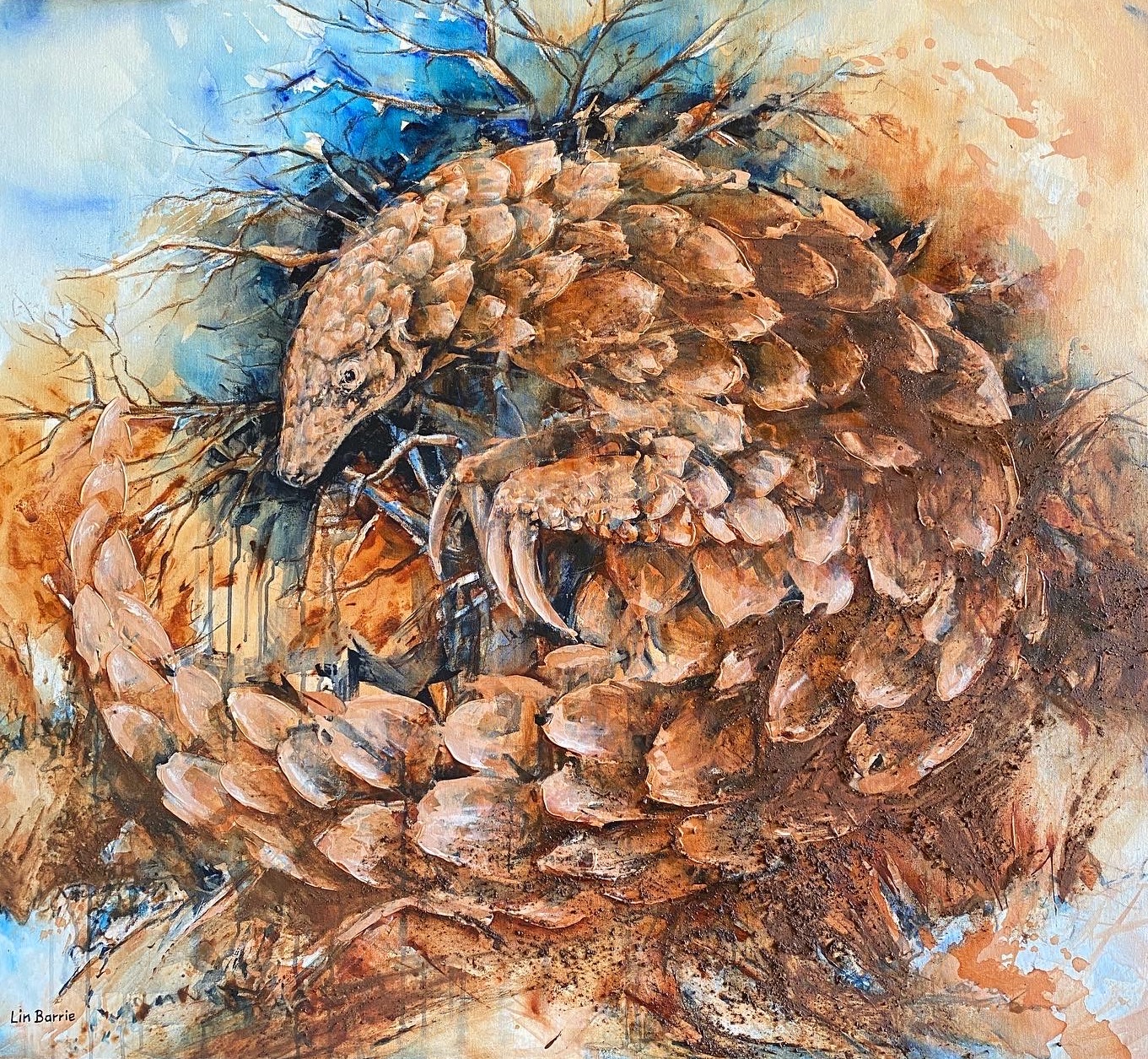
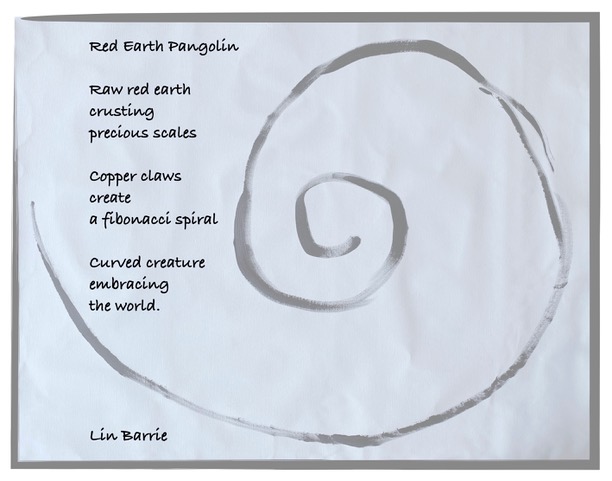
Raw red earth

crusting precious scales

Copper claws

create a fibonacci spiral.

Curved creature

embracing 

the world.

Lin Barrie
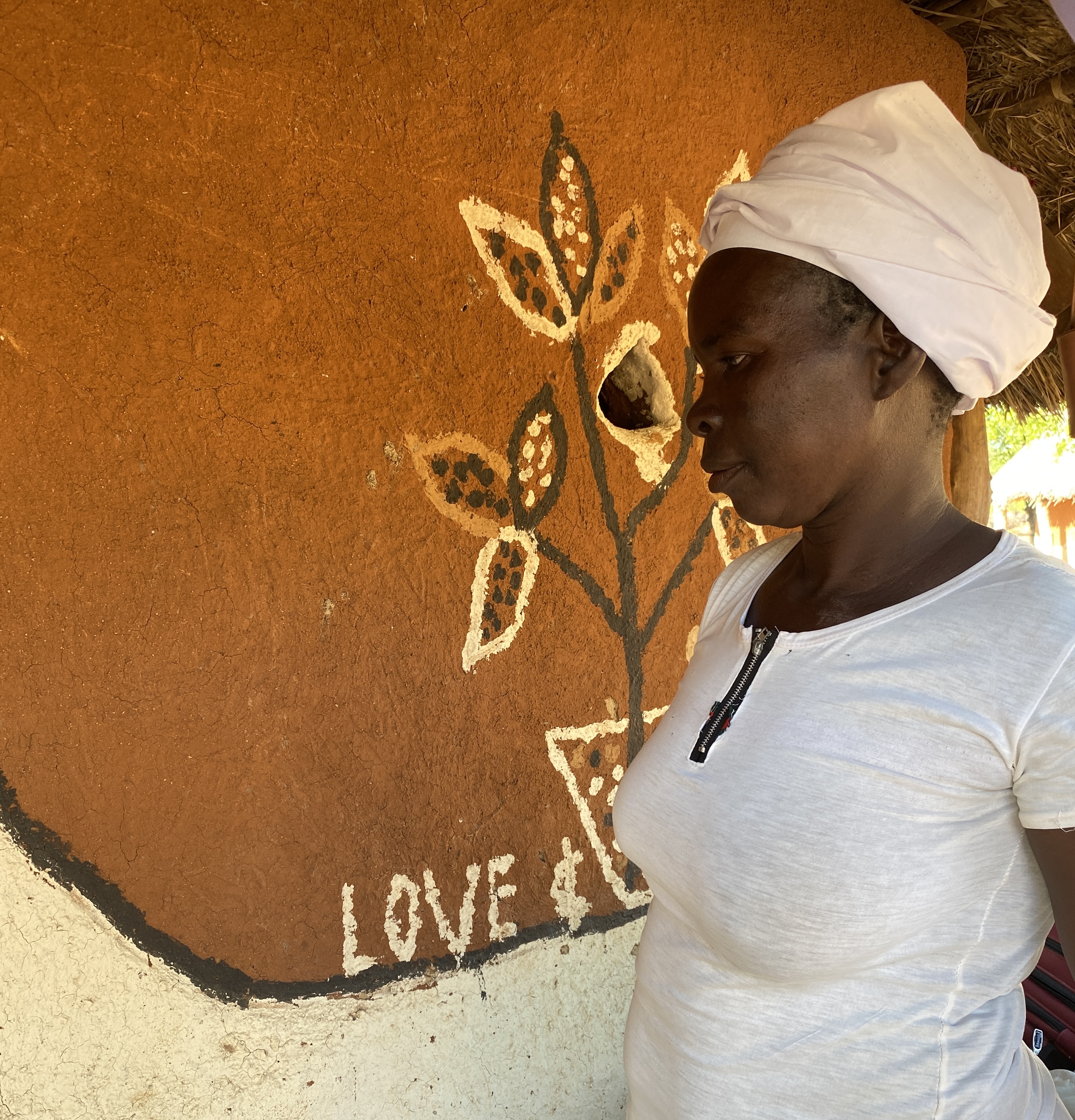
The red earth used in hut paintings, Jamanda Community Conservation Area, in Mahenye Village, place of my bush home, Kaya Nyala, inspires me… here is part of Chef Makokwe’s homestead hut wall…gorgeous linework…(he works at the neighboring Chilo Gorge Safari Lodge, where pangolin tracks are sometimes seen by delighted guests…)

The earth pigment is dug up and laboriously ground to a fine powder… here seen being processed by Chilo chief gardener, Enock’s wife,
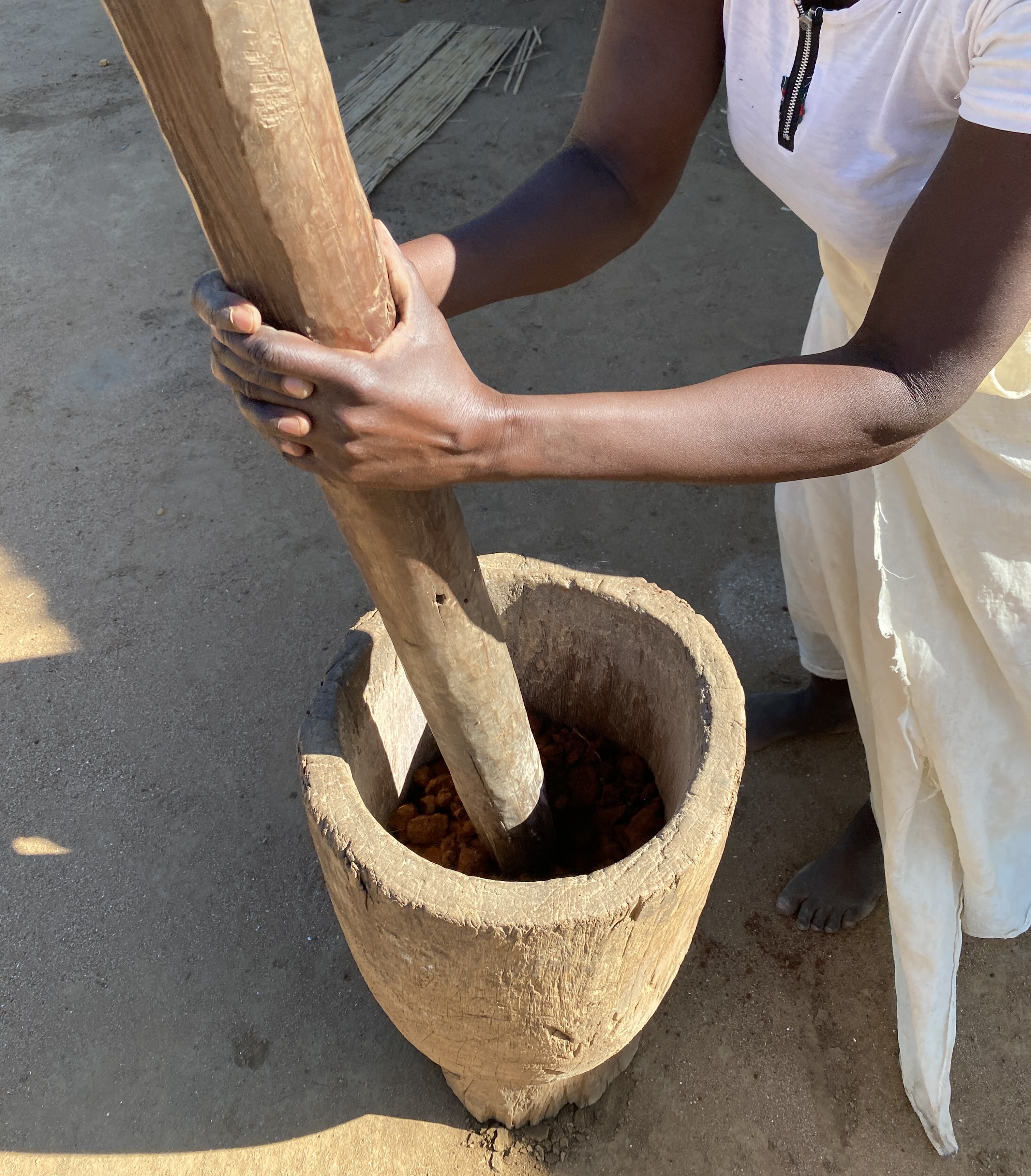
Enock’s wife pounding earth pigment in her pestle and mortar

love and peace is the message Enosk’s wife inscribes on the wall of her own sleeping hut….
I get hands on with the wives in applying the various earth pigments found in our area, to a raised clay brick floor, a sitting and eating area, a patio… at Chef Makokwe’s house in Mahenye

Precious pangolins, who dig for termites and make homes in this very same red earth, are found in these remote villages and protected lowveld places…including Jamanda Community Conservancy, Save Valley Conservancy, and Gonarezhou National Park, (Gonarezhou Conservation Trust GCT)….we even find evidence of nocturnal diggings and pangolin tracks in the Chilo Gorge Safari Lodge gardens…and in our own Kaya Nyala homestead in the Mahenye Village.

Mahenye is a Campfire area of Zimbabwe, (the origins of Campfire indeed started in this very place, brokered between Chief Mahenye, Clive Stockil and National Parks… read the page on Clive Stockil for background..)… similar to the CBNRM areas in Namibia. The electric community wildlife management fence around Jamanda Wilderness Area is being investigated to make sure it is “Pangolin Friendly”… no low wire to entrap and electrocute a slow and coiled pangolin, as has happened with some electric fences in the past…. a similar admirable effort is being made country wide through the Tikki Hywood Trust and yet again wonderful progress is being made in South Africa such as the Sabi Sands Nature Reserve pangolin friendly fence, supported by Chris Renshaw and the team at Conserv Earth.

More on that initiative in a coming blog!….
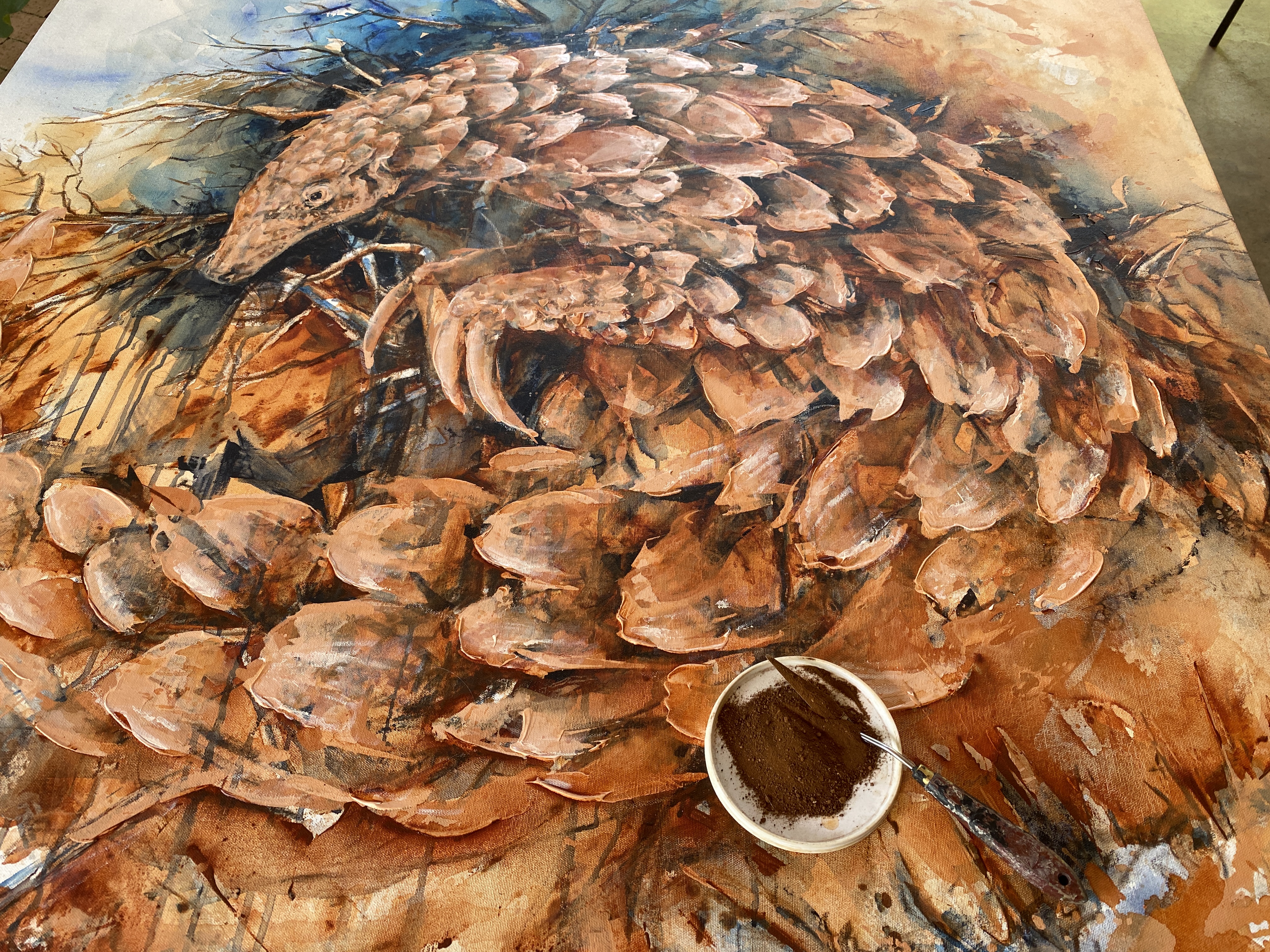
Creating the painting, I lay red earth pigment into the pangolin scales with my palette knife…
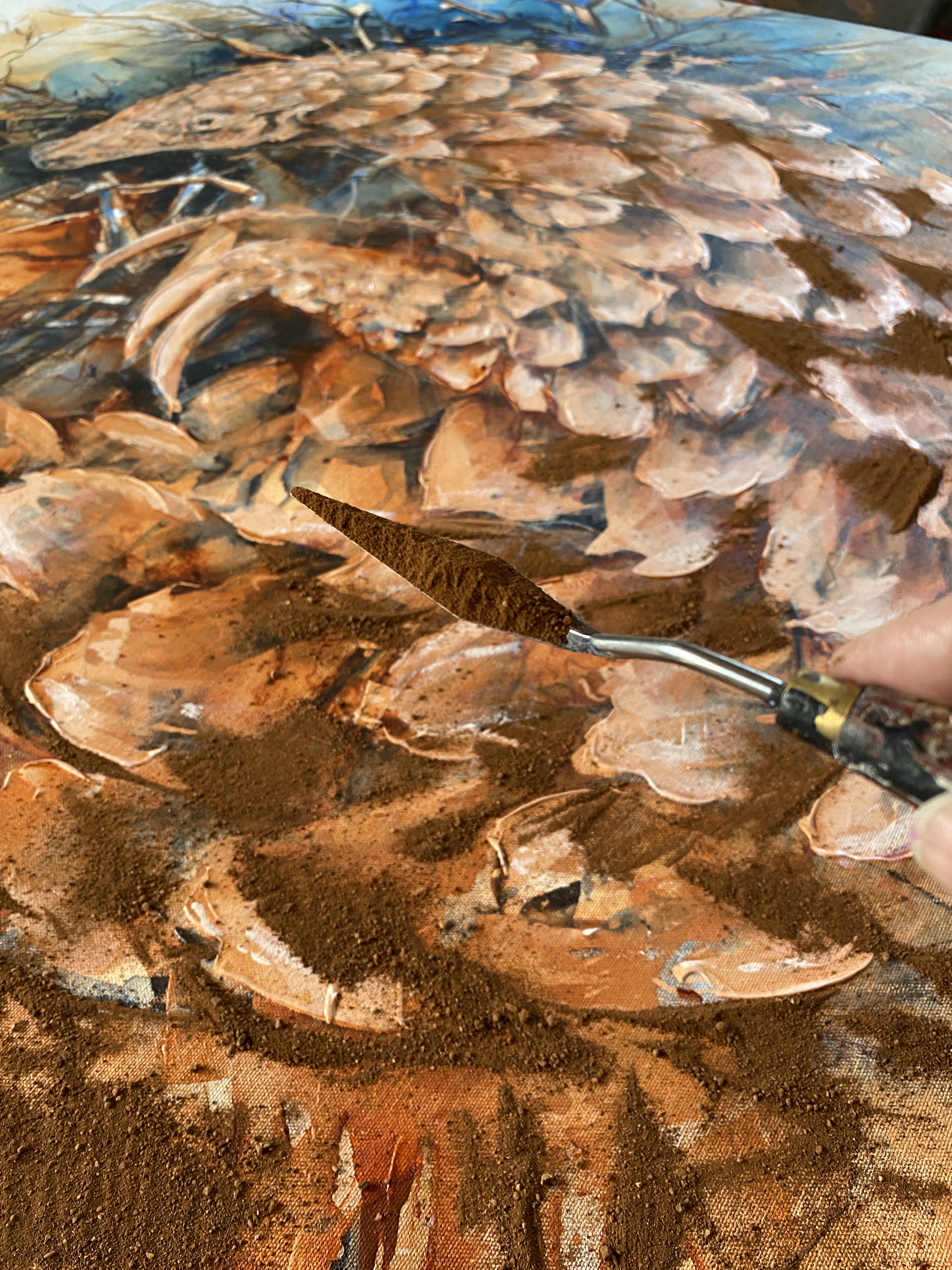
A pangolin, termite connoisseur, is a creature of the earth, living in the earth, digging in the earth, often coated in earth, and that real red earth features in this painting as encrusted pangolin scales, is so apt!
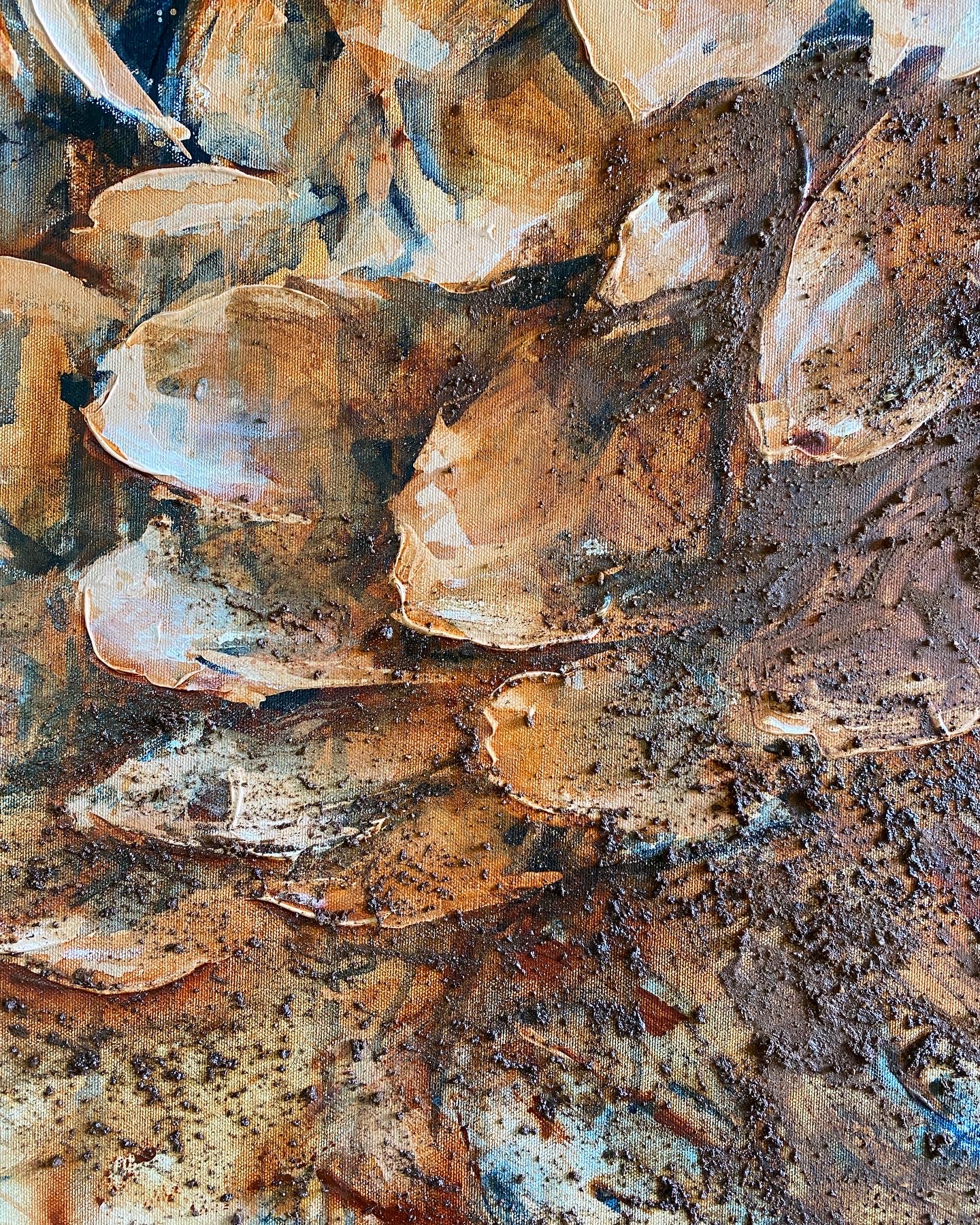
Watch out for the next blog in the ongoing journey of this pangolin painting……. a further auction to be held at Strauss & Co.
Unknown's avatar

About wineandwilddogs

Lin Barrie The Save Valley Conservancy stretches along the upper reaches of the great Save River in the south east of Zimbabwe. The Gonarezhou National Park laps against the southern banks of the Save River and between these two nestles the Malilangwe Wildlife Reserve. These three celebrated wildlife areas form part of the Greater Limpopo Transfrontier Conservation Area, (GLTFCA)- a unique wilderness jewel which is home to the “Big Five” (endangered Black and White rhinos, elephants, buffalo, lion, leopard) and the ”Little Six” (Klipspringer, Suni, Duiker, Steenbok, Sharpe's Grysbok and Oribi). Endangered African wild dogs, Cheetah, Brown hyena, Bat-eared foxes and a host of special birds and plants contribute to the immense variety of this ecosystem. Communities around the GLTFCA contribute to innovative partnerships with National Parks and the private sector, forming a sound base on which to manage social, economic and environmental issues. This is home to artist and writer Lin Barrie and her life partner, conservationist Clive Stockil. Expressing her hopes, fears and love for this special ecosystem with oil paints on canvas, Lin Barrie believes that the essence of a landscape, person or animal, can only truly be captured by direct observation. Lin Barrie states: “Through my art, and my writing, I feel an intimate connection with the natural world, and from my extensive field sketches of wild animals, people and landscapes, I create larger works on canvas. Lin's work is in various public and private collections in South Africa, Kenya, Zimbabwe, Australia, England, Canada, Sweden and the United States of America. She is represented by galleries in South Africa, Zimbabwe, England, Kenya and Florida, USA.
This entry was posted in abstract art, abstract female expressionist, Africa, African Safari, african wildlife, animal rights, anti poaching, arid areas, art, art collaboration, art exhibition, art gallery, baobabs, bio diversity, bush camps, Campfire, cbnrm, Changana people, Chilo Gorge Safari Lodge, CITES, citizen science, clay, clay pots, clive stockil, community, community conservation, community wildlife challenges, community wildlife conflict, conservation, conservation education, conservation news, conservation publication, cultural beliefs, culture, drawing, earth pigment, eco-tourism, ecosystem, education, endangered, endangered species, environment, film, food, food culture, gardens, Gonarezhou Conservation Trust, gonarezhou national park, great limpopo transfrontier conservation Area, Greater Limpopo Transfrontier Park, hut painting, illegal wildlife trade, interior decor, landscapes, Life Drawing, lin barrie, Lin Barrie Art, lowveld, Machangana culture, national parks, Painted Wolf Wines, painting, paintings, Pangolin, pangolins, peace parks, photography, Poaching, responsible tourism, rewilding, Rivers, runde river, Save River, Save Valley Conservancy, Shangaana people, Social Customs, traditional craft, Tusk Trust, Uncategorized, wilderness, wildlife, wildlife trade, wine tasting, wines, Xangana, zimbabwe, Zimbabwe Artist, Zimbabwe artists, Zimbabwean Artist and tagged , , , , , , , , , , , , , , , , , , , , , , , , , , , , , , , , , , , , , , , , , , , , , , , , , , , , , , , , , , , , , , , , , , , , , , , , , , , . Bookmark the permalink.

1 Response to Red Earth, Red Wine; Pangolin Protection…

  1. Pingback: Art and Inspiration; Jozi Juxtapositions… | wine and wild dogs

Leave a comment

This site uses Akismet to reduce spam. Learn how your comment data is processed.