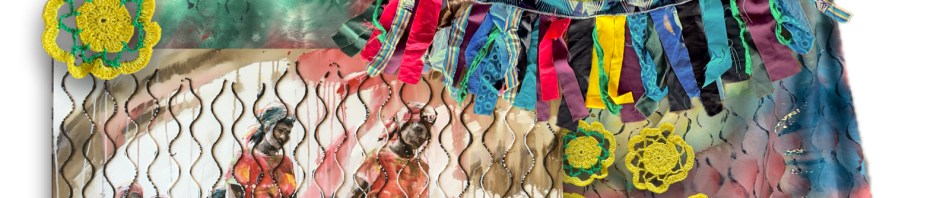
Tsonga/Xangana (Changana) Culture; Dance, Mucino.
The Xangana/Tsonga people of the south-eastern lowveld of Zimbabwe, and into adjoining South Africa and Mozambique, are the proud owners of strong social traditions, and a unique and vibrant culture.
The Budula Festival 2025, will be held at Boli-Muhlanguleni, (Chiredzi RDC).
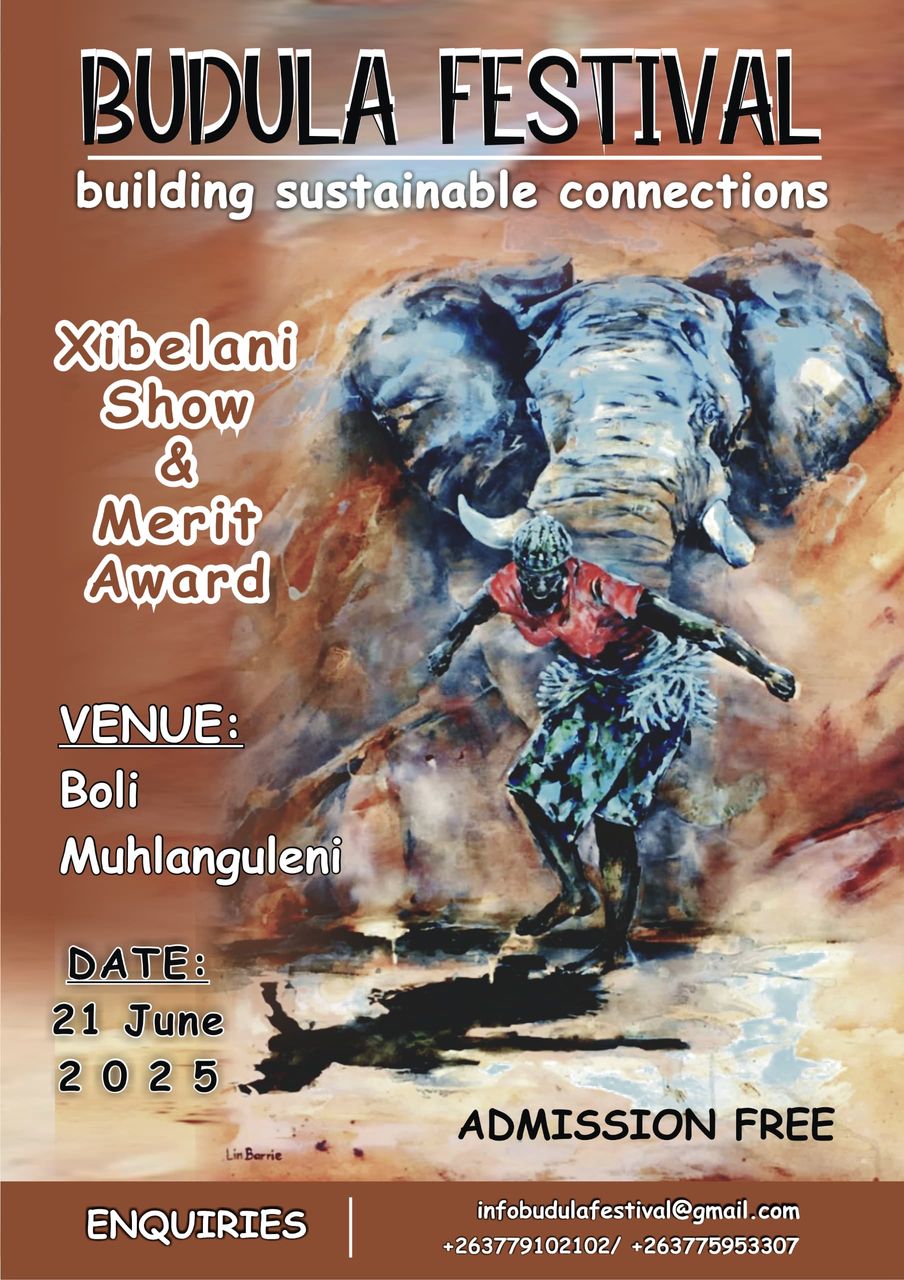
Lin Barrie, Budula Festival flyer, “Dancing with my shadow, Dancing with Elephants, or Dancing Alone?!” from my original artwork was on canvas.
The elephant in the room… shall we dance together, to our common good, embracing biodiversity?!…. or do we dance alone, failing in our quest for inclusion of cultures, conservation of communities.
The inaugural Budula Festival, scheduled for June 21st, 2025, in Boli/Muhlanguleni, Chiredzi, Zimbabwe, will attract community members, regional officials, and stakeholders from the Great Limpopo Transfrontier Conservation Area (GLTFCA), encompassing Zimbabwe, Mozambique, and South Africa.

The Budula Festival, derived from the Shangani (Tsonga) term meaning “active pathway”, represents a rebranding of the Great Limpopo Cultural Trade Fair to connect communities across borders within the GLTFCA. It will serve as a platform for communities, (focussing in 2025 on women’s dance, on women, youth and children), to exchange valuable insights on livelihoods, wildlife conservation, and climate action initiatives. Activities will include the Xibelani dance show, Community Merit Awards, and innovative exhibitions on pressing issues like climate change and human-wildlife conflict.
Xangana people celebrate their culture in various ways and one of the most important is in the realm of dance, kuchina, and of course, dance attire, dance fashion; and this is what the Budula Festival will focus on with regard to women in particular, in 2025…..
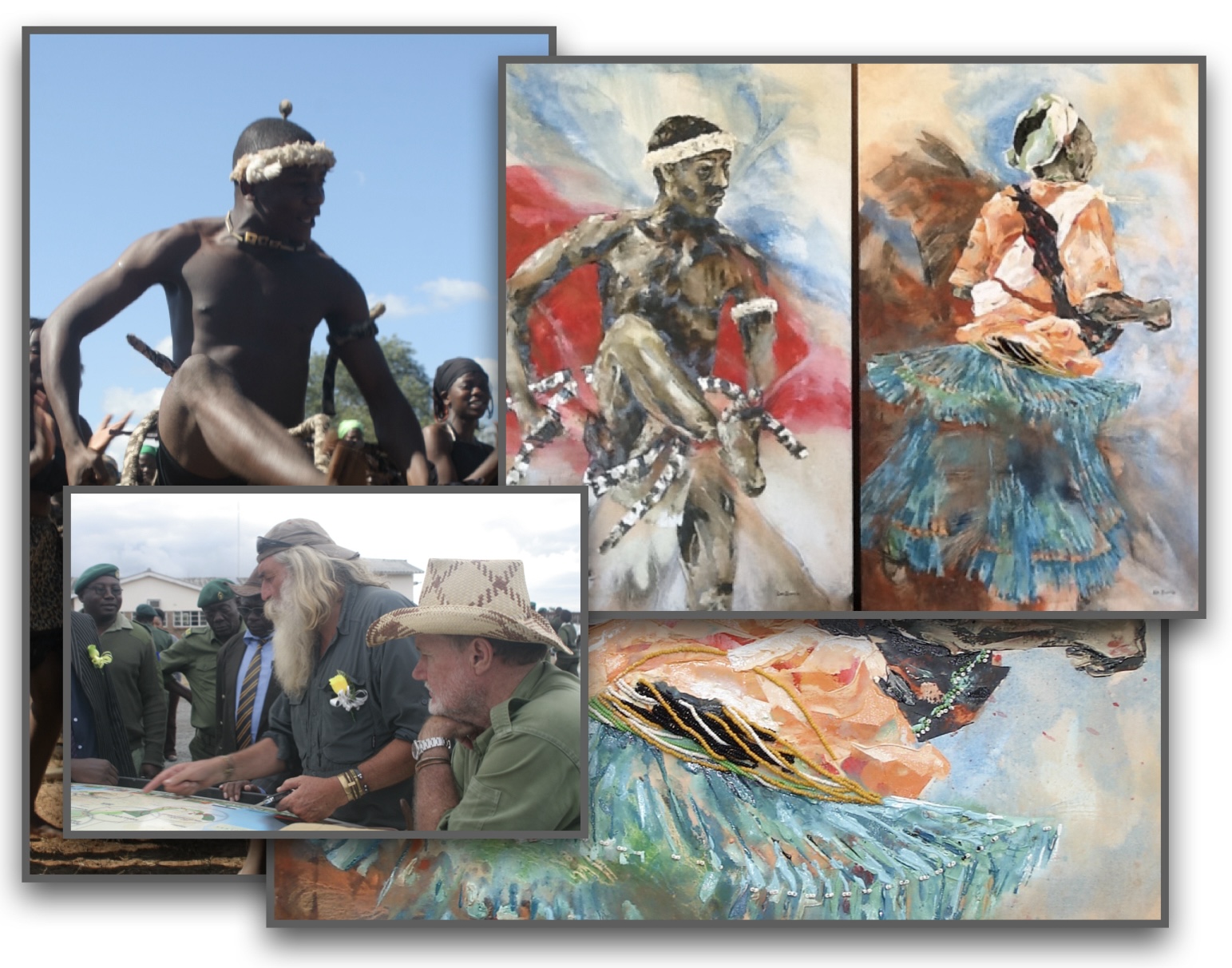
Dance! (Kuchina/Kucina)…. My own general interest in culture and dance, worldwide, and cross culture collaborations, is growing into a body of artwork along the theme of dance, men and women. Here are two tsonga dancers (whom I painted after meeting them years ago on a cross border cultural expedition linking the Peace Parks of Southern Africa, Boundless Southern Africa, with Kingsley Holgate, to Crook’s Corner, on the banks of the Limpopo and Luveve Rivers…in celebration of the formation of the Greater Limpopo Transfrontier Conservation Area, (GLTFCA)
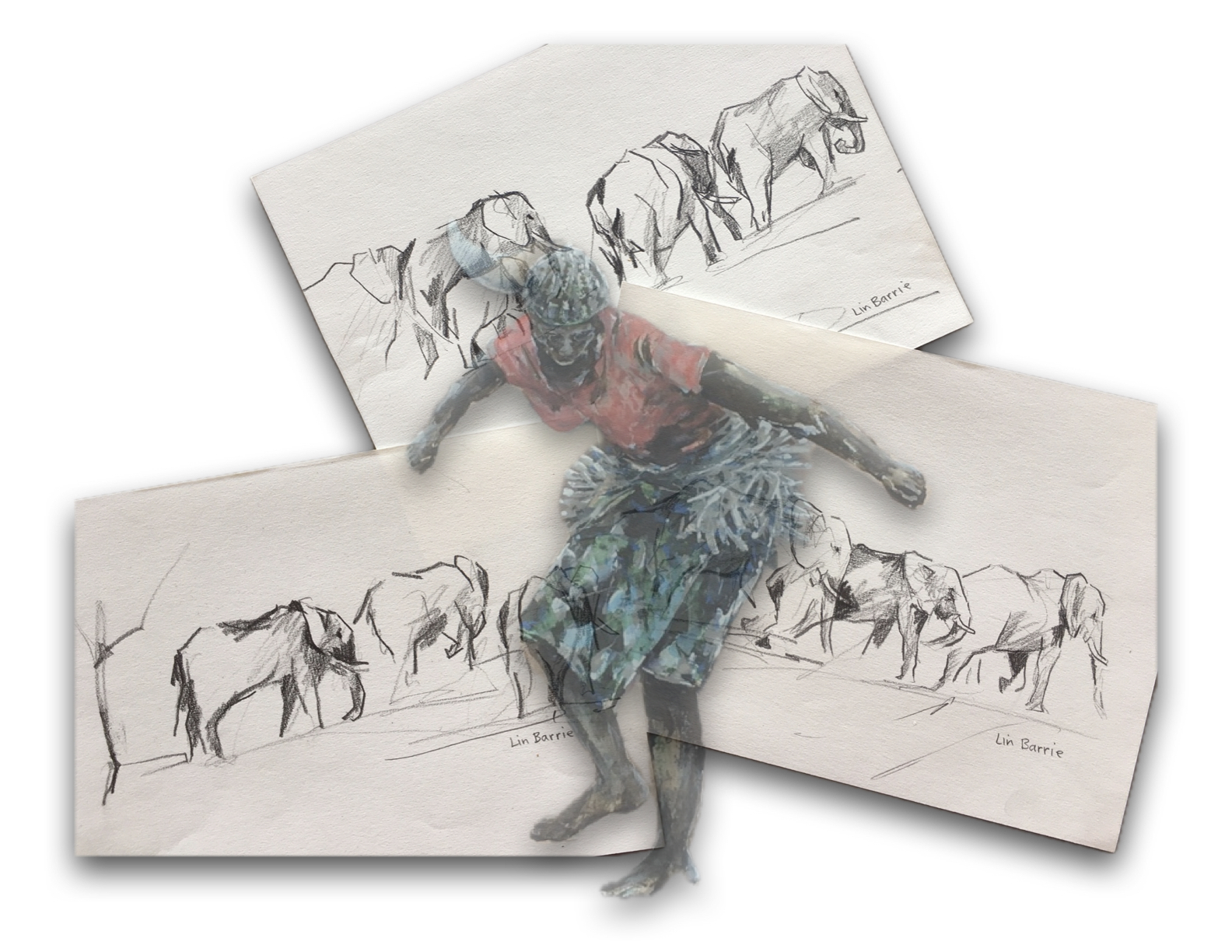
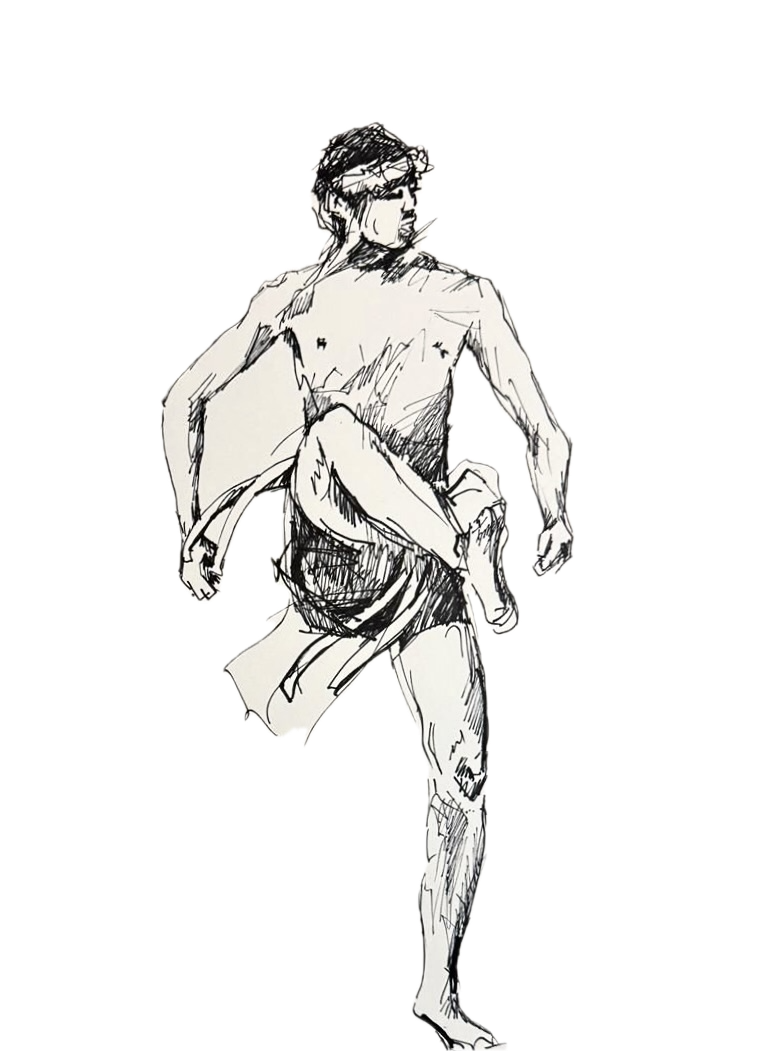
My sketch, (at Boundless Southern Africa Expedition, 2010, celebrating Peace Parks) ….a dancer at Crooks Corner, the junction of the Limpopo and Luvuvu rivers, bordering Mozambique, South Africa and Zimbabwe;
Some History: culture and communities; transcending manmade borders..
In a landscape referred to as Gaza, the Xangana/Tsonga/Hlengwe peoples cover a vast region, stretching, irrespective of manmade borders, from south eastern Zimbabwe through to coastal Mozambique and into northern Kruger, Makuleke, and all the way through Louis Trichardt to Pretoria and Johannesburg. .
A rich history pervades this Gaza area, from the original peoples who painted evocative rock art, to the Zulu heyday of King Shaka, to the banks of the Limpopo, the court of Mzilikazi, beyond to Great Zimbabwe, the Zambezi river, and eastwards to the Indian Ocean, to legendary Johannesburg, Egoli, (the city of gold), Jozi, Joni…a melting pot of African and world culture from the wild days of the initial gold and diamond rushes, resulting in the recruitment of thousands of willing, (and unwilling!), mine labourers, drawn from the far reaches of the southern African hemisphere. Joni is the name that rings true for us at Mahenye, for the fact that our Hlengwe people in Mahenye and Gonarezhou area ‘joined’ up with recruitment teams to trek to Johannesburg/Pretoria and work the mines, hunting each for his own pot of gold, even if that meant only eventually earning enough to buy a cardboard suitcase and a bicycle with which to traverse homewards through the inhospitable and arid wilderness of Gonarezhou, to eventually return triumphant to the family village, (wild animals, footpads, fever and thirst allowing.… )
Xichangana/xitsonga is a term referring to the language. Hlengwe is the dialect spoken in our own area, where we live – Chief Mahenye’s village. Xangana (Machangana), is referring to the people. Much debate arises over correct use of these terms, making for endless, often heated and always animated discussions, around campfires (maxuxo) and in offices alike!
Background:
Yearly, various Xangana (tsonga/hlengwe) cultural festivals have been hosted by the Chiefs surrounding Gonarezhou National Park… on the ‘contact zones’, where Gonarezhou National Park wildlife and adjacent xangana communities co-exist.
One major festival was called “The Great Limpopo Cultural Trade Fair” – this was the flyer for 2016, ably spearheaded by Hebert Phikela, of the National Arts Council.

Here below is history of some of those festivals, embracing the culture, and supported by the Gonarezhou Conservation Trust (Frankfurt Zoological Society and Zimbabwe National Parks) , Malilangwe Trust, National Arts Council, rural district councils and Chilo Gorge Safari Lodge, Mahenye Charitable Trust. Originally being called the MaChangana (Shangaan) Cultural and Arts Festival (MCAF), the Xangana (MaChangana) Chiefs of the south east lowveld, custodians of the Xangana culture, have, through various committees over the years, organised the MaChangana Culture and Arts Festival (MCAF). Held yearly in different areas around Gonarezhou National Park, part of the Greater Limpopo Transfrontier Conservation Area, (GLTFCA), the organising committees have included Hebert Phikela, Headmen, Kraal heads, Local MP’s, Councillors, members of the Xangana community and select women from each of the Chiefs councils. ………
The MaChangana Culture and Arts Festival, 2010, at Chief Sengwe’s Village
The MaChangana Culture and Arts Festival, 2011, at Chief Tshovani’s Village.
The MaChangana Culture and Arts Festival, 2012, at Chief Mahenye’s Village.
The MaChangana Culture and Arts Festival, 2013, at Chief Gudo’s Village.
The Great Limpopo Cultural Trade Fair, 2016, Muhlanguleni
Dance teams from Mozambique and South Africa have travelled to these festivals, sharing their talent with Zimbabwean dancers, a wonderful continuance and cross pollination of cultural heritage; embracing modern ideas and media, to create vibrant culture that respects the best of tradition but also moves forward with the times, gaining relevance with young people by so doing.
Indeed, children relish joining in with the dances, together with their mothers and fathers, their grandparents, old and young alike…
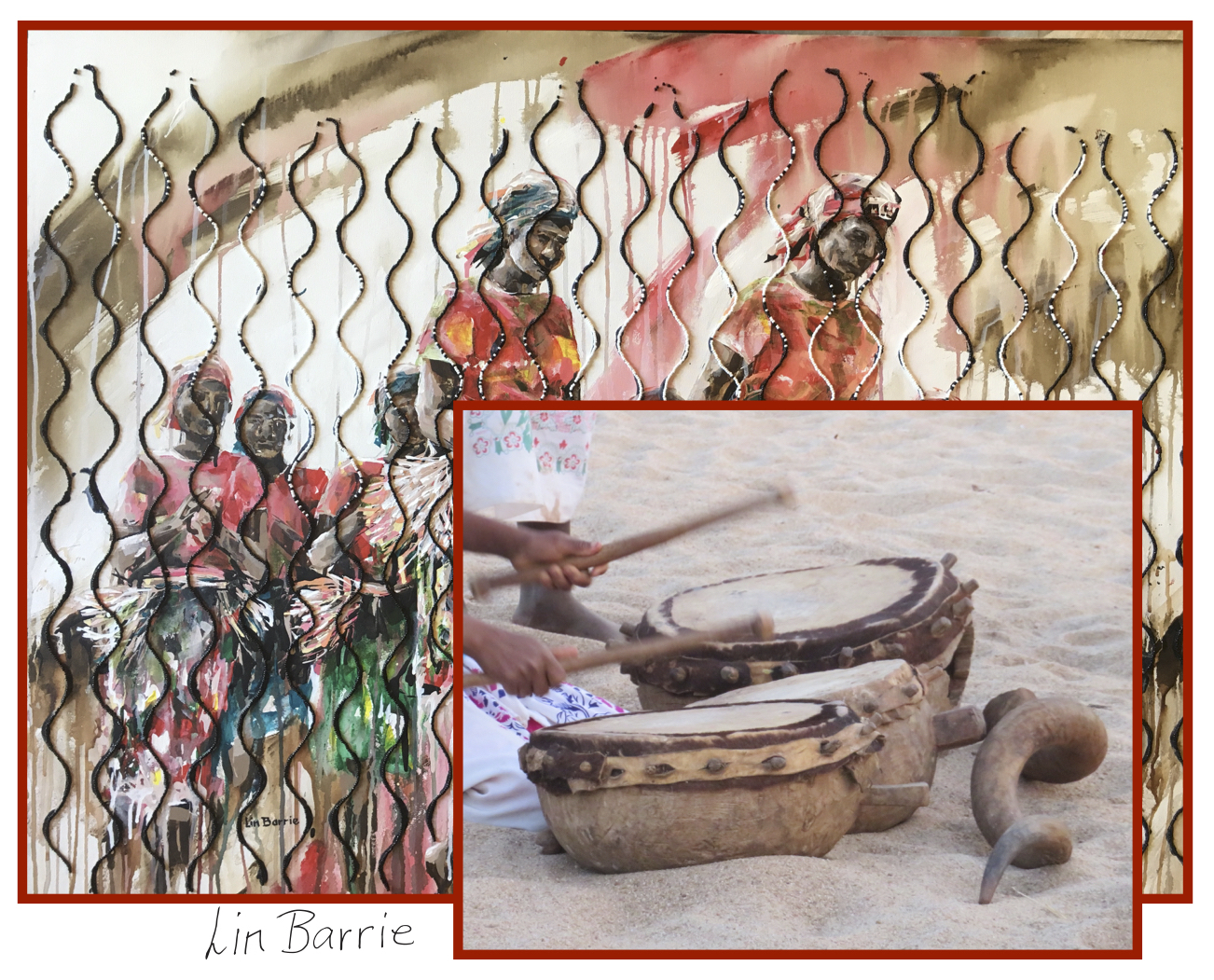
My painting/beaded monoprint of a Mozambican dance team who joined us a few years ago at Chilo Gorge Safari Lodge for an evening of dance and cultural collaboration…my stitched undulating beadwork trying to capture the ‘waves’ of music, the ‘resonance’ of culture..
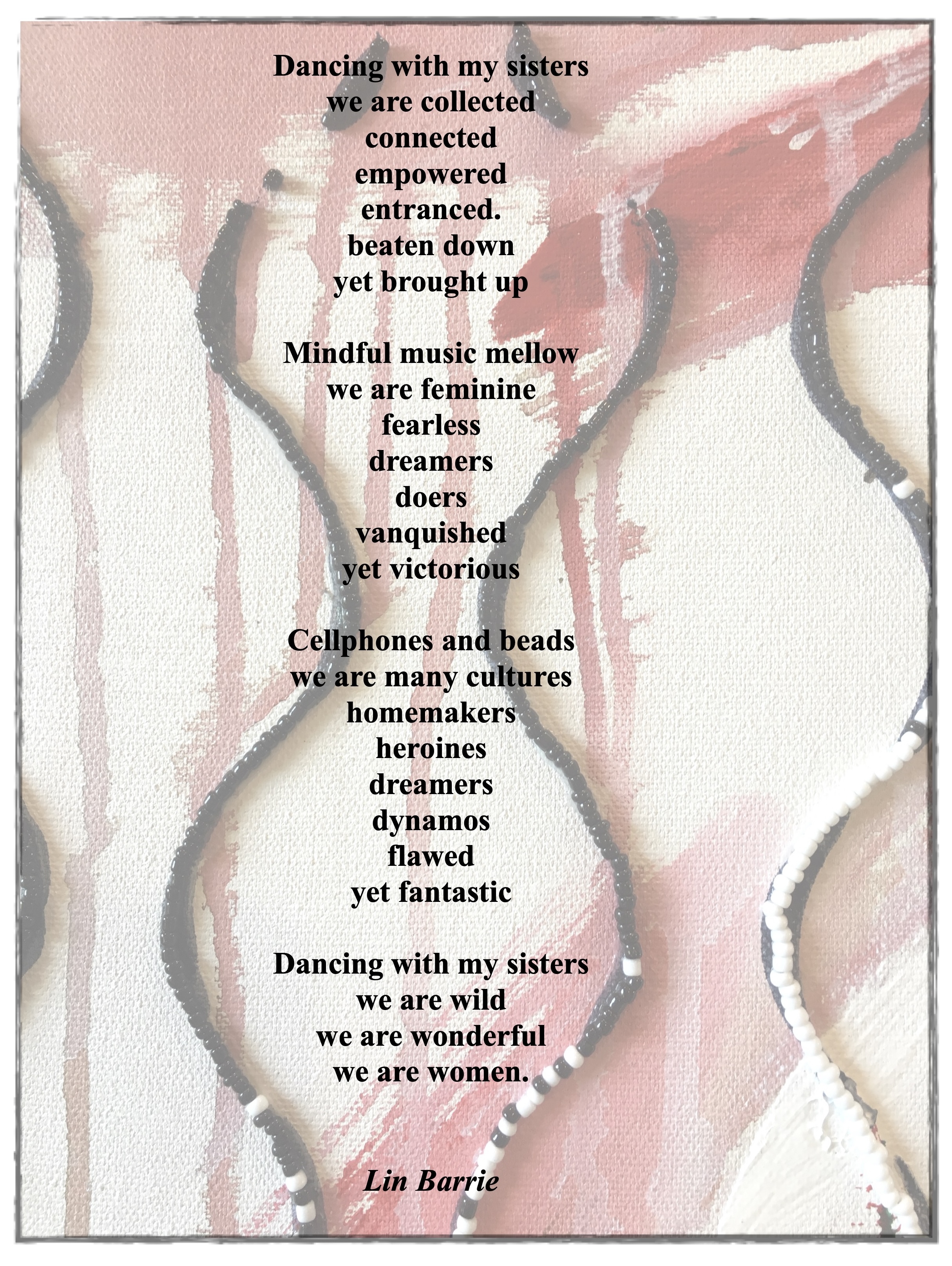
Dancing with my sisters….my poem
My sepia ink sketch of a young Mozambican woman, who recovered and rested on her huge cowhide drum while the Mahenye Muchongoyo team danced….

The Muchongoyo dance troupe from Mahenye, (photo 2010 at a festival..) The men are wearing cowrie shell headbands, baobab fibre fringes, goatskins, porcupine quills…
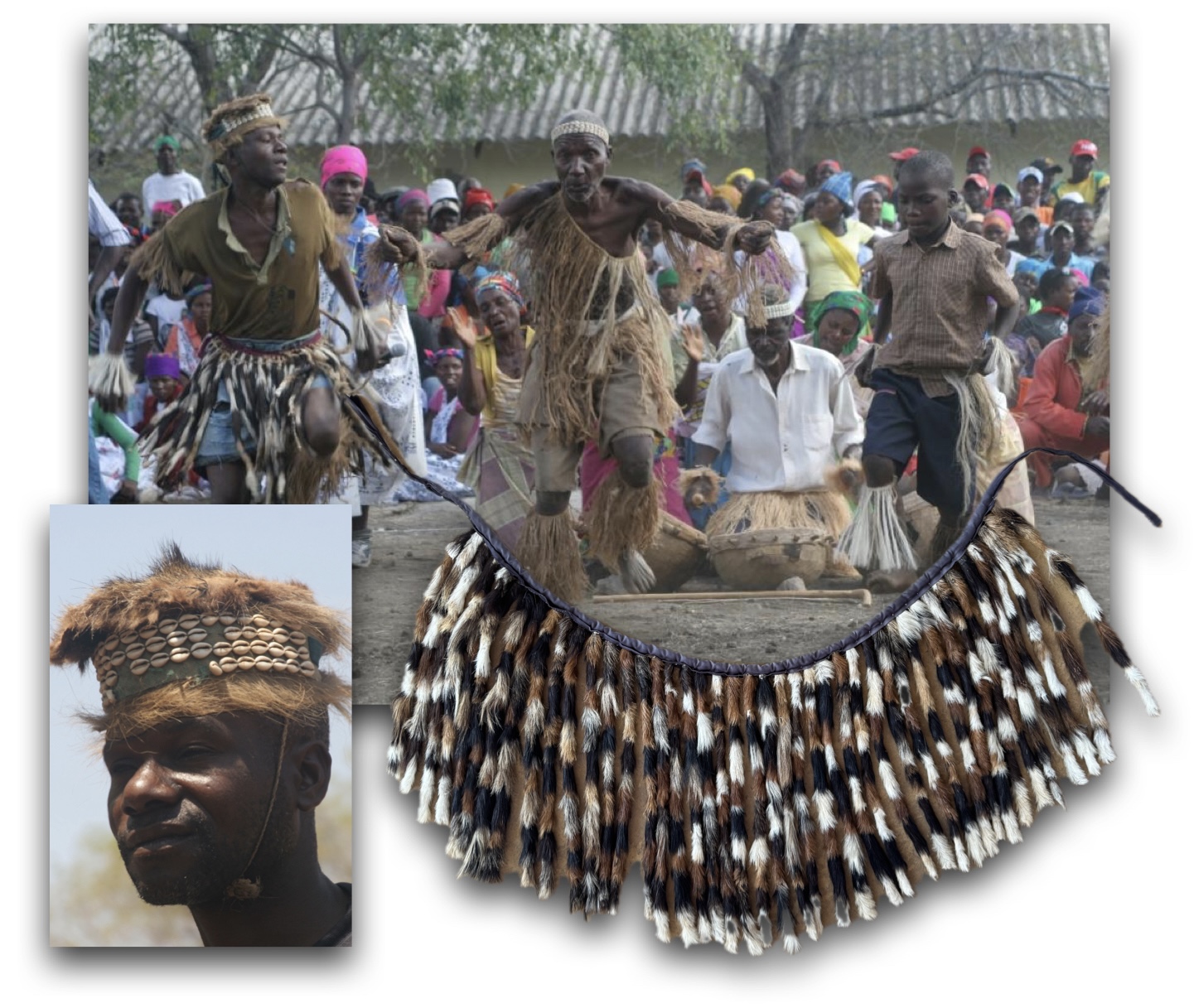
Living in the Mahenye community, I have experienced many dances performed in the daily life of the community, and at festivals. Such as the dances of mixed men and women, Muchongoyo, and others called Chokoto, Marula, Chinyambela and Chigubu.
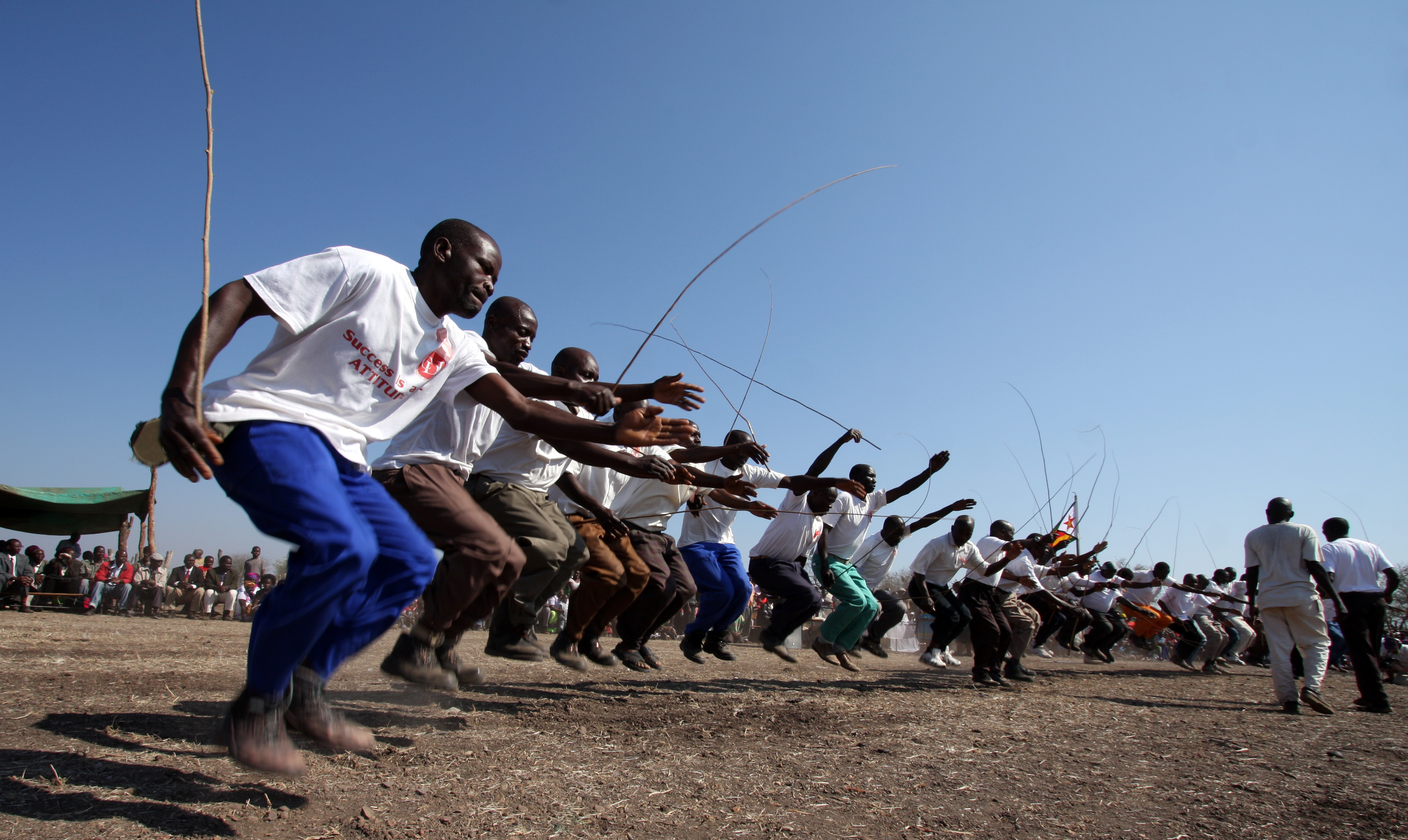
I have been honoured to witness men’s Ngomeni initiation dances, such as these seen at a festival 2007..
And here we see women leaping in celebration of the initiates at an Ngomeni held in Chef Tsovani’s village years ago…
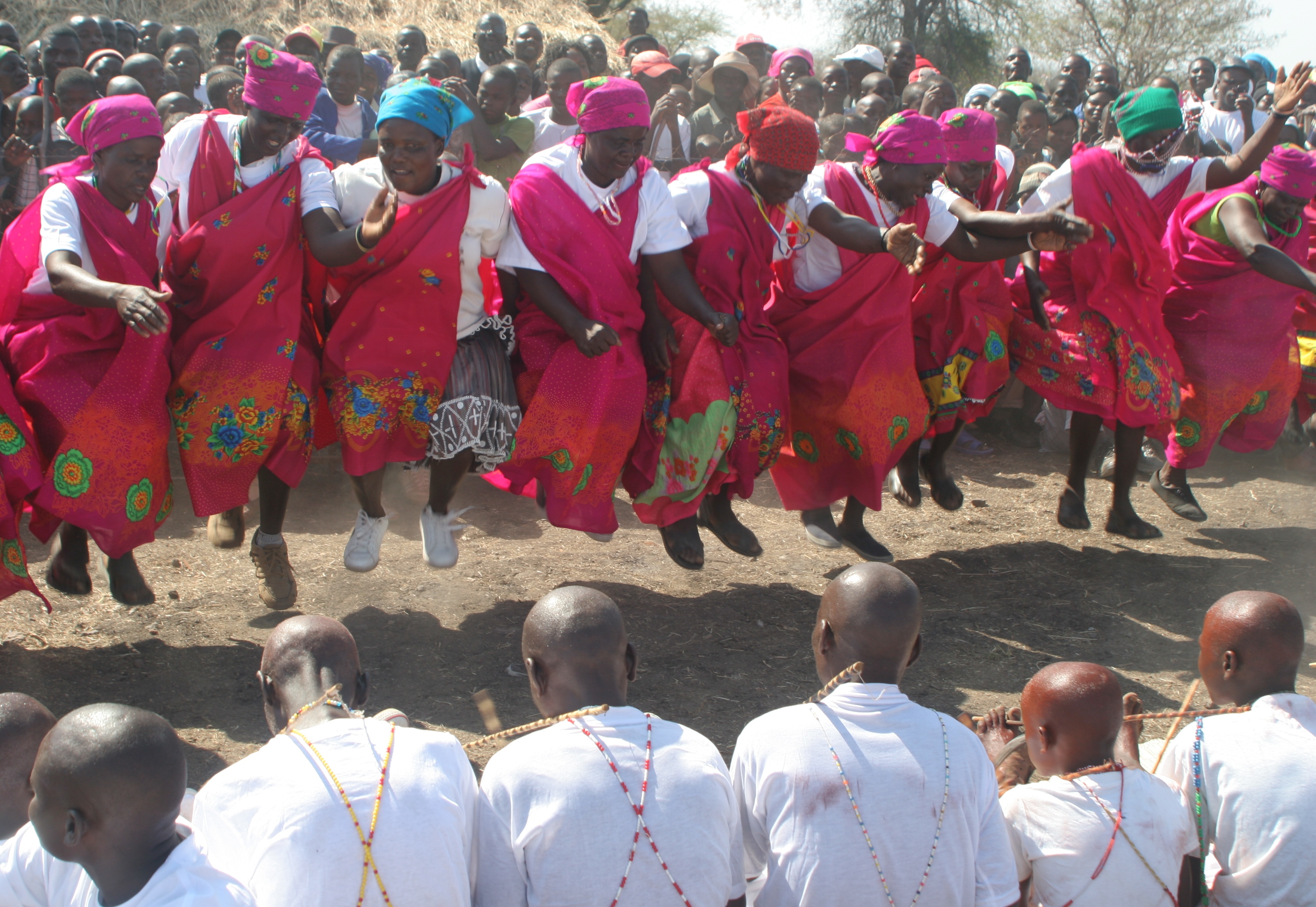
(CLIVE STOCKIL PHOTO)
In general dance, a kudu horn, hwamanda, is treasured as a lead musical intrument, as are wood and skin drums, ngoma. Musical wind and string instruments, Tingoma, Chizembe, Chitende are still made.
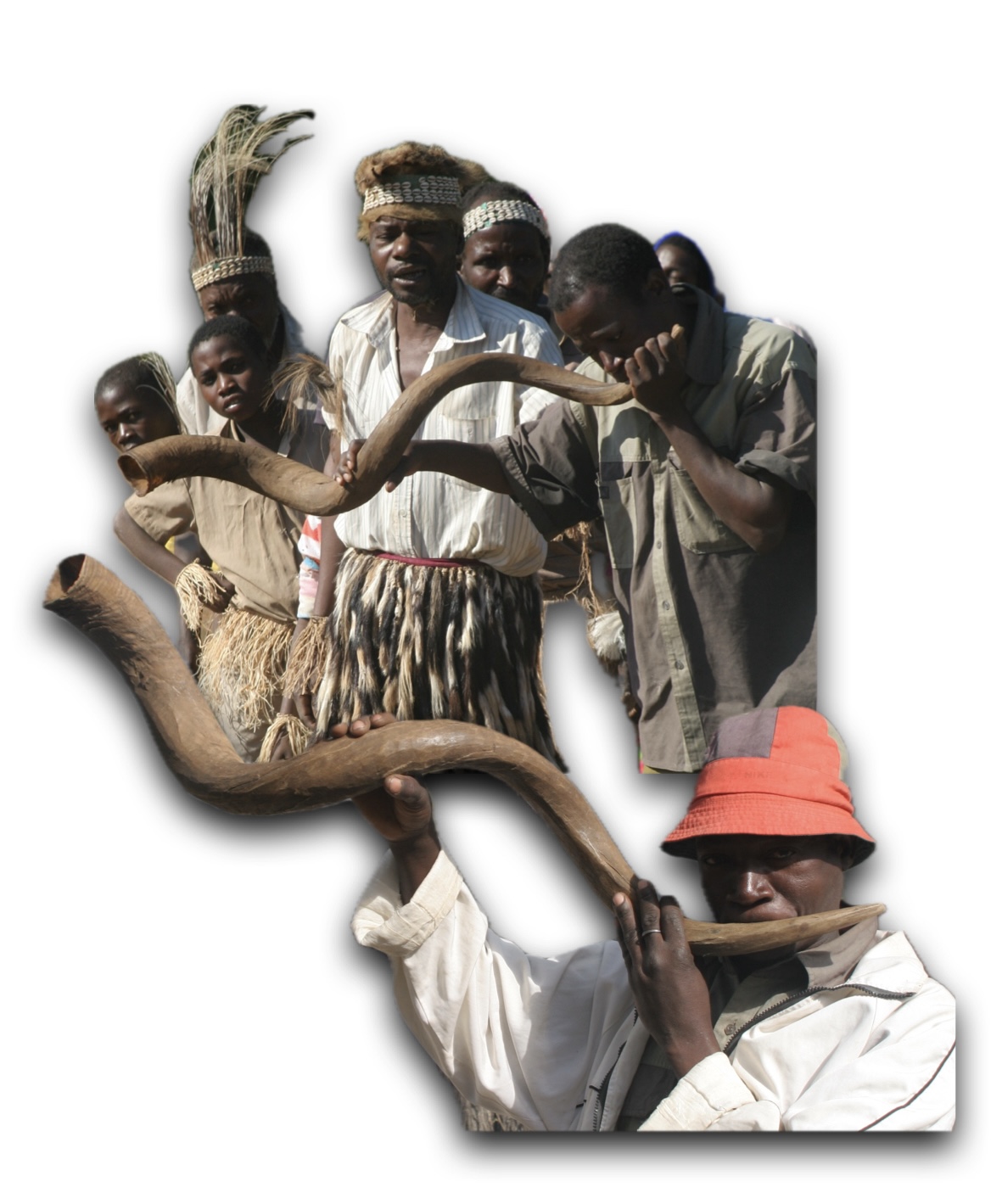
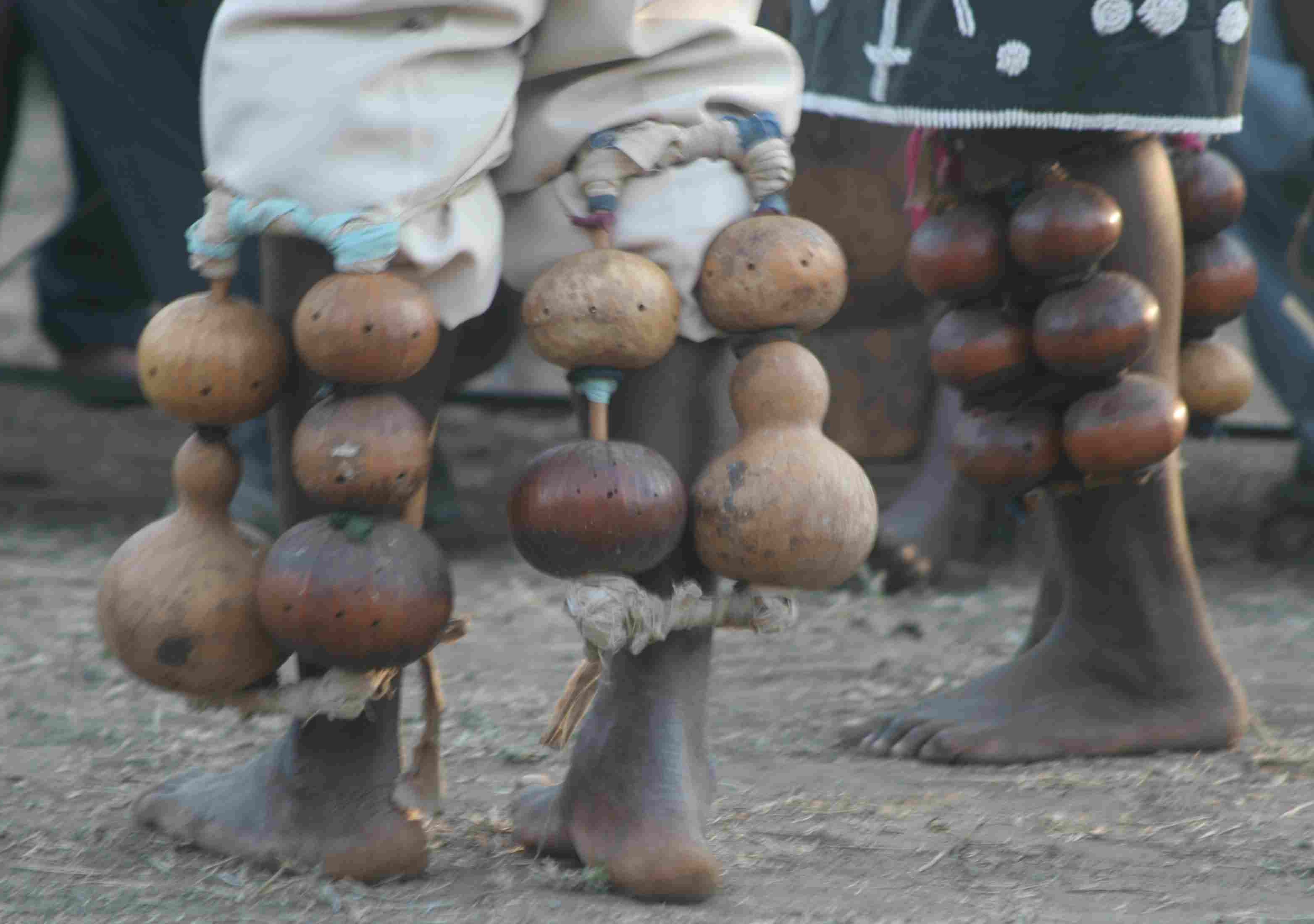
Ladies and men enjoy the piercing sound of tin whistles to lead their dance troops; and men and women wear hollow indigenous gourd leg rattles…..
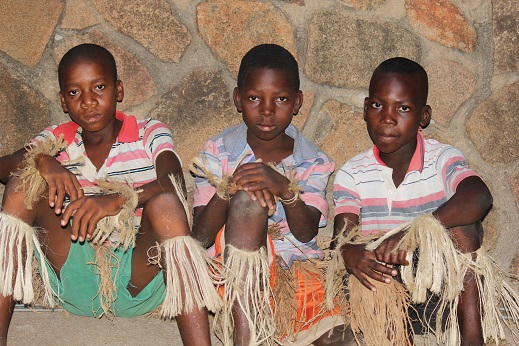
Young children learn the choreography, the tradition, loving to dress up and dance with their elders….a rare continuation and celebration of culture and identity, a precious gift in this fast paced modern world………
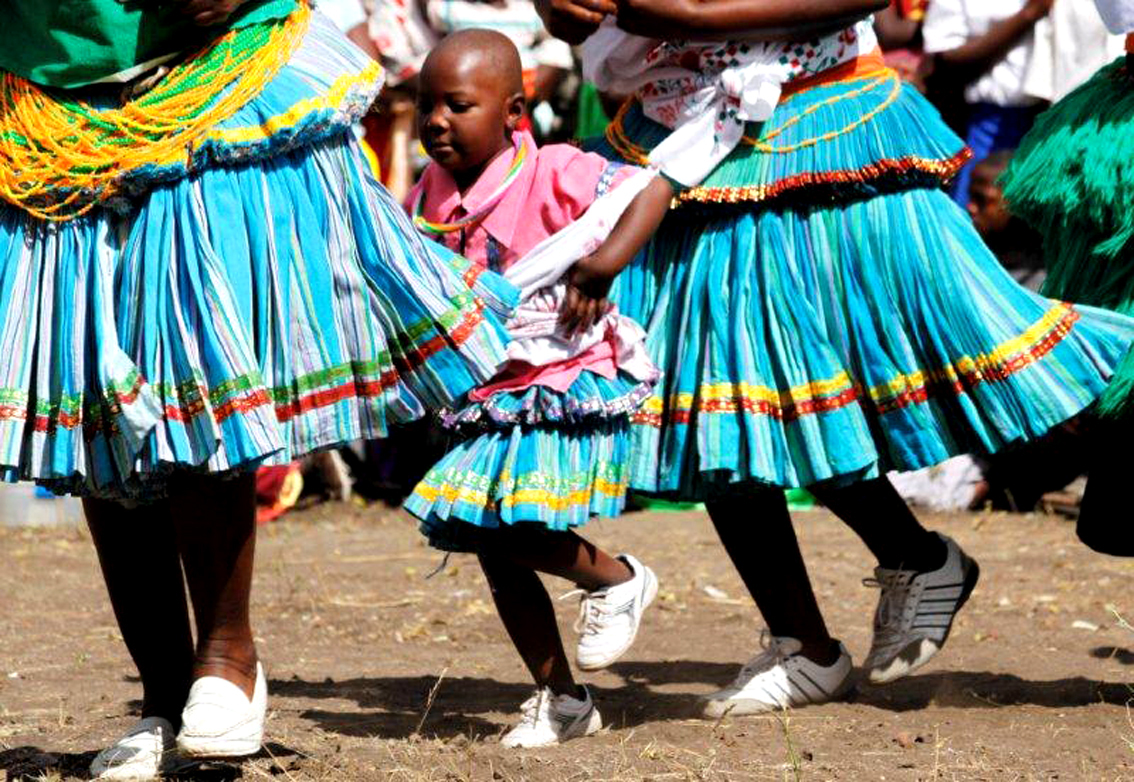
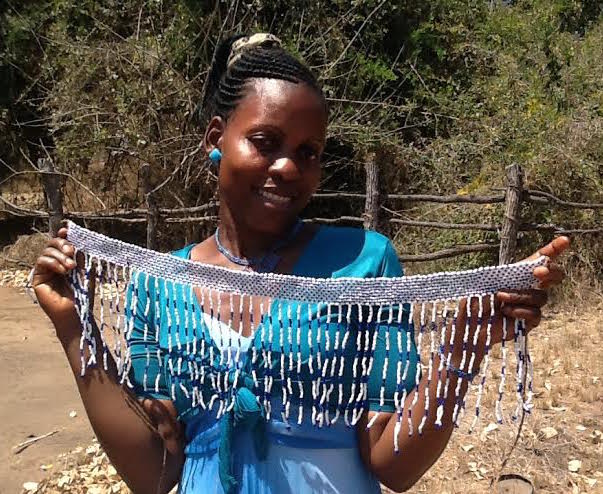
In general dance, Ladies wear the traditional Chibabela skirts, with mutiple strands of twisted beads wrapped around their hips and adorning their necks. In Mahenye these are made using Salampore – striped woven fabric from India…
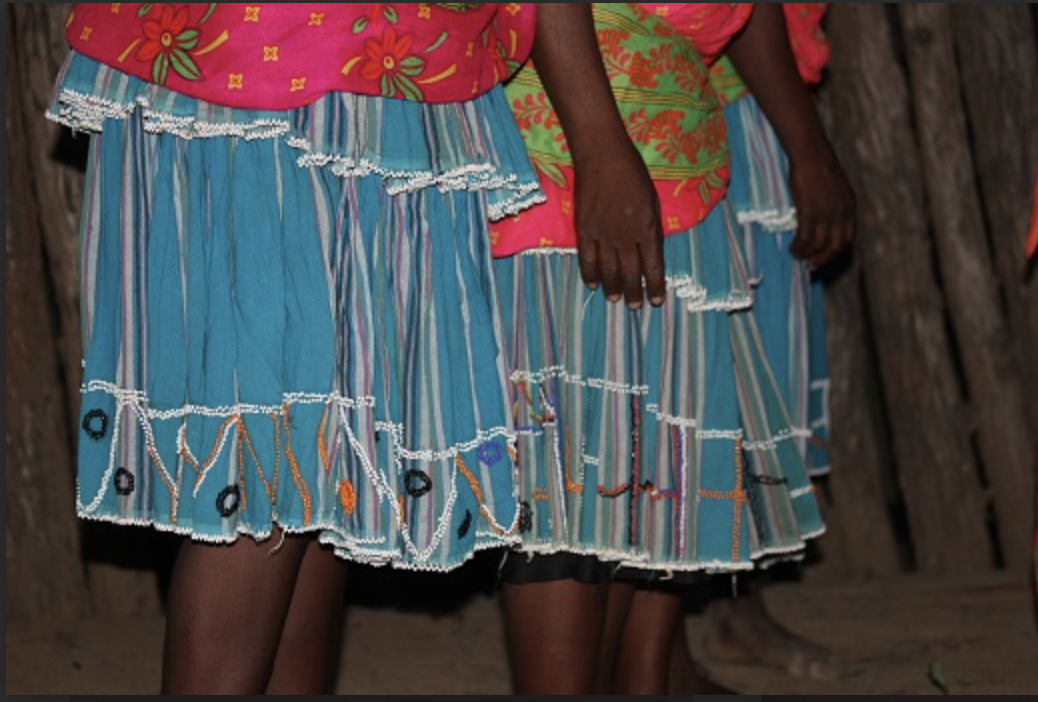
In Northern and Eastern Gonarezhou, (including Mahenye area), “Tibabela” are deeply gathered and heavily beaded skirts, worn under bright tsonga (chimatsatsa) wraps and displayed when dancing or for special occasions. Seen at festival, 2010.
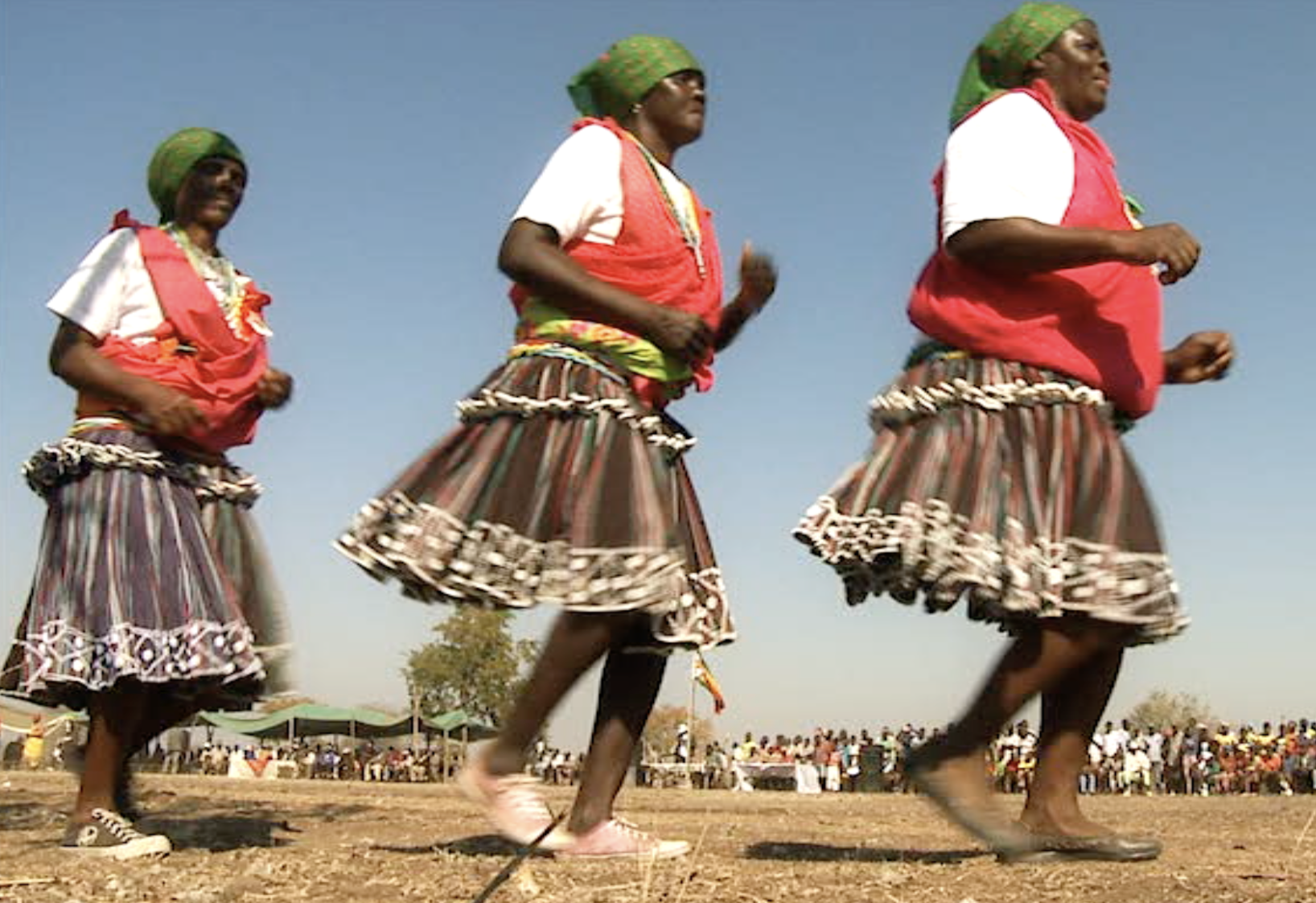
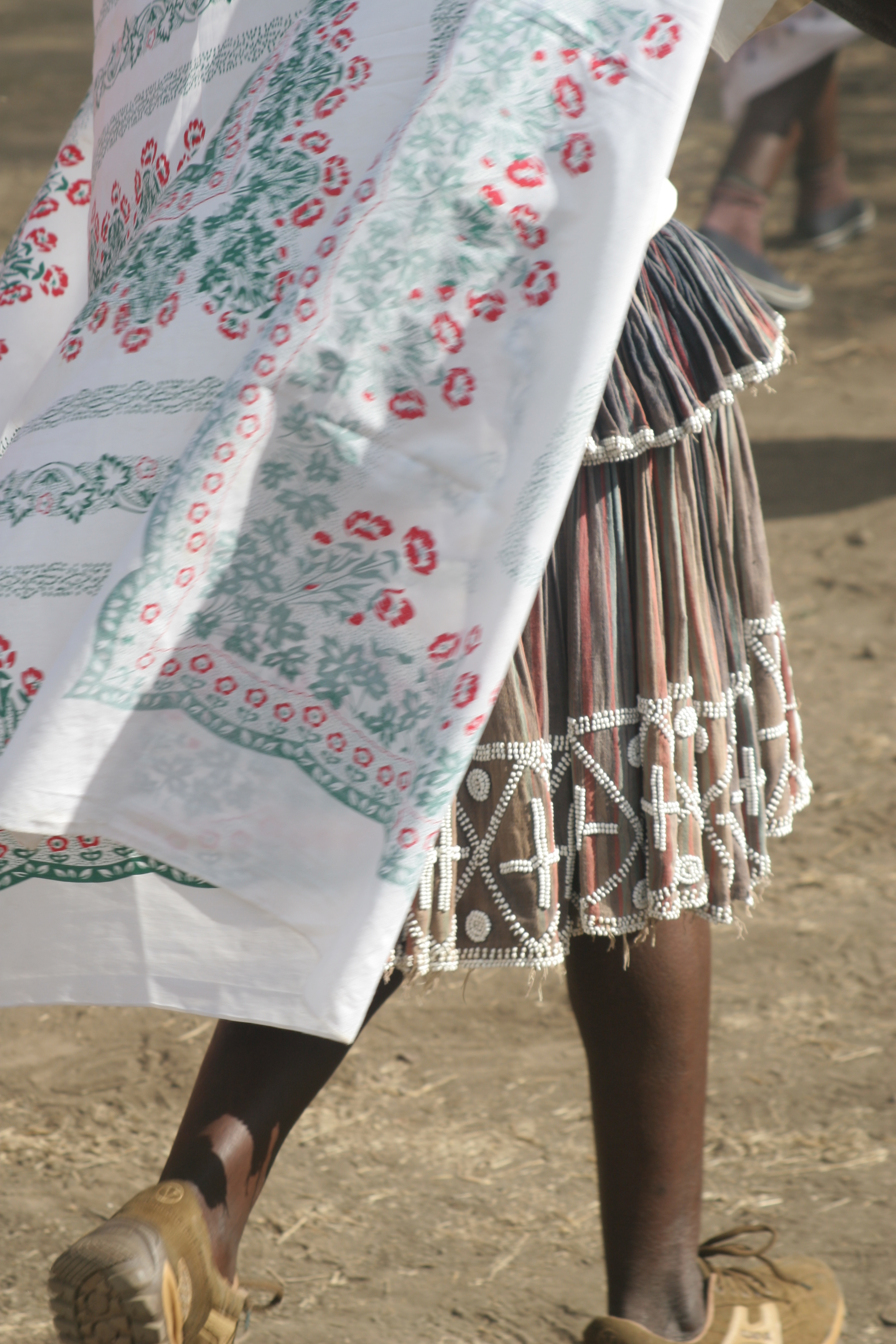
Because of the weight of the beads, these chibabela skirts sway when walking and flare out when dancing to create an energetic and mesmerising effect. They are made from traditional Indian striped, woven “Salempore” fabric and glass seed beads. A strong tradition of using salampore fabric and glass seed beads for decorating skirts is still maintained.
The beads and fabric reflect the long history of ancient Indian Ocean trade, with Arab and Indian dhows sailing up and down the east coast of Africa. …..
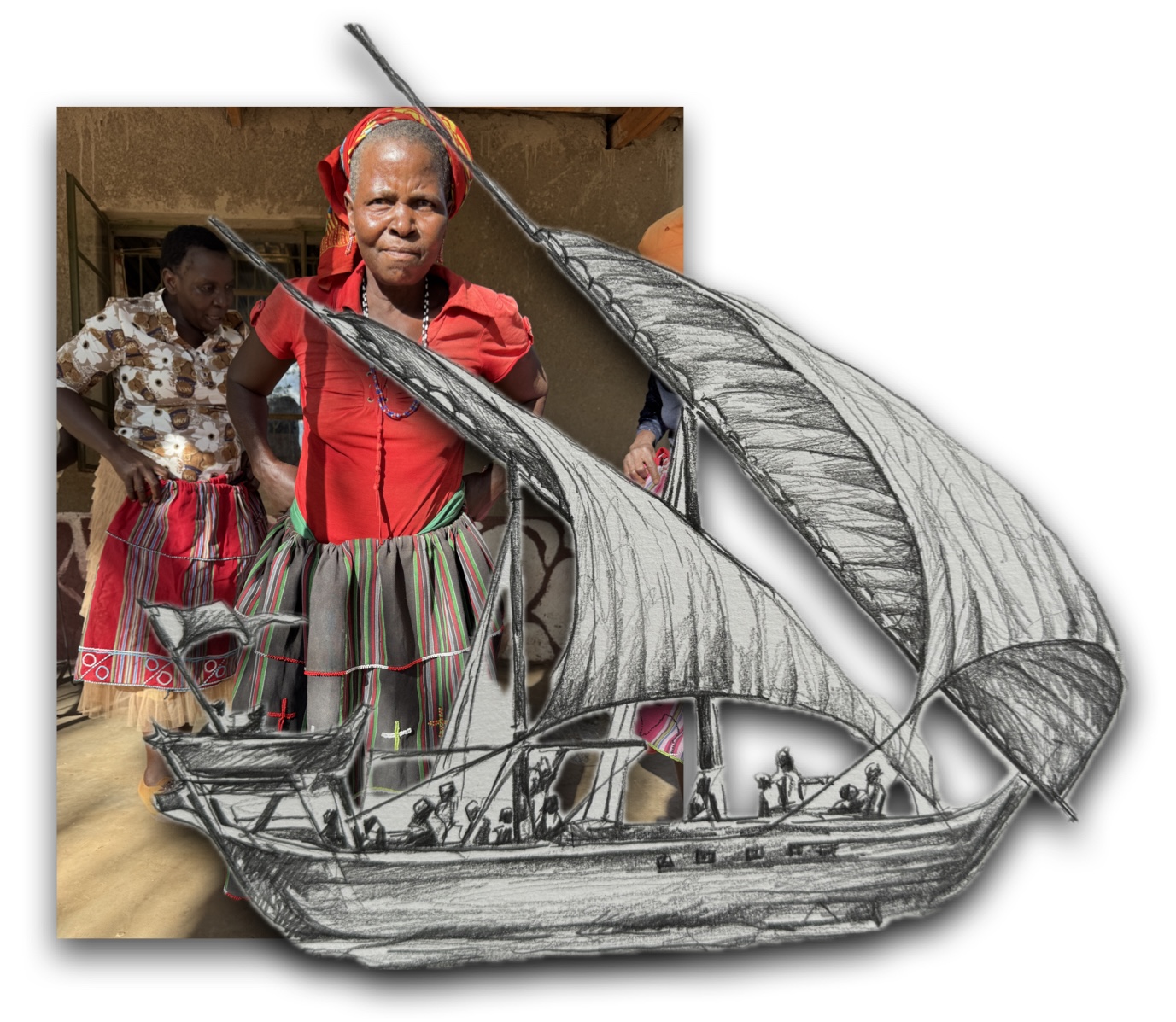
Seed beads are also much used for necklaces and headdresses. Older men and women wear earrings, with large holes in the earlobes, but this is less common than in the past.
Here is a treasured, vintage chibabela skirt; well-worn, lovingly patched, and heavily embellished with glass seed beads, imparting a swing while walking….
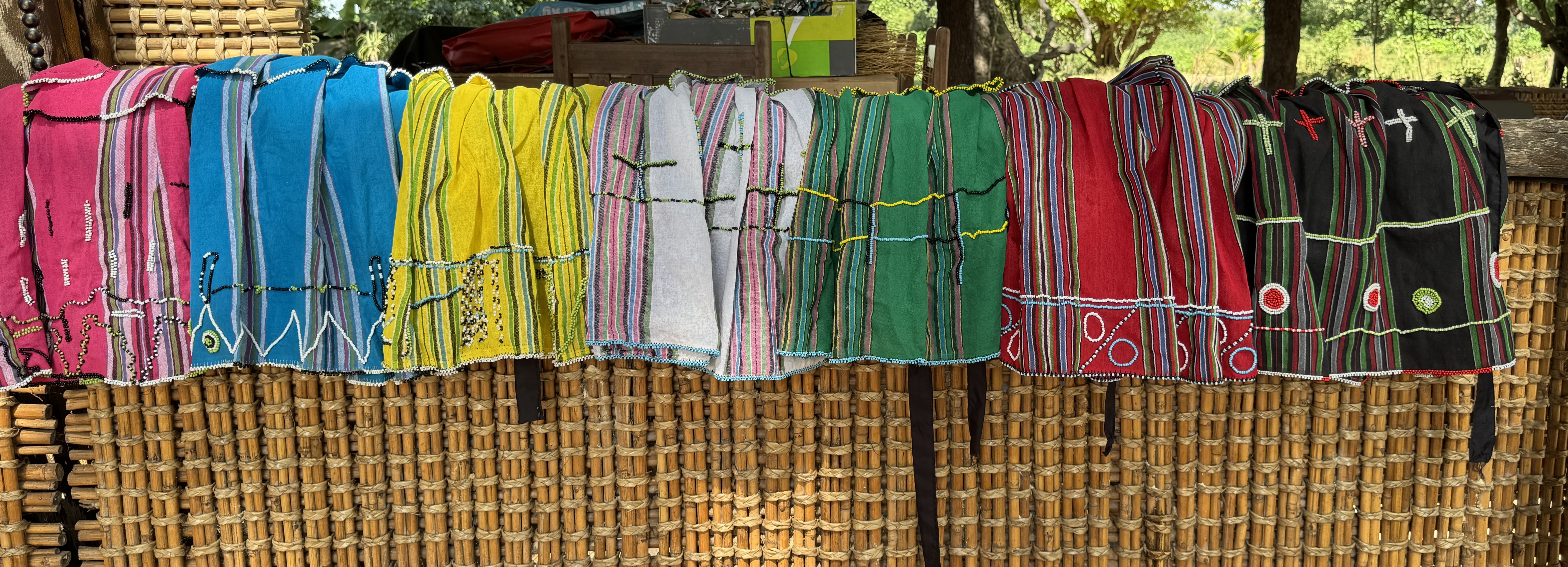
A delightful blend of coloured stripes, salampore and other Xibelani fabric and glass seed beads are readily available and popular, through a few steady suppliers who import the fabric from India, no longer by dhow, but by more modern means!… (such as Khojas Modern Store in Loius Trichardt..)
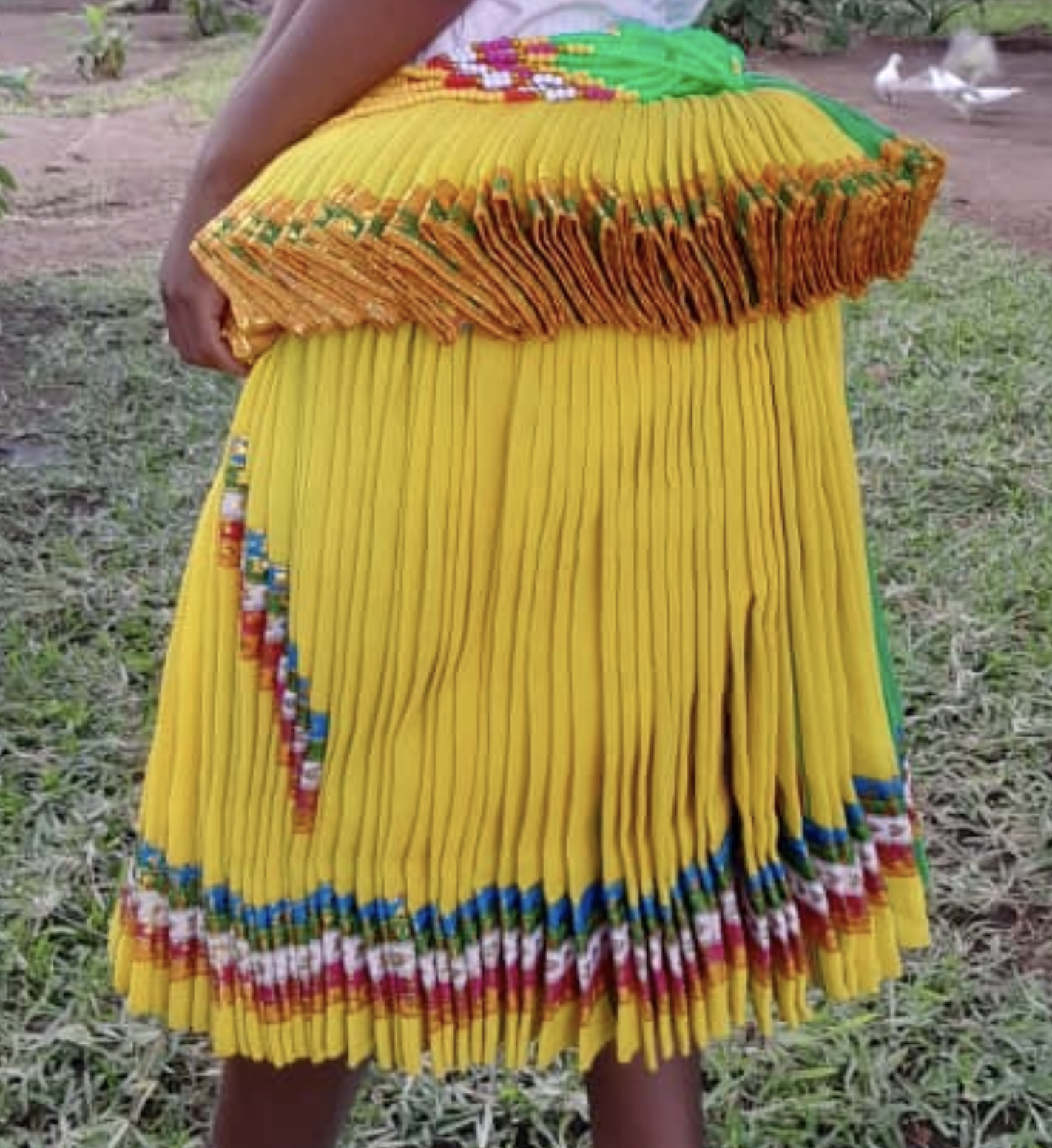
The Tsonga skirts, xibelani, found in Western Gonarezhou and into northern Kruger, tend to be blocks of colour, embellished with gorgeous twists of beads around the waist..(as seen in this lovely photo from Hebert Phikela), a pleated ensemble worn by his daughter near Chipinda Pools, North/western Gonarezhou.
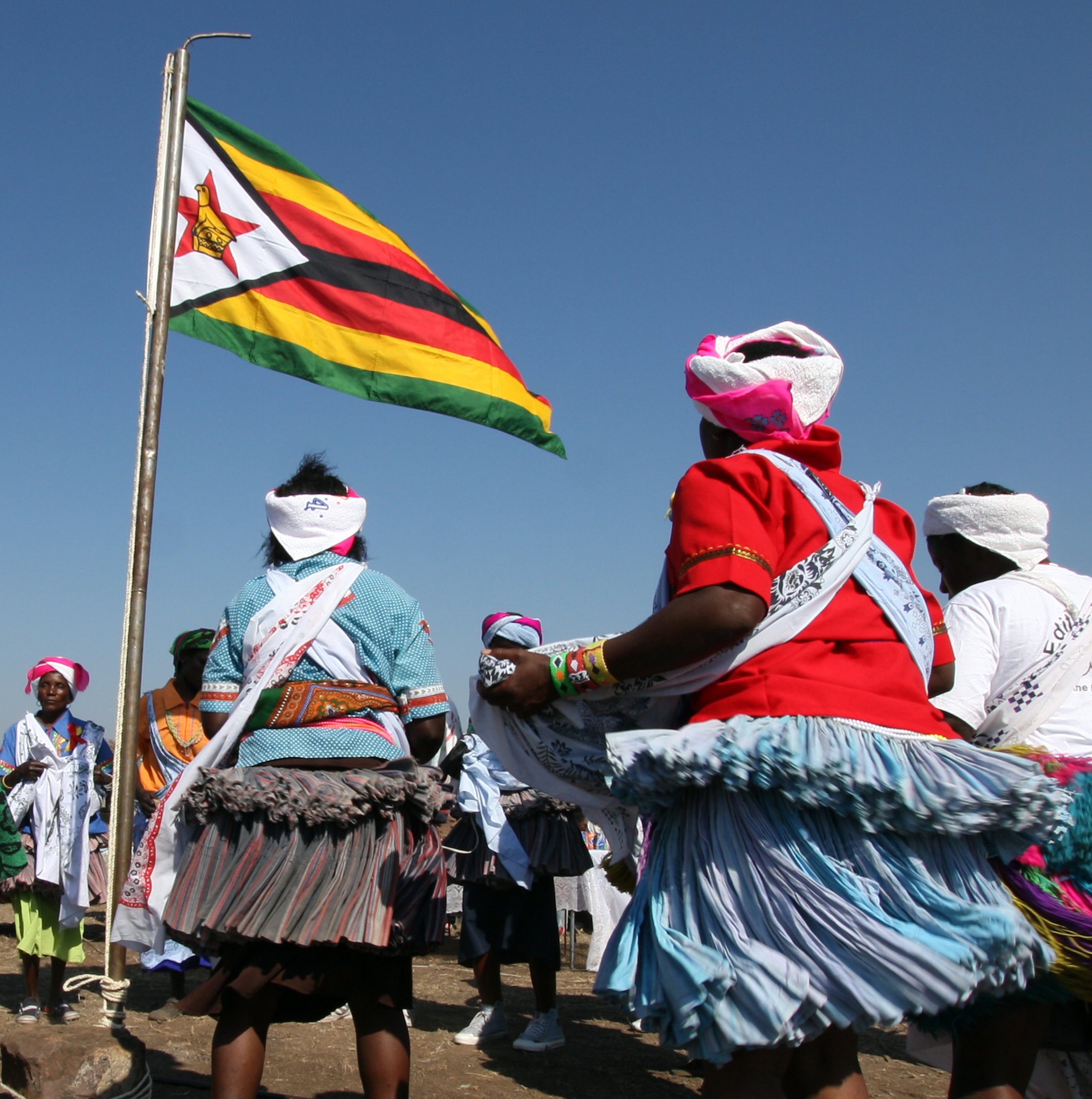
The Zimbabwe flag flies as the dance continues…
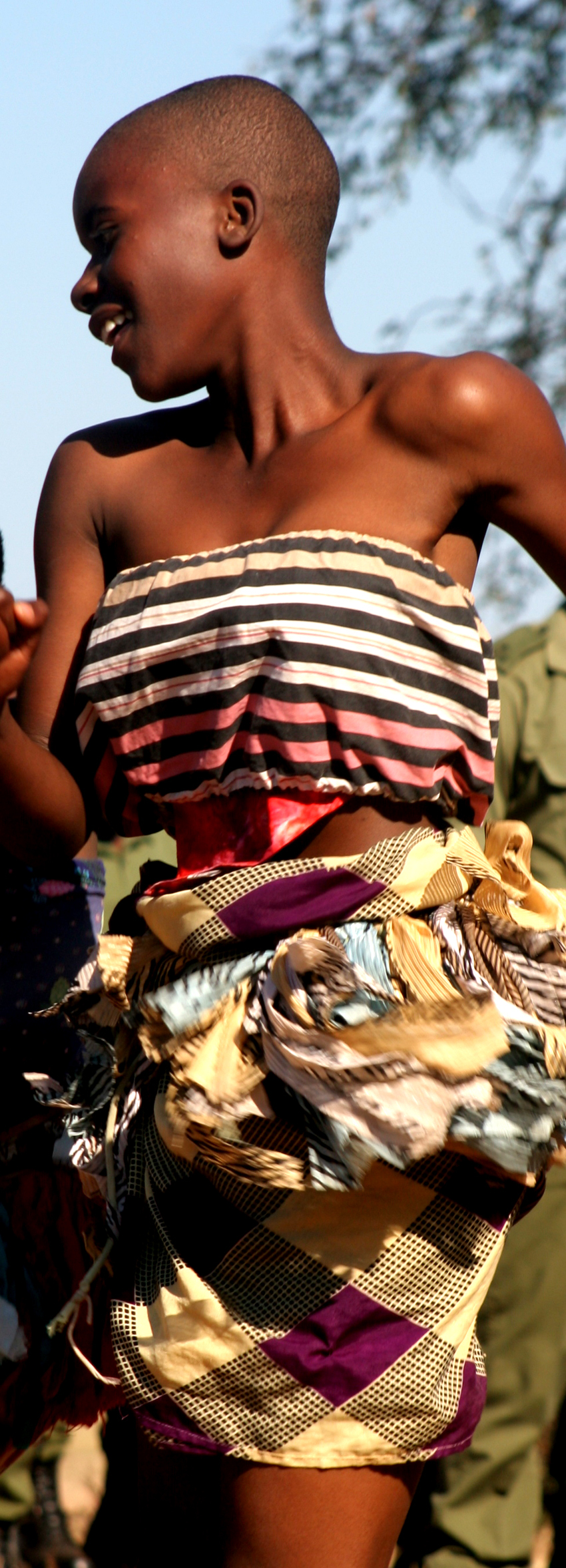
Some tsonga skirt styles are created with multiple rag strip/tufted dancing skirts, seductive strips of swaying fabric….
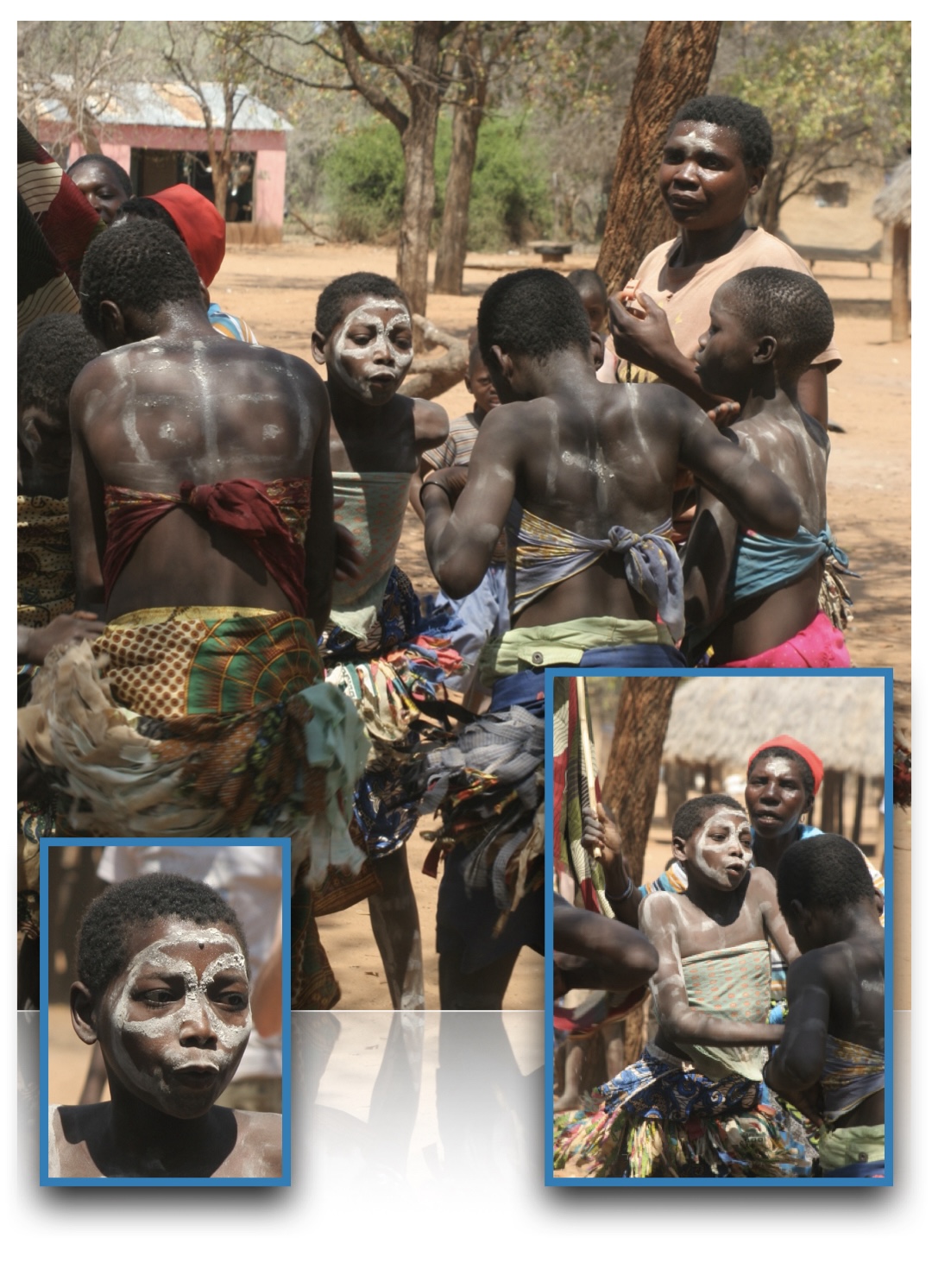
I have witnessed Komba initiation dances, celebrating the traditional initiation rites for girls becoming young women. (note: no genital mutilation is practiced, girls merely spending weeks secluded with trusted ‘aunties’ and mentors who verse them in the mysteries and also practical ways of becoming women…)
The Komba dancers from the southern end of Mahenye Village, (the Uketi area of Mahenye), dance wearing rag strip tufted dancing skirts, and kaolin painted faces and bodies, and the dance is traditionally called Magelegele.
Here, young girls at Mahenye, emerging from Komba, dance with painted faces,
Distinctive fringed/patchwork type fabric skirts… here seen on the iconic Chief Gudo’s dance team…
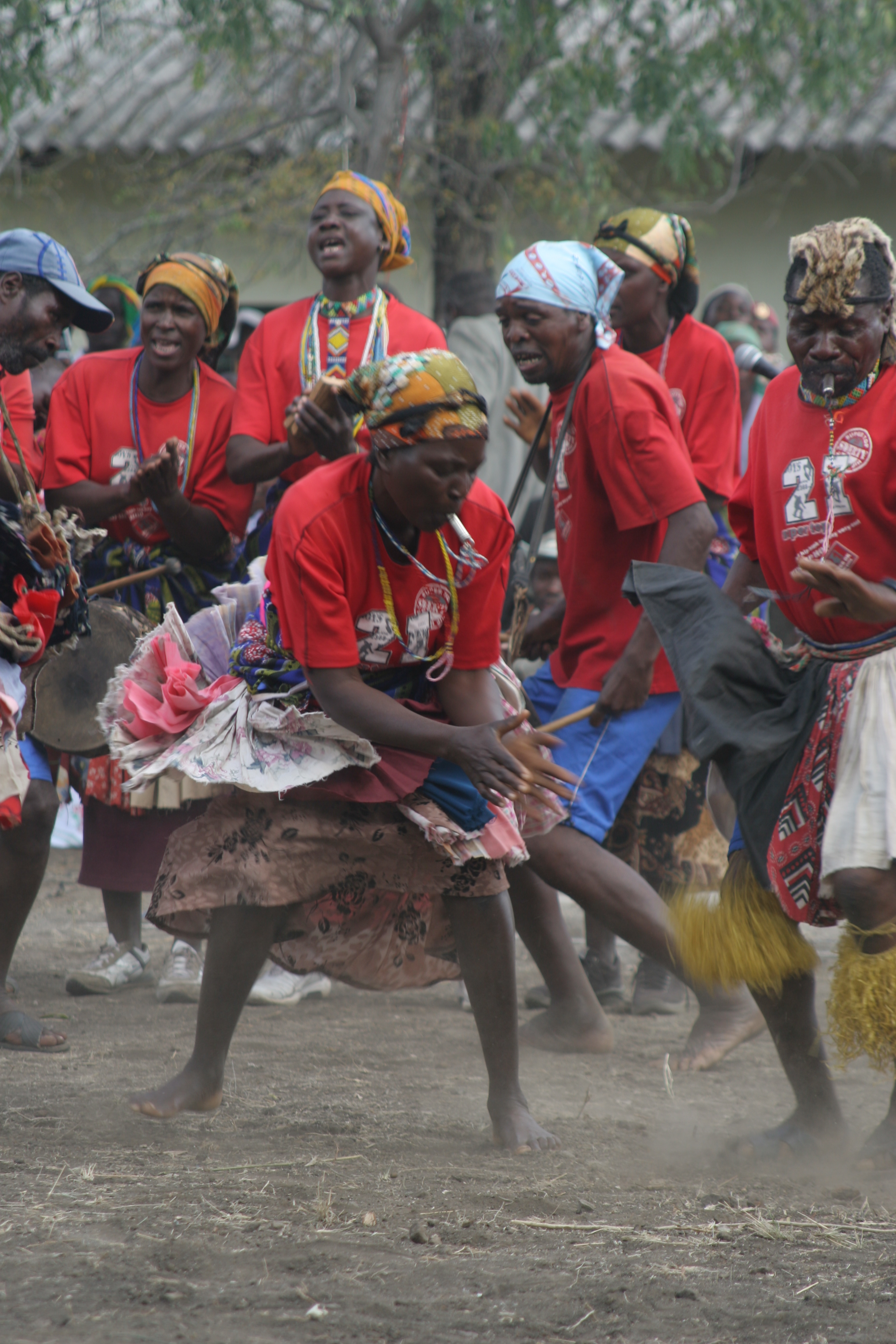
Some tsonga skirts use spectacular pompom-type layers of wool…all spectacular according to the tradition and creativity of the wearers…here are multiple skirt styles, seen all dancing together at a festival…
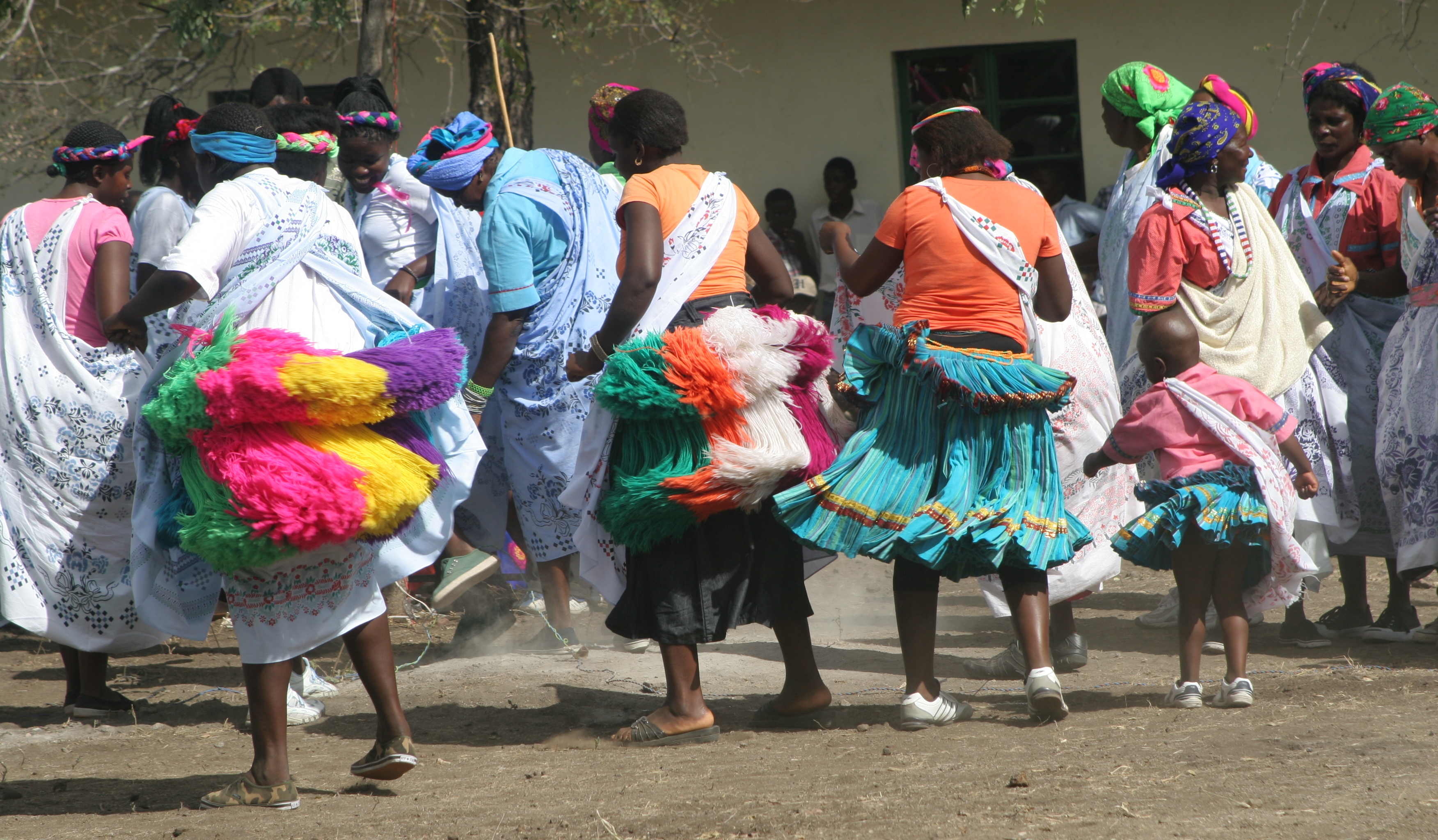
These cultural fairs and gatherings maintain the traditions and culture of the Xangana people, promoting this unique culture amongst the youth and ensuring that this heritage be passed on to future generations.
The Budula Festival 2025 is spearheaded by the Mahlanga Trust, and will focus on Dance. Will focus on building corridors and connections between Xangana communities within Zimbabwe and neighbouring Mozambique and South Africa. Will focus on actively sharing their unique culture with other cultures, cultural practitioners and visitors from southern africa and from further afield.
PS: The CCDI Trust, what was The Centre for Cultural Development Initiatives, is now renamed as the Mahlanga Trust, referring to the confluence of the rivers bounding the three countries Zimbabwe, Mozambique and South Africa.. the confluence of cultures, the confluence of conservation, the confluence of communities.
Beadwork is a strong component of xangana/tsonga fashion and traditional attire..
What does dance, music and the arts have to do with human-wildlife conflict?!
Communities around wilderness reserves such as Gonarezhou National Park, (‘sacred place/gona of the elephants), and Save Valley Conservancy, are living with wildlife, facing conservation and cultural challenges, literally ‘dancing’ with elephants…..
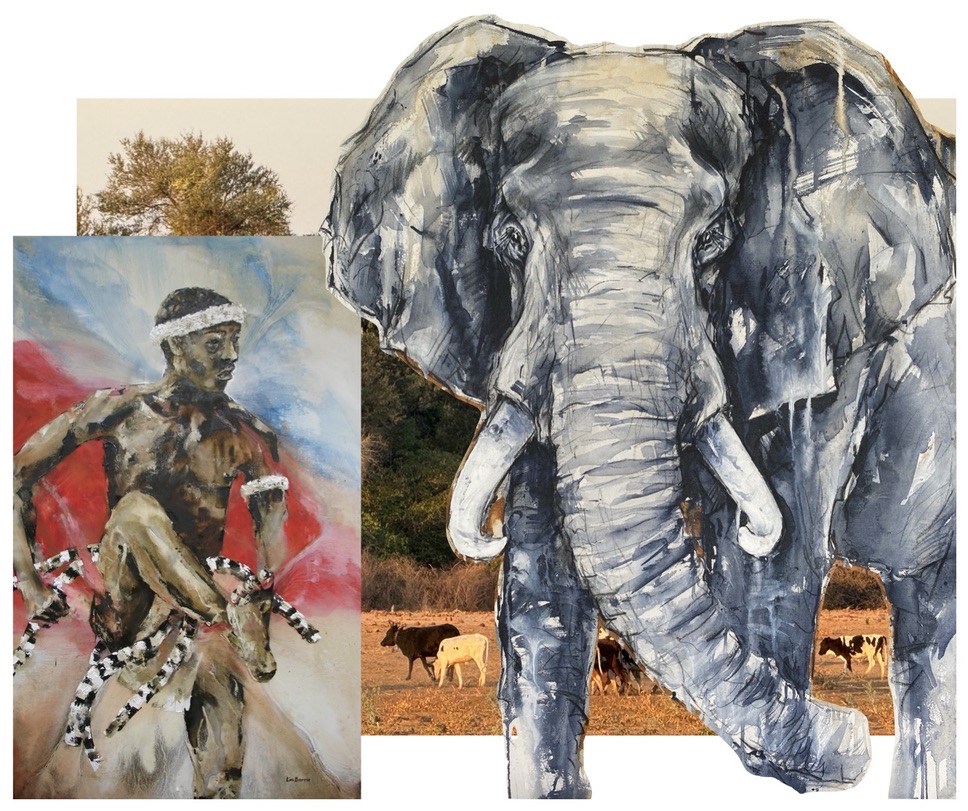
Admirable conservation concepts such as Peace Parks, Campfire and Connecting Corridors between wildlife areas and communities, go far to partly address these challenging issues…..
Art, Music and Dance, a vital expression of humanity, can also play a part, can be a catalyst for conservation, for communities to express innovative ways of adapting to human wildlife challenges, creating dialogue and collaboration. My personal ongoing art journey over the last years, and onwards into 2026, is in investigating Dance, Movement and Music, as an abstract and figurative expression of the human psyche and culture worldwide , and most especially at the intersection of our xangana culture and other world cultures.
My art practice currently is themed around DANCE- dance across cultures..
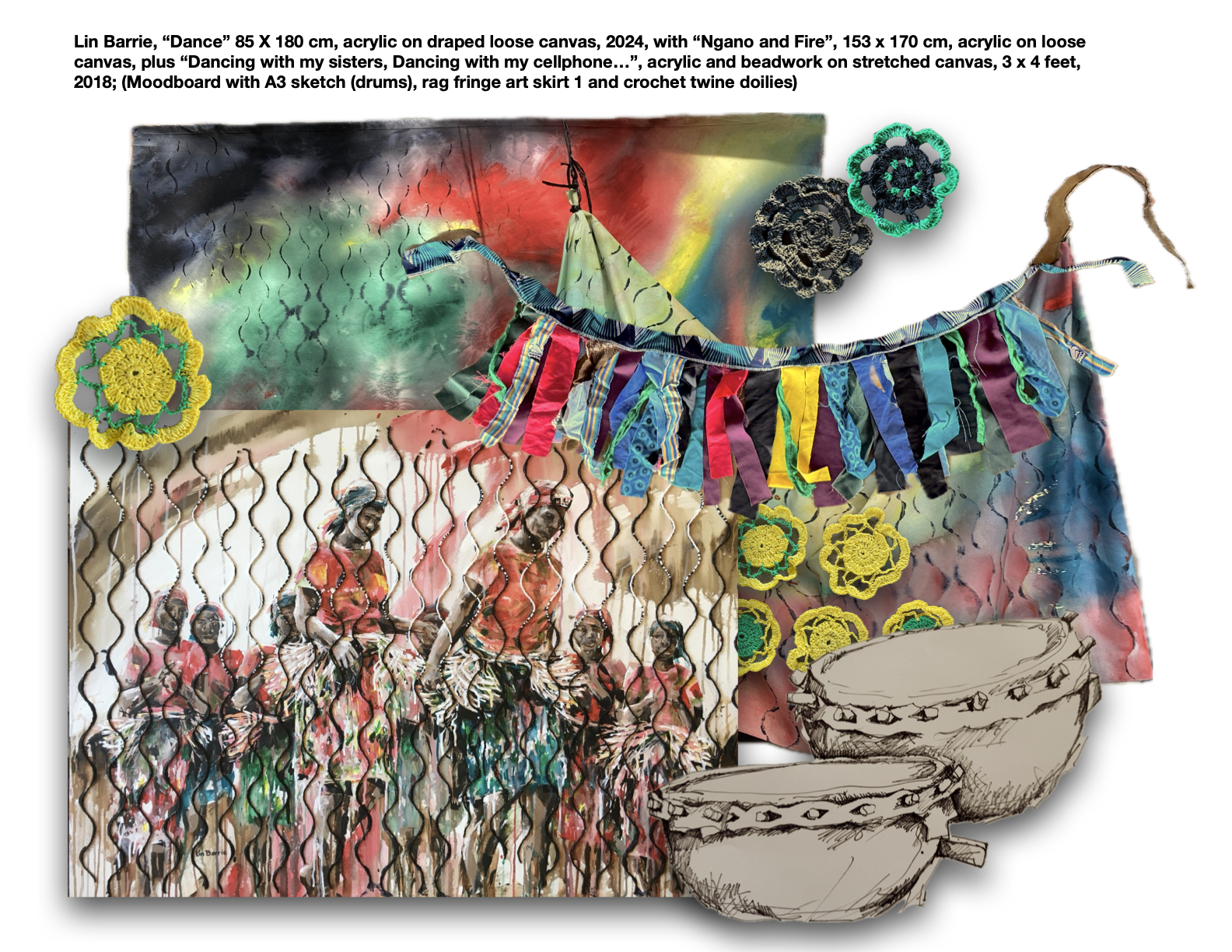
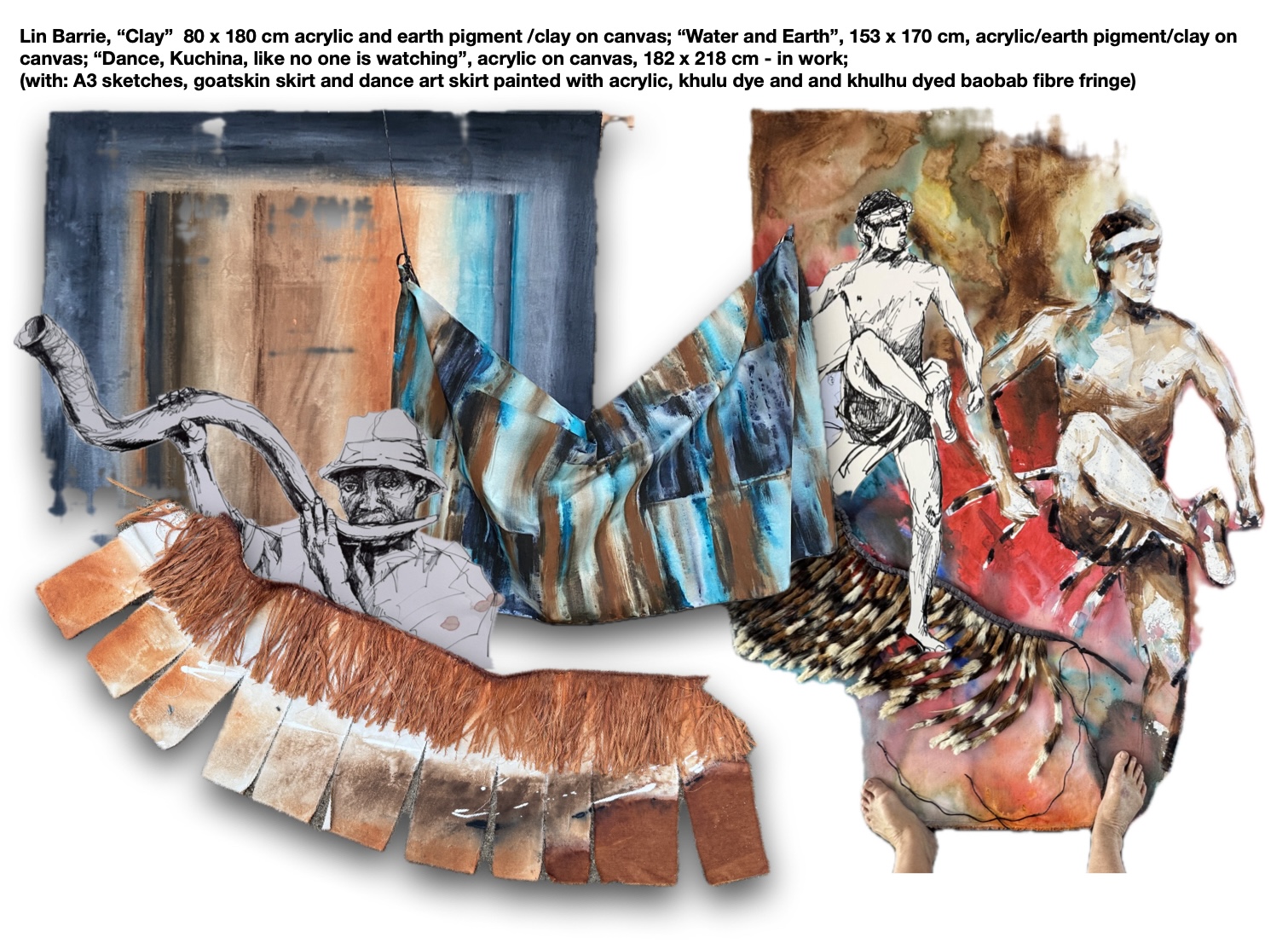
Here follow four of my art moodboards, assemblages of paintings in work, focussing at present on xangana/tsonga dance themes, which I will push further into figurative expression, stitching crochet and beading, collage and abstraction in the following months;
Lin Barrie, “Dance” 85 X 180 cm, acrylic on draped loose canvas, 2024, with “Ngano and Fire”, 153 x 170 cm, acrylic on loose canvas, plus “Dancing with my sisters, Dancing with my cellphone…”, acrylic and beadwork on stretched canvas, 3 x 4 feet, 2018;
(Moodboard with A3 sketch (drums), my rag fringe art skirt 1 and community crochet twine doilies)….
Lin Barrie, “Clay” 80 x 180 cm acrylic and earth pigment /clay on canvas; “Water and Earth”, 153 x 170 cm, acrylic/earth pigment/clay on canvas; “Dance, Kuchina, like no one is watching”, acrylic on canvas, 182 x 218 cm – in work;
(moodboard A3 sketches (kudu horn player and male dancer), purchased goatskin skirt and my dance art skirt painted with acrylic, khulu dye and and khulhu dyed baobab fibre fringe)
In my art practice, starting points always are my life sketches of people and still life, from which intense observations I can further express abstraction of my ideas, emotions, memories, into larger canvases…
Lin Barrie, Dance assemblage/Moodboard; “Dance, abstract rhythm”, created with mutsvairo, acrylic on loose canvas, 90 x 180 cm, 2023, and “Drum, Ngoma 1”, created with palm fronds, acrylic and Ink on paper A3 2025.
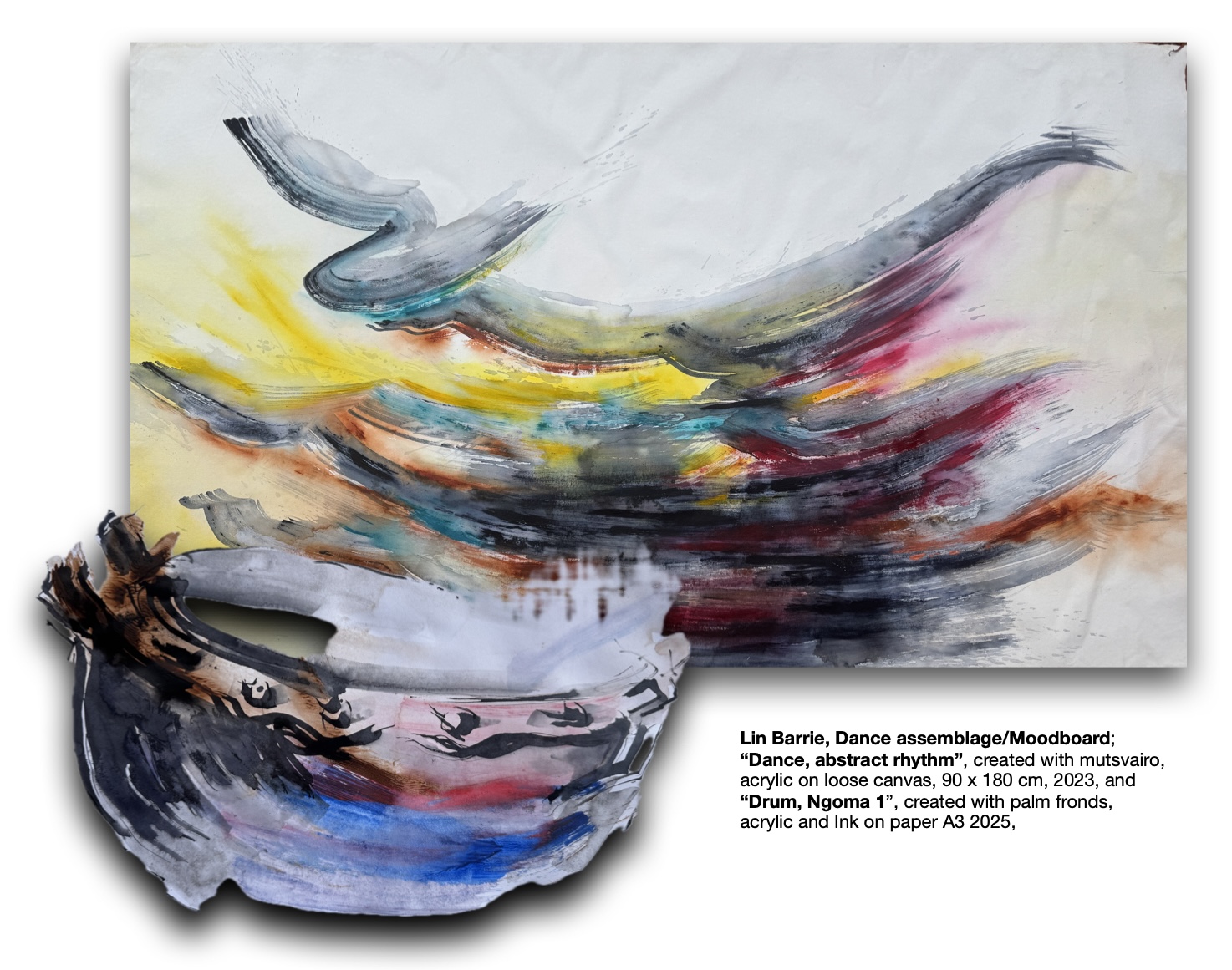
I am inspired to distraction and abstraction by the drums, ngoma, and kudu horn, hwamanda, the elemental heartbeats and horns of Gonarezhou….of Africa.
Lin Barrie, Dance assemblage/Moodboard; “Palm music 1”, created with palm fronds, acrylic on watercolour paper A3, 2023, and “Hwamanda, Kudu Horn,” diptych, created with palm fronds, acrylic and Ink on paper A3, 2025.
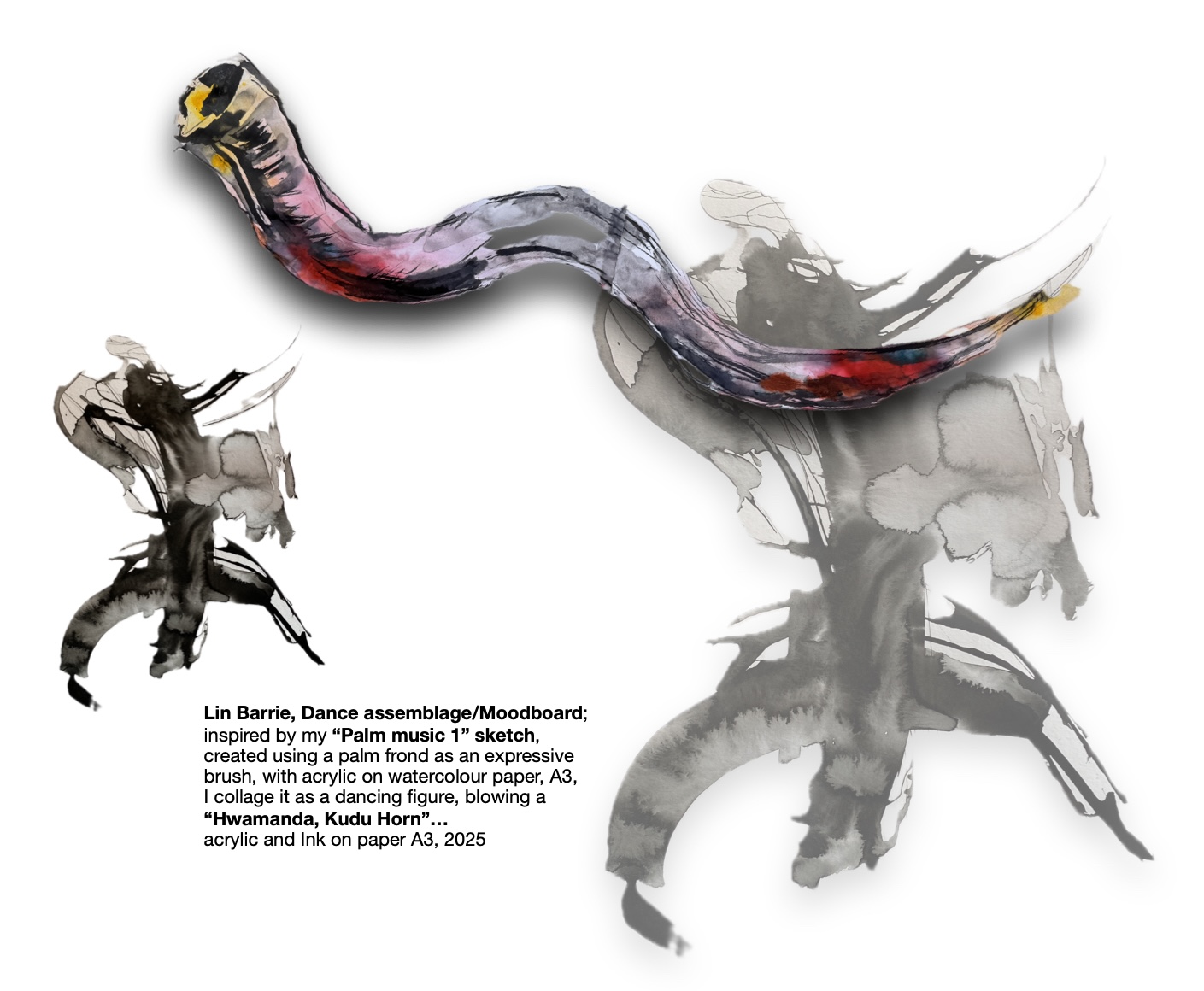
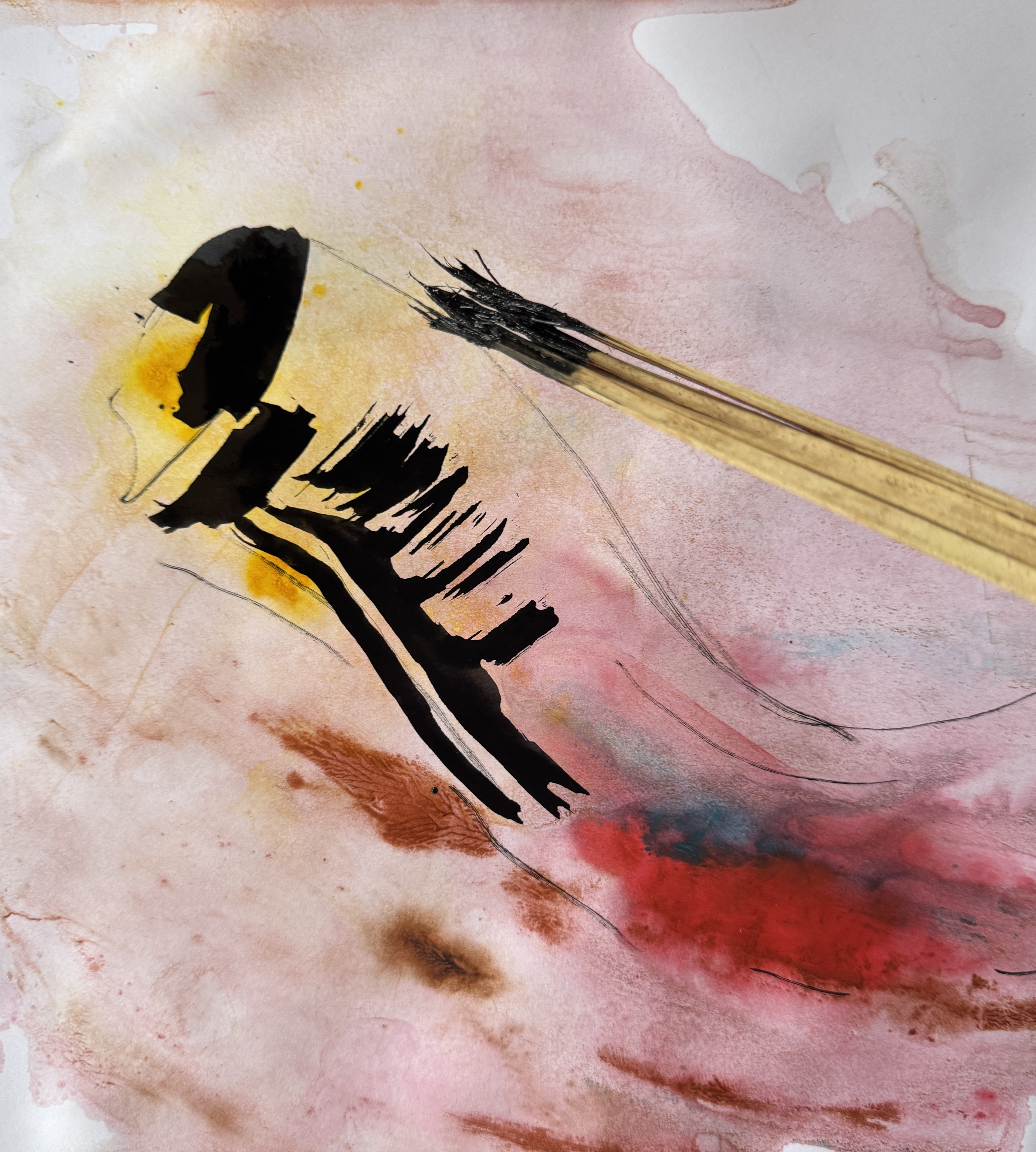
Inspired by painting with collected palm fronds, as brushes… my expression grows into a kudu horn…
I feel that Dance and dancing skirts, traditional and contemporary dance fabrics, the act of beading, stitching, fringing, bark dyeing, and of course music, are the strongest connecting threads across cultures and environments worldwide- #Fashion and #fabrics; #beads and #stitching; #dance and #music; #art and #painting; #assemblage and #collage; #traditionalcultures moving forwards creatively, embracing #communityconservation and “dancing with elephants!” #beadworkoncanvas #budulafestival #tsongaculture #xanganaculture #cagedculture let’s not ‘cage’ the cultures….
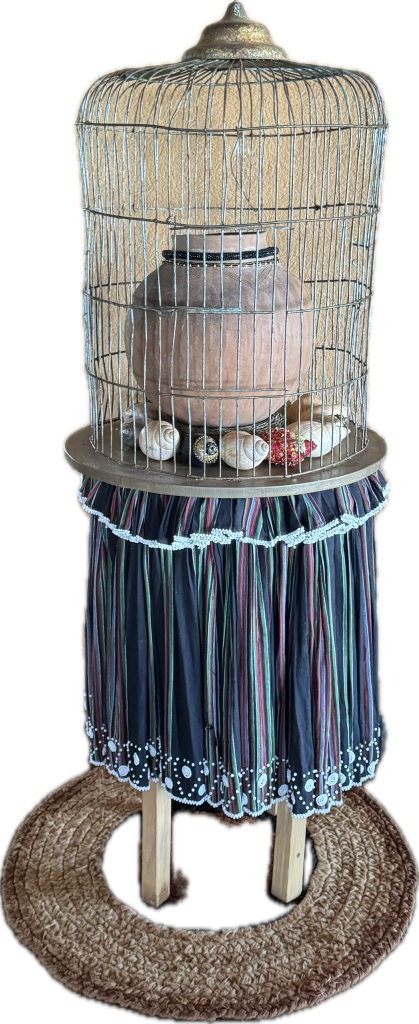
My art assemblage “Caged Culture” becomes a ‘dancer’ in its own right – with hand-beaded xibelani skirt, wooden table legs, and a wire birdcage torso enclosing jeweled totem snail shells (Humba) and hand coiled clay pot adorned with beads….
LET”S DANCE!!!

All artwork and photographs are my own unless otherwise stated.….


 wine and wild dogs
Thanks Lin. This is quite comprehensive
Pingback: Budula Dance Festival 2025; Dancing with Community at Boli-Muhlanguleni…. | wine and wild dogs