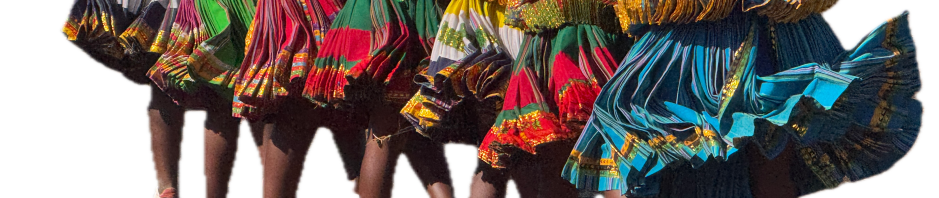
Building Sustainable Connections, Budula being an active, well used pathway.
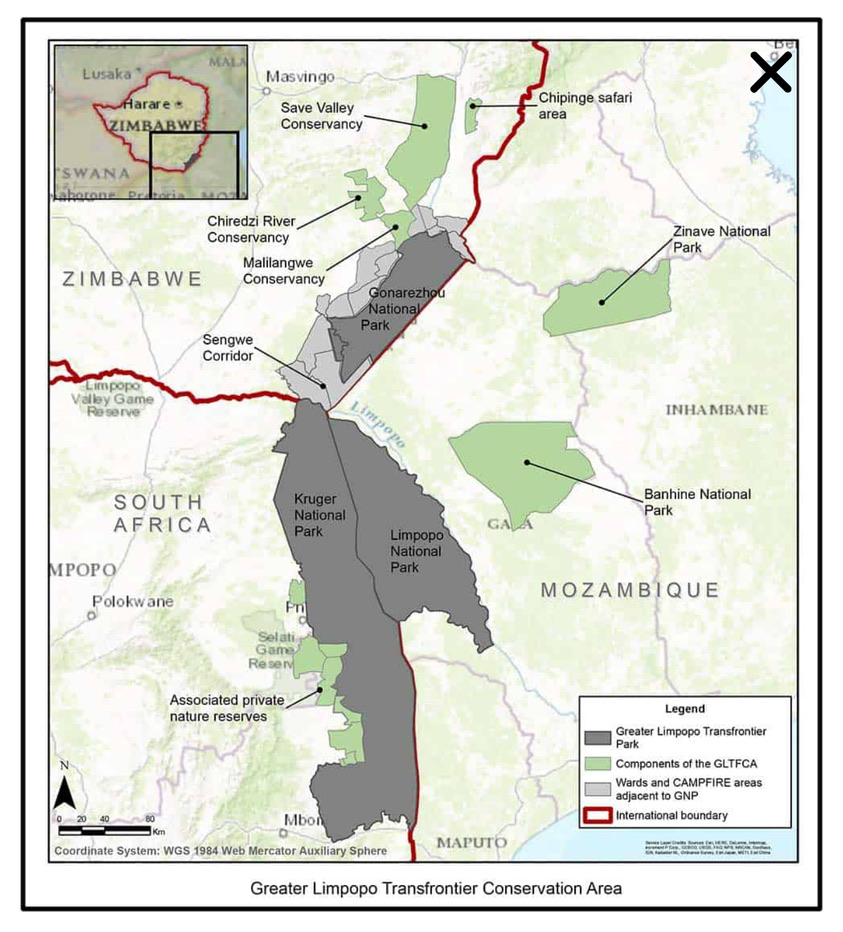
The Budula Festival 2025 is spearheaded by the Mahlanga Trust, focusing on Dance. A budula is an active pathway, a corridor, and so is an apt title, considering the transboundary collaborations we are engaged in as the Greater Limpopo Transfrontier Conservation Area, (GLTFCA). Building corridors and connections between communities and National Parks/wildlife areas within Zimbabwe and neighbouring Mozambique and South Africa. Focusing on actively sharing the unique Tsonga culture with other cultures, cultural practitioners and visitors from southern africa and from further afield.
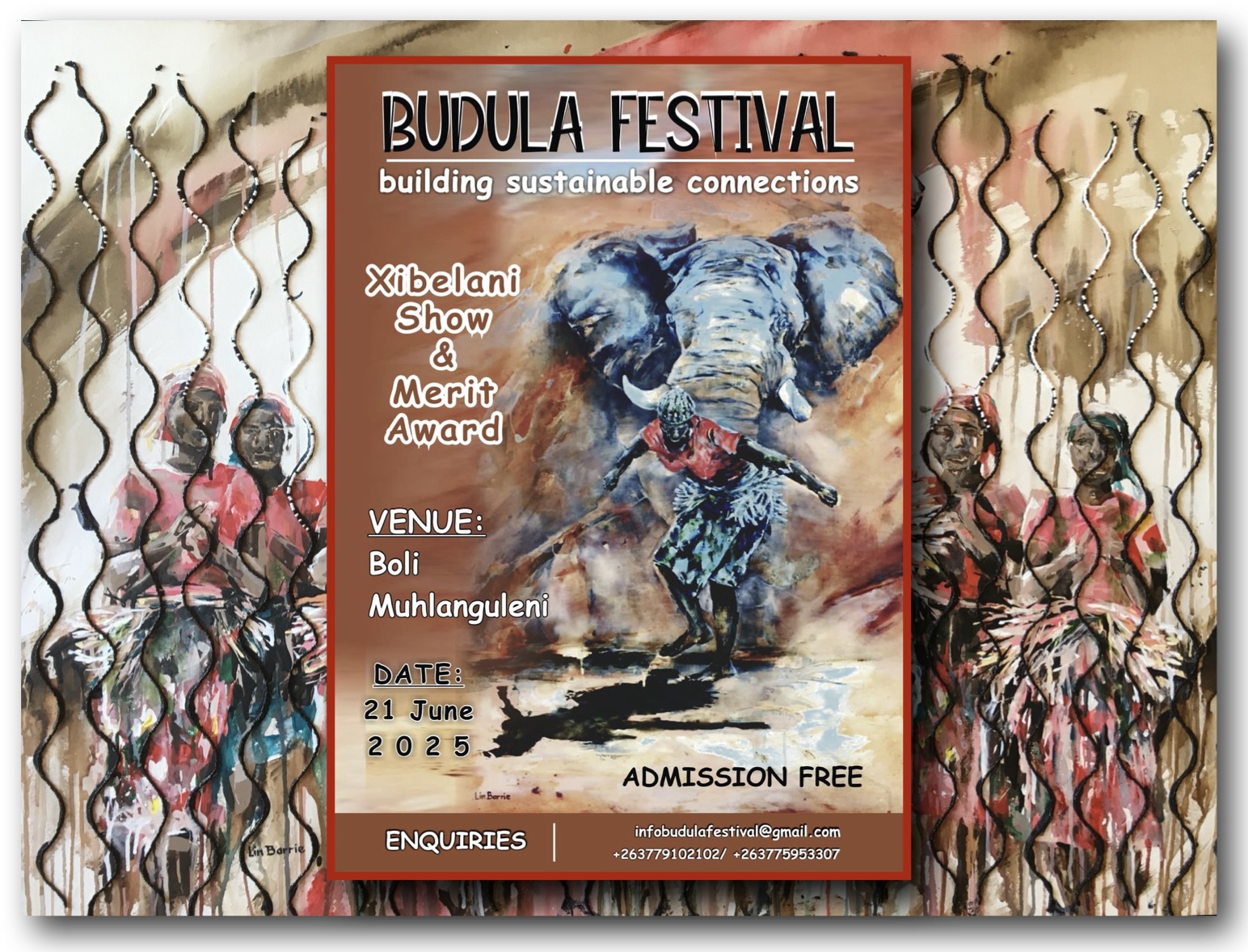
The Mahlanga Centre at Boli- Muhlanguleni, Chiredzi, Zimbabwe, was the venue for a day long Tsonga xibelani dance celebration, Mahlanga referring to the confluence, the meeting, of the rivers bounding the three countries Zimbabwe, Mozambique and South Africa.. a confluence of cultures, a confluence of conservation, a confluence of communities, a collaboration of cultural and conservation knowledge.
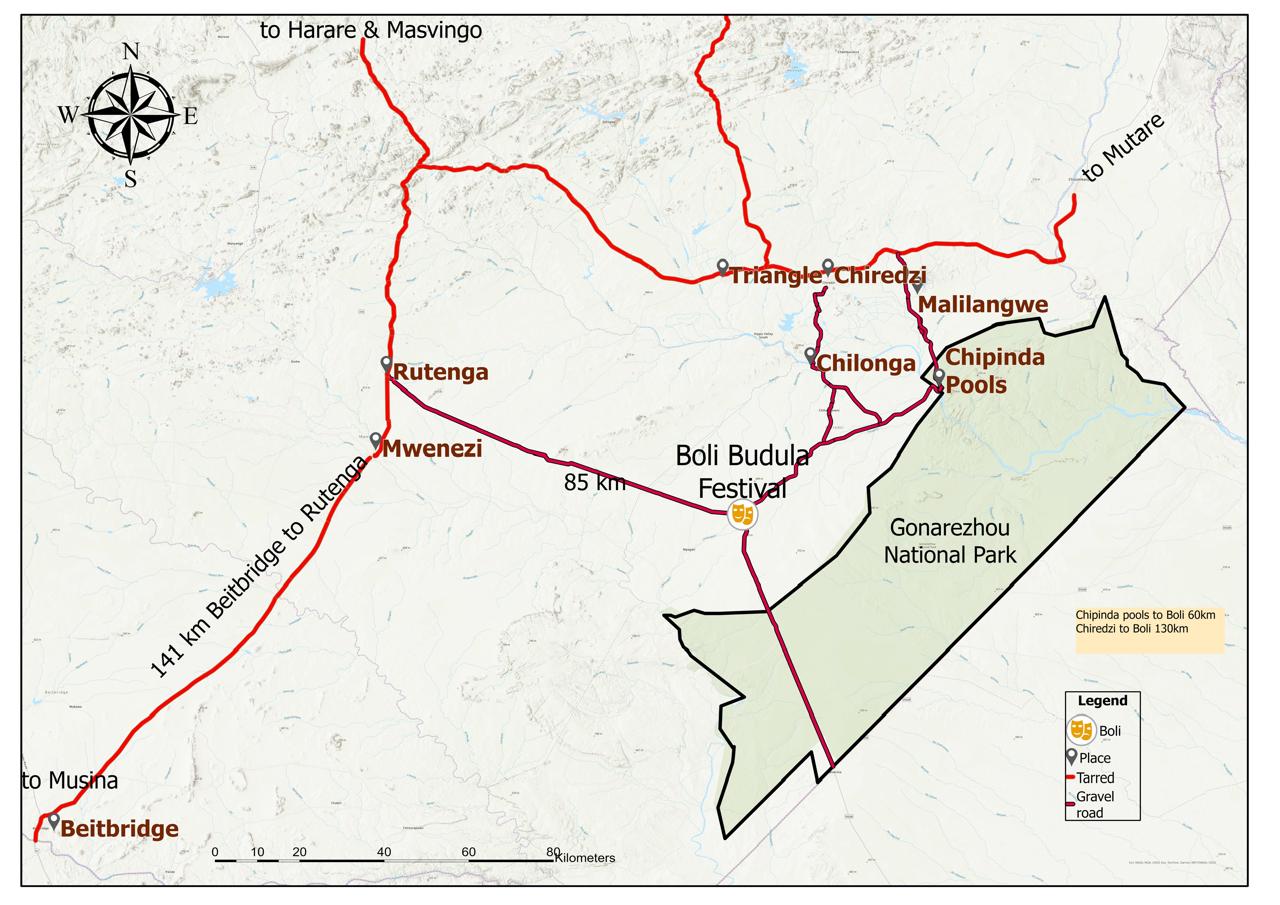
The day before we arrived to settle into our home-from-home, a very comfortable Mahlanga Mafundza Homestay accomodation within the Boli Village, and to plan the layout of our display stands and met with vibrant local organizers who were busy planning their own contributions
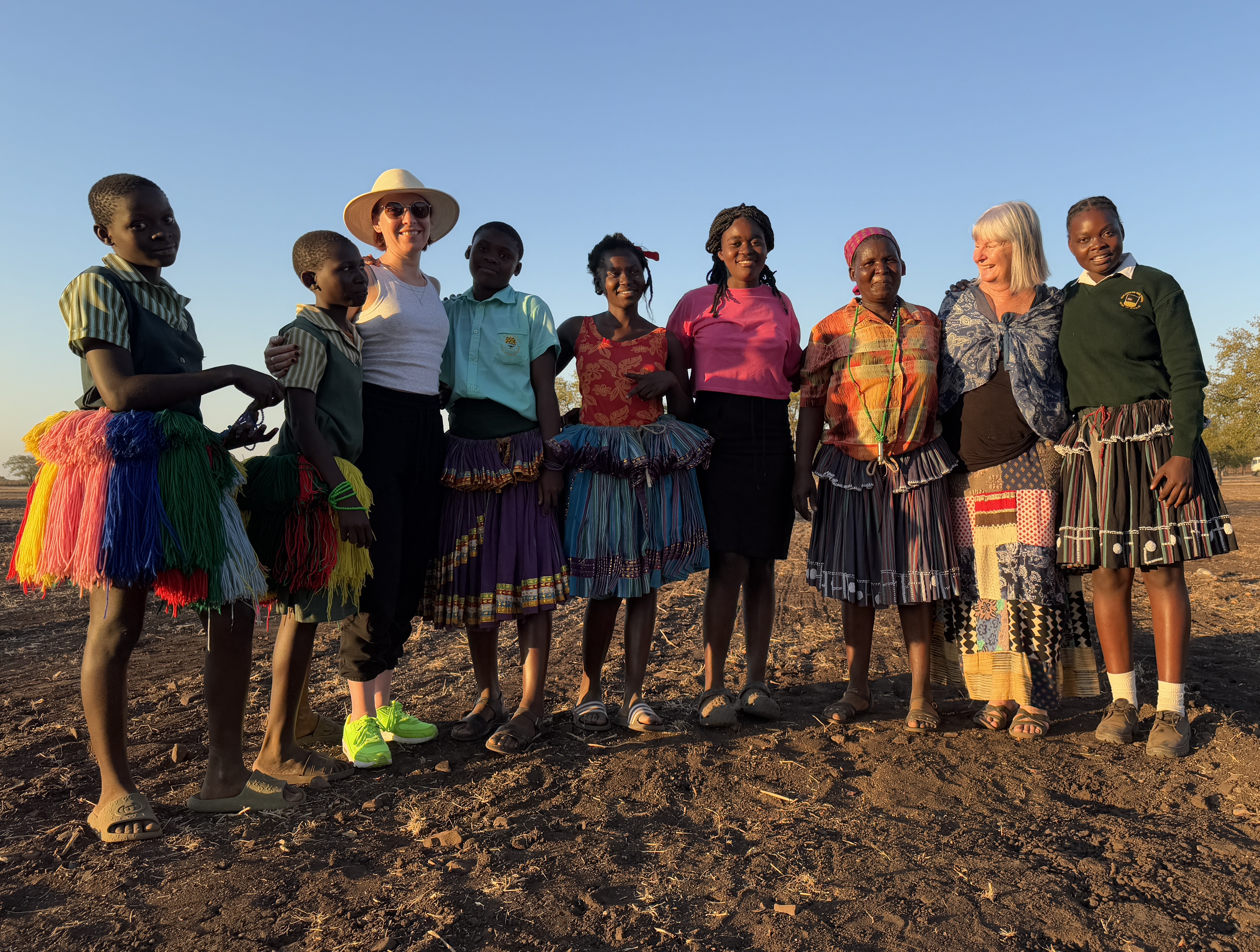
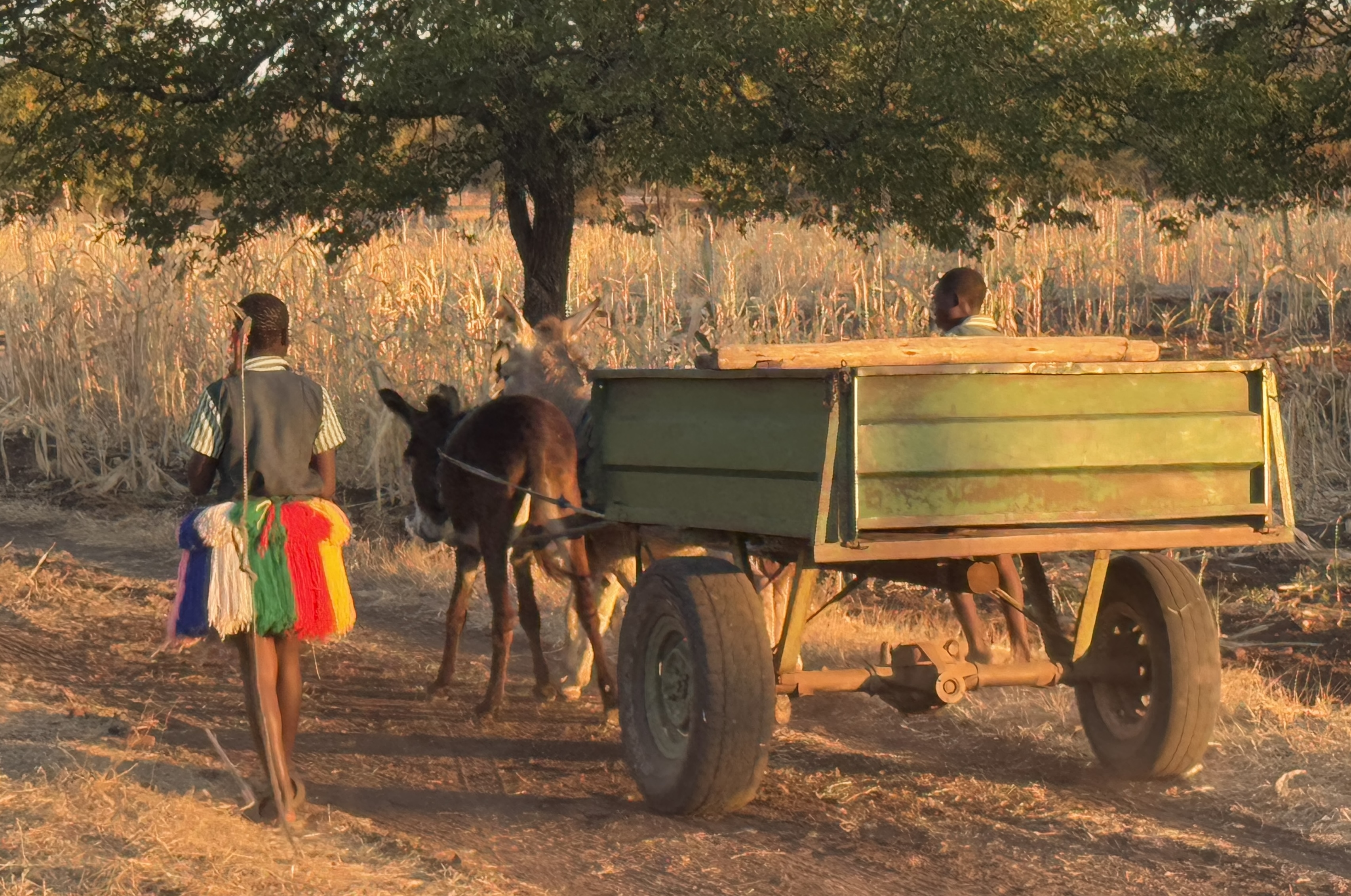
End of that planning/setting up day, we all wound our way, weary but happy, into the golden african dusk, to find our respective village beds for the night….
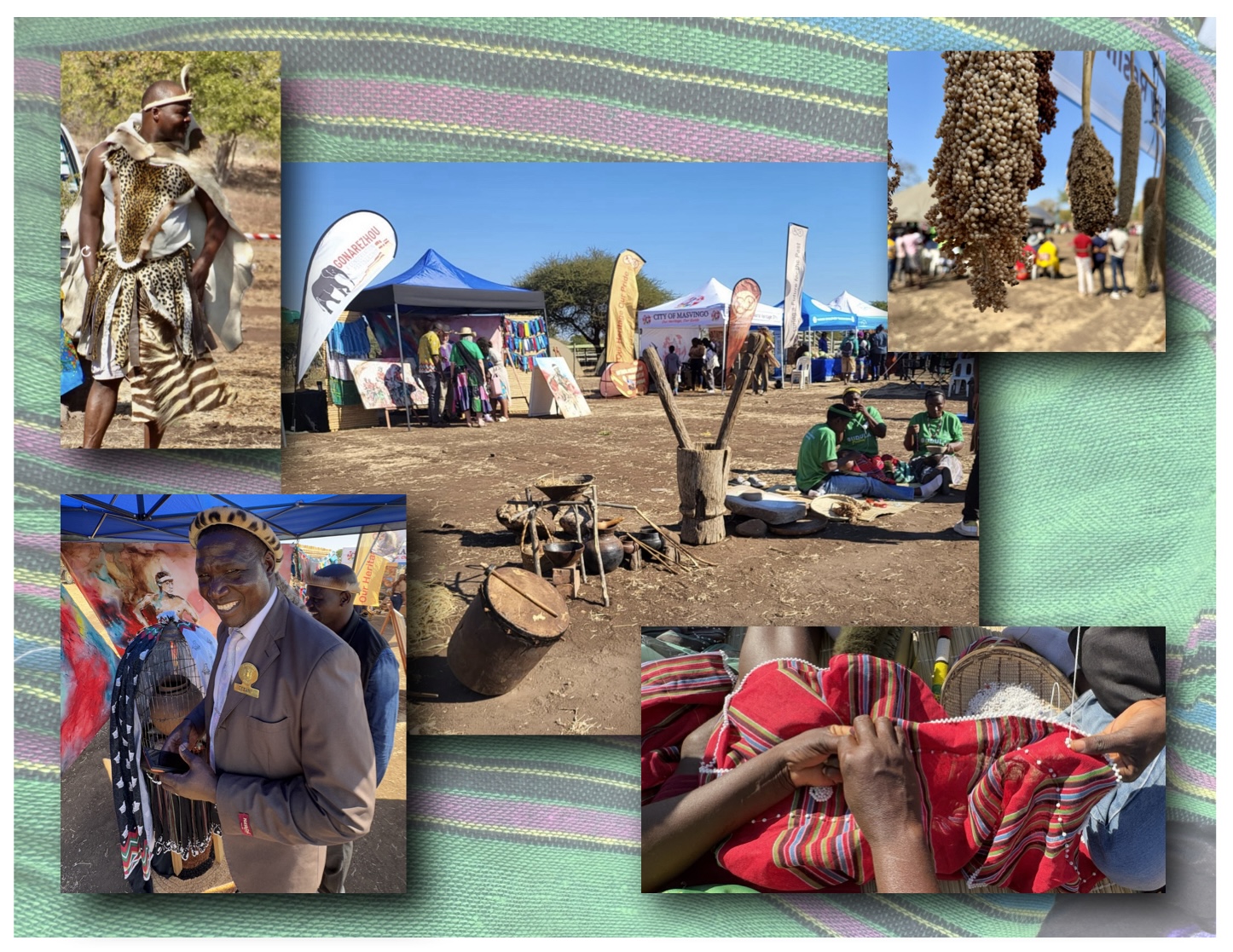
Then came the actual day of the Budula Festival… a sunny Zimbabwean Winter day, on 21st June, as we arrived early and exhibitors set up many inspiring displays in preparation for sharing a day of Dance, Music, Art, Conservation and Indigenous foods.
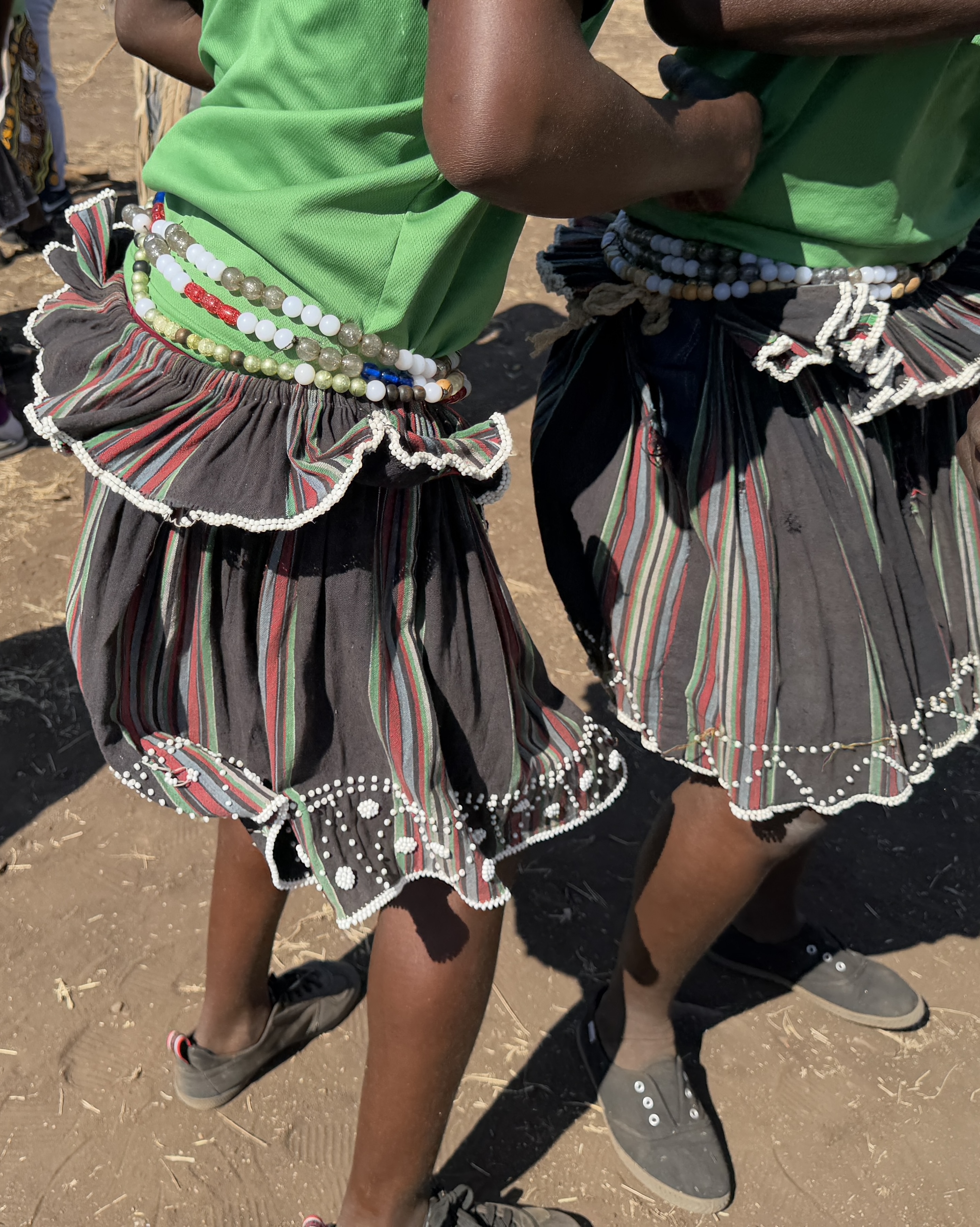
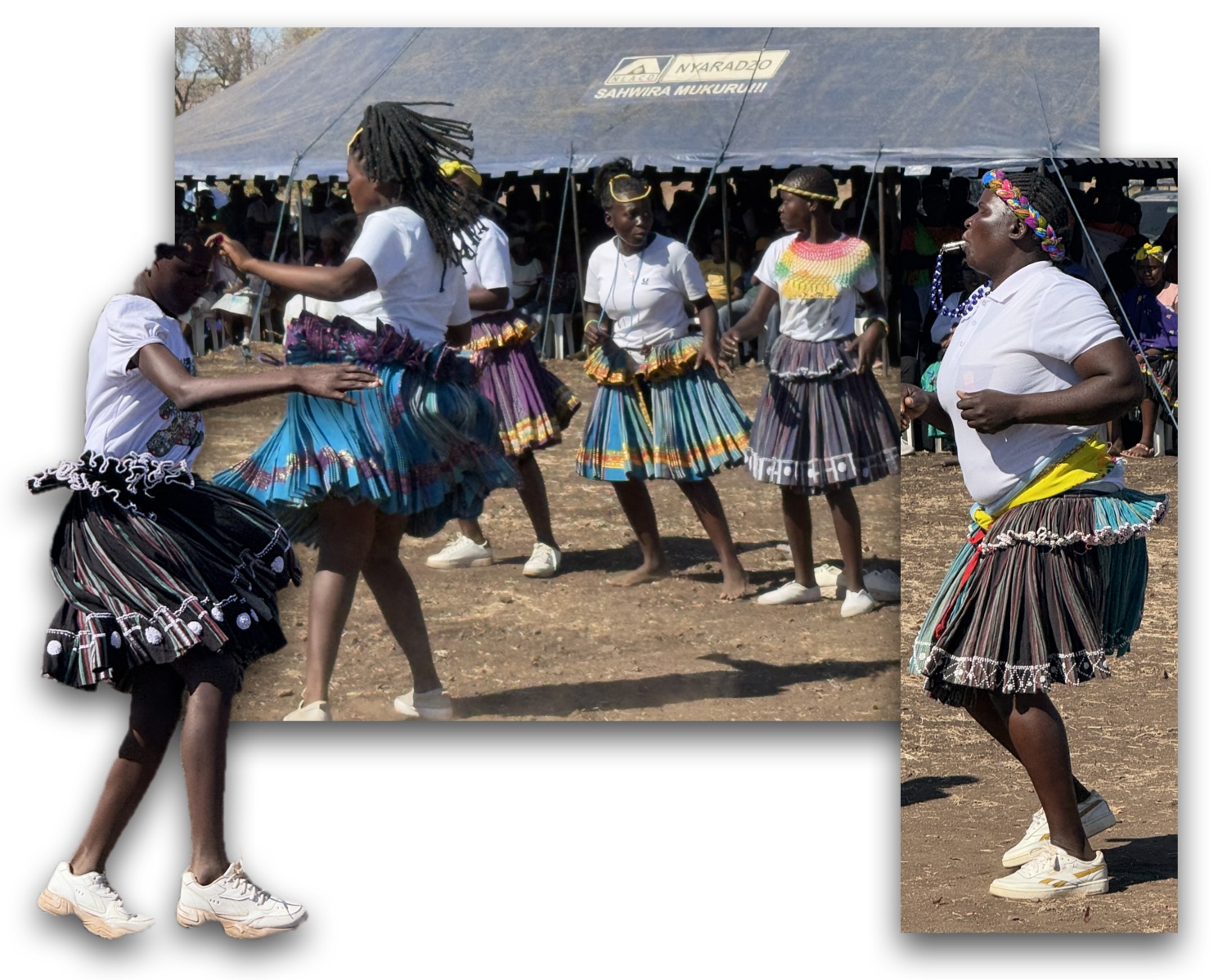
Xibelani skirts, of salampore fabric beaded in intricate patterns, swayed and shimmied as Kambako (Malilangwe) ladies celebrated their arts culture and beading display ….
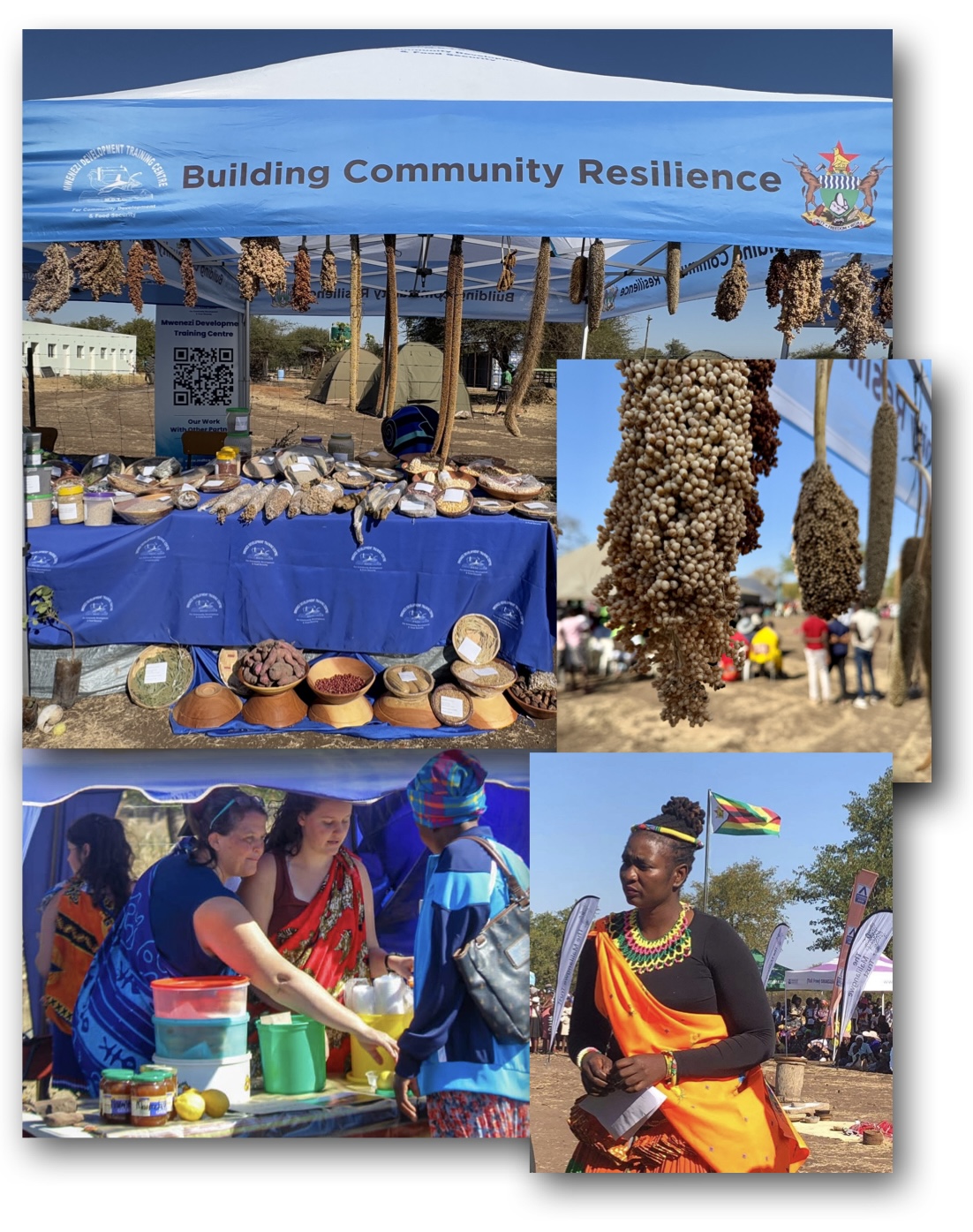
Indigenous foods were fully appreciated on the wonderful Mwenezi Development Training Centre traditional food exhibit, and the local Lirhandzo School served fresh granadilla juice, as vibrant Lister Matsilele helped to compere the event….
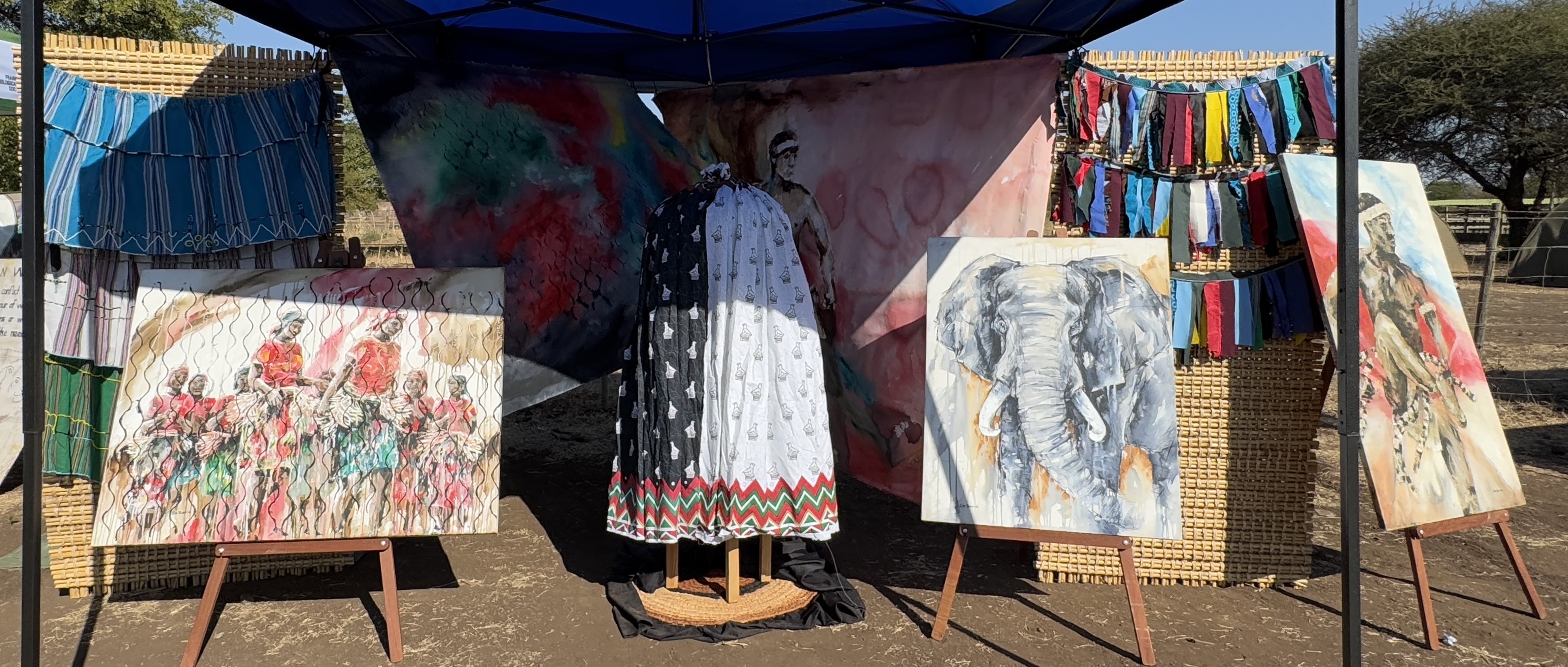
My art display was partly themed “Dancing with Elephants”, (sited aptly next to the GCT and African Wildlife Conservation Fund display…. ) and reflecting on the challenges that communities face in co-existing with wildlife. Conservation and Culture collaborating …

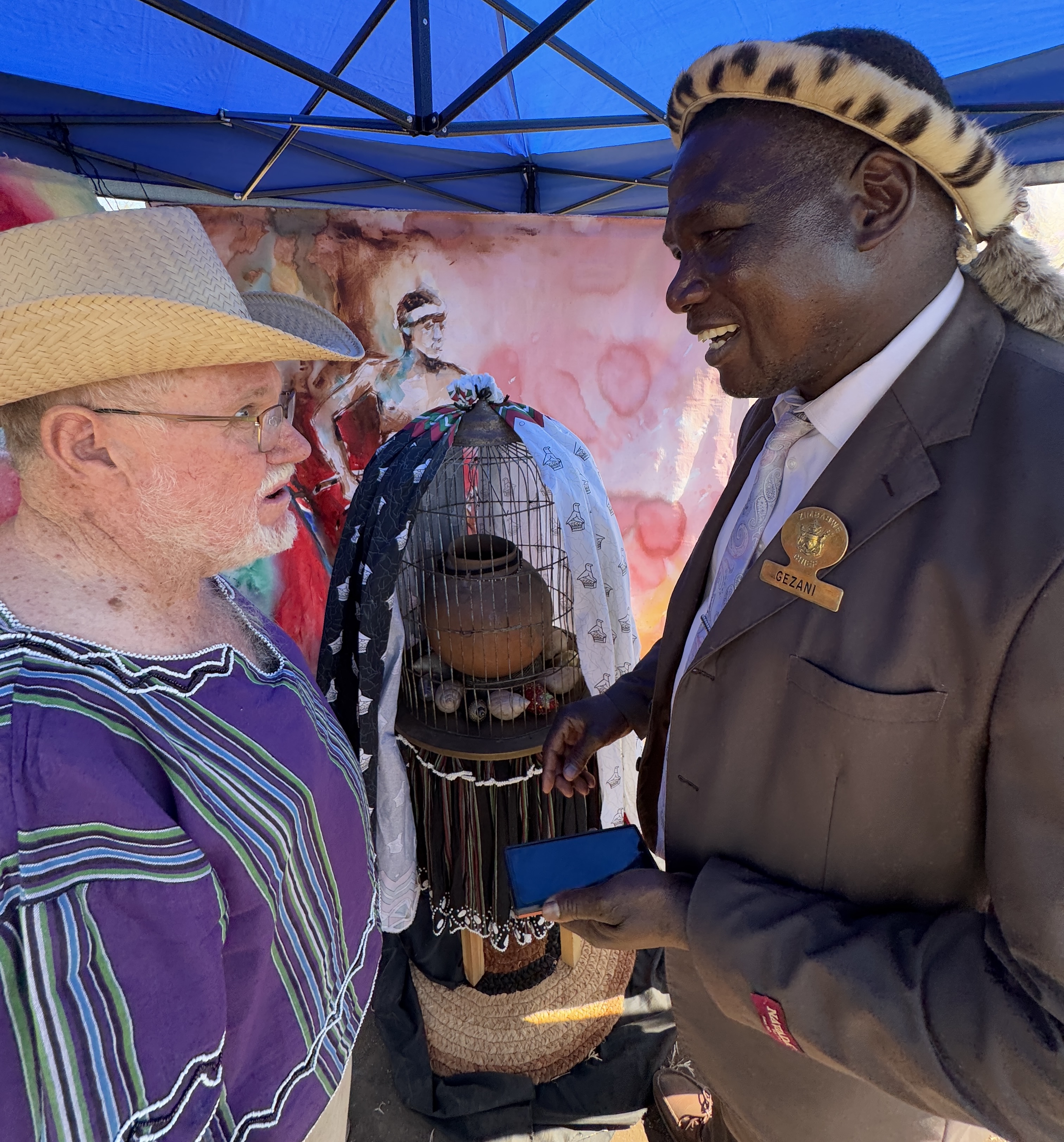
Chief Gezani visited our displays, chatting to Clive Stockil about my art installation, “Caged Culture”..
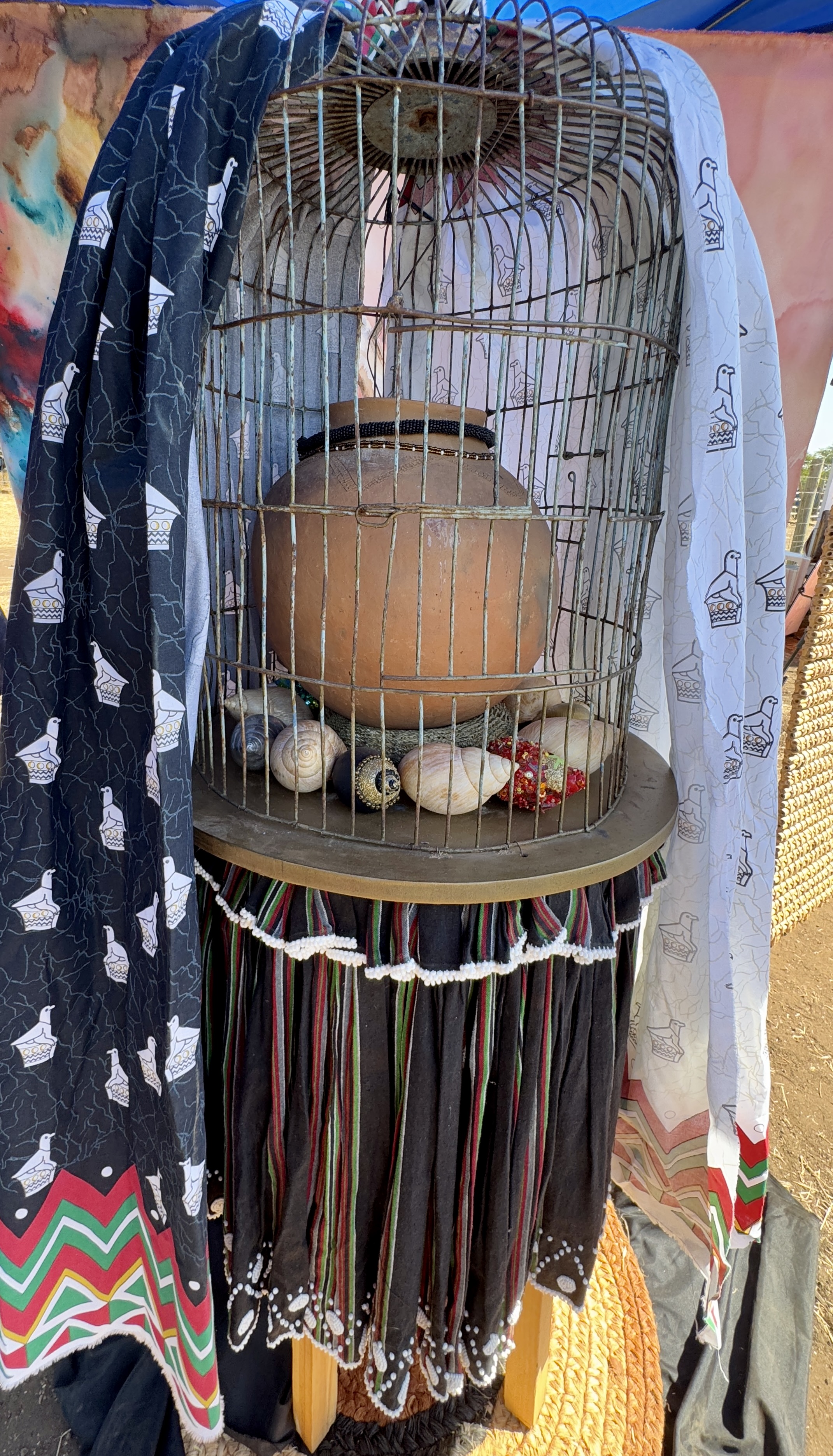
Lin Barrie, art installation, “Caged Culture”… do we protect it, display it or hide it? What is culture after all if it is not celebrated and growing?!….. my art installation is a woman “under wraps” which can be pulled aside to reveal a clay pot (a beating heart) topped by beads and resting on a hata of totemic giant snails, all encased in a corset, (a torso) of a salvaged wire birdcage. A chibabela beaded dance skirt sways beneath atop wooden legs ..
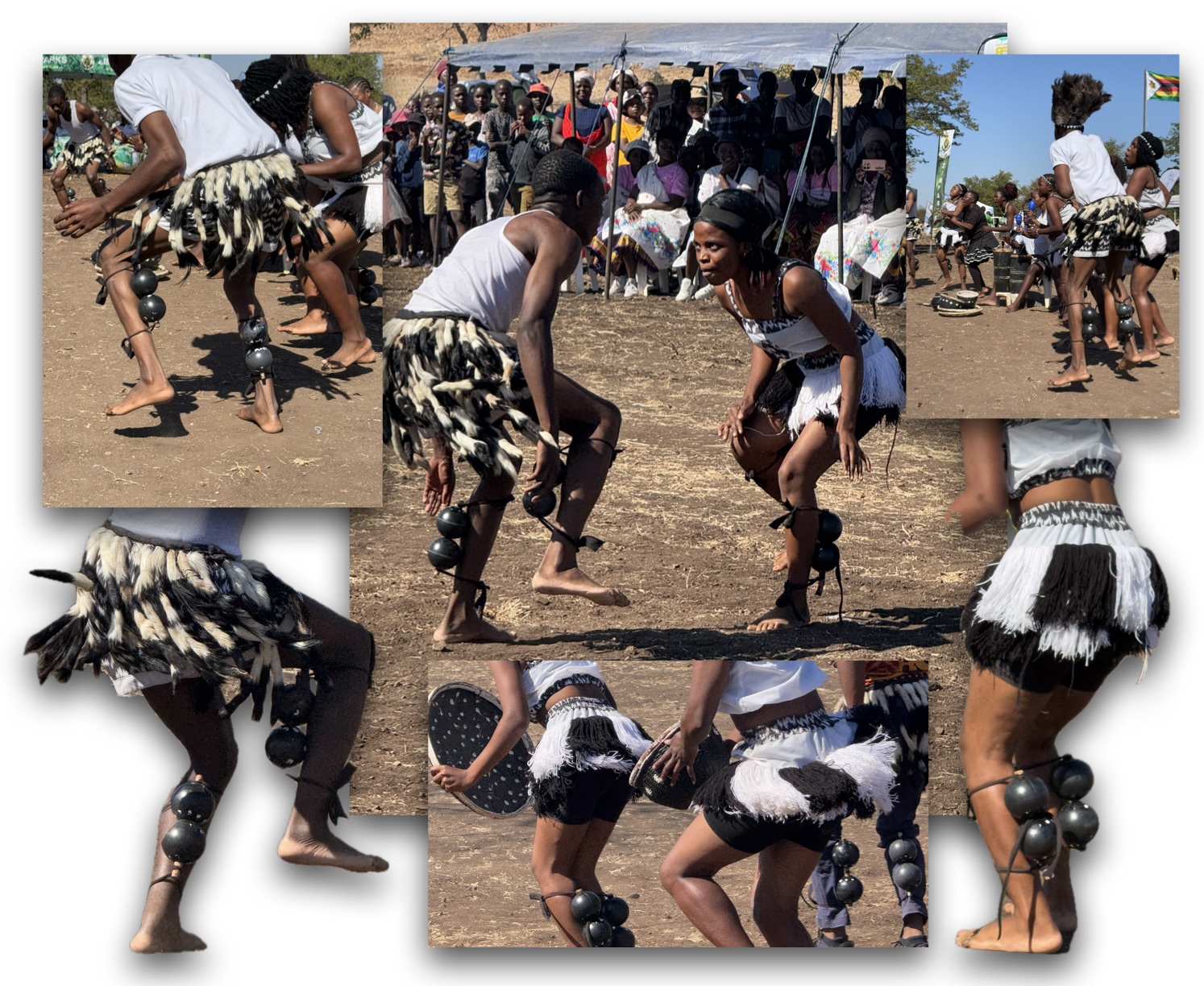
Masvingo Teachers College provided a shona guest dance group display to start the proceedings….
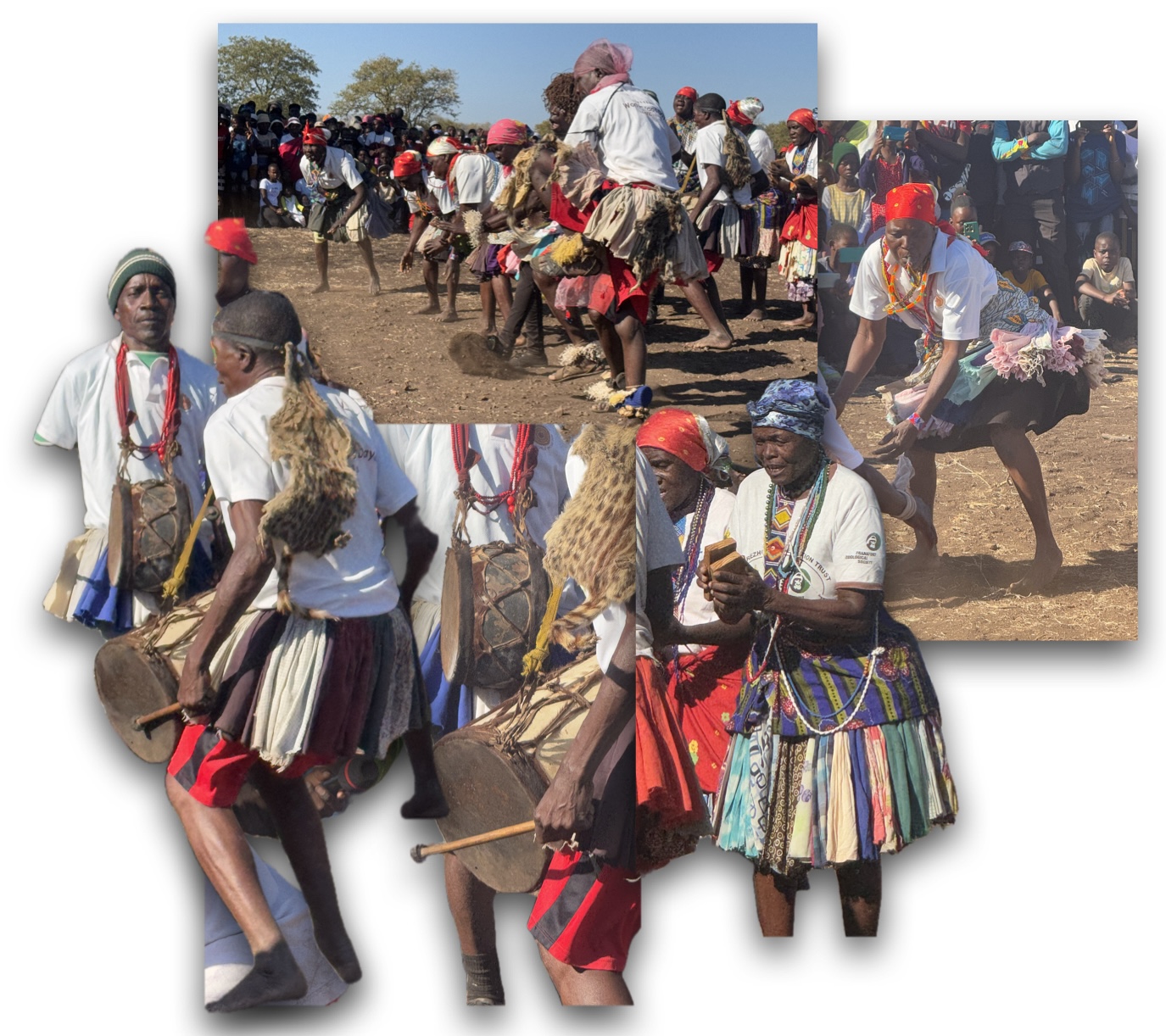
Of course the MOST IMORTANT events of the day were the xibelani dance teams, (celebrating womens’ dance and dress), eight Chiefs/headmen from the surrounds of Gonarezhou submitted their ladies dance teams to compete. The variety and style of xibelani on show was vibrant, truly joyous.
1. Chief Mpapa…
2. Headman Ngwenyeni …
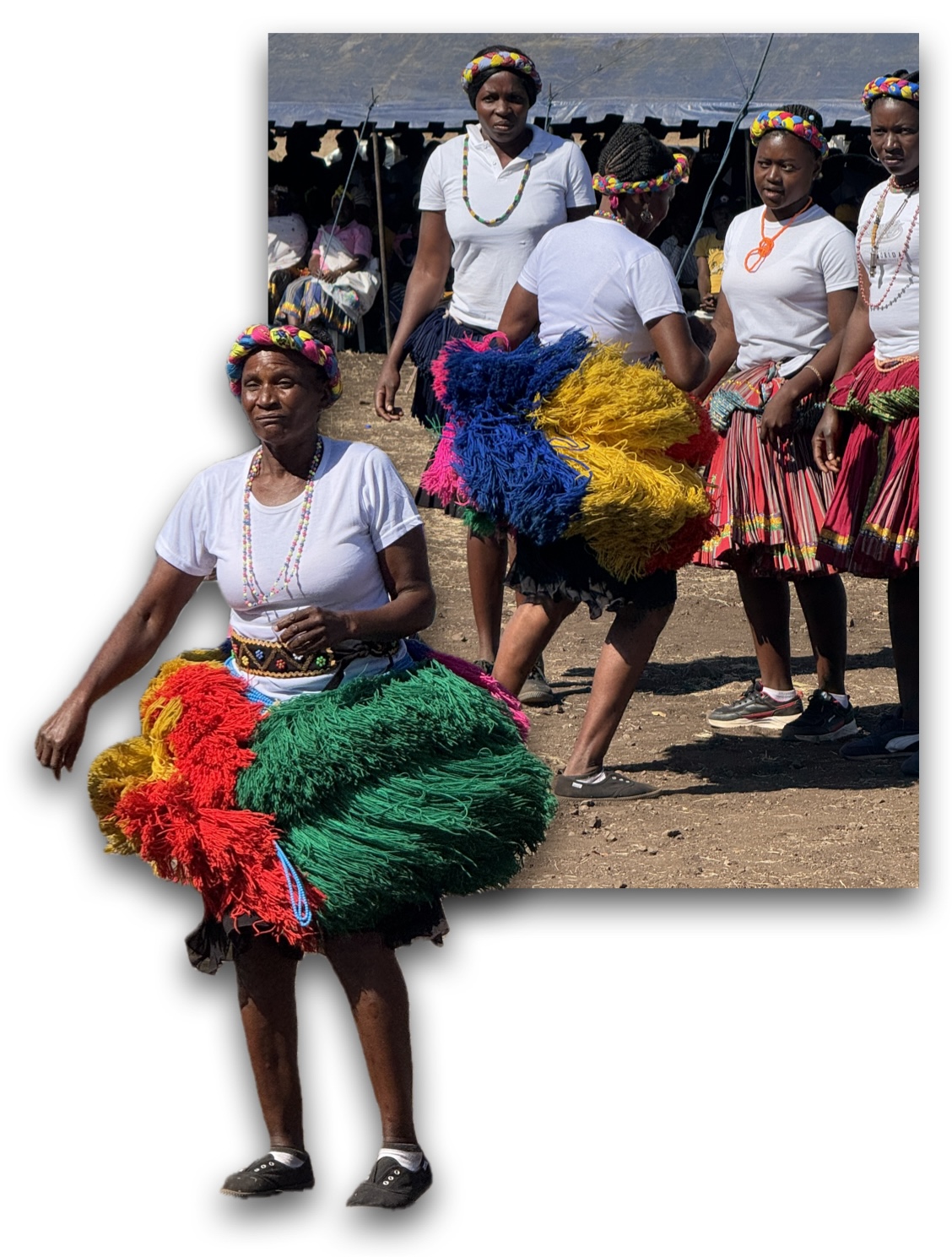
3. Chief Chilonga….
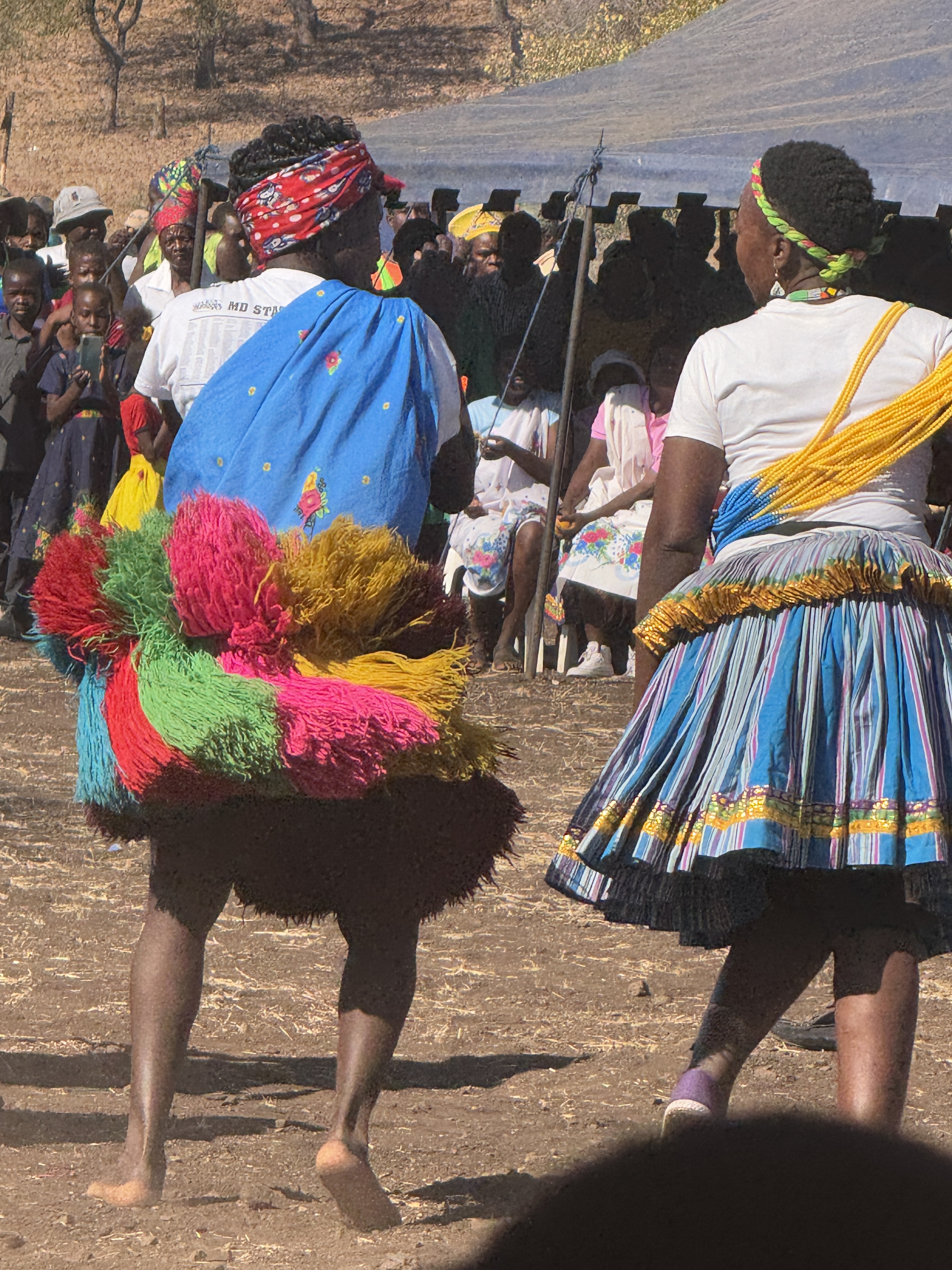
4. Chief Masivamele
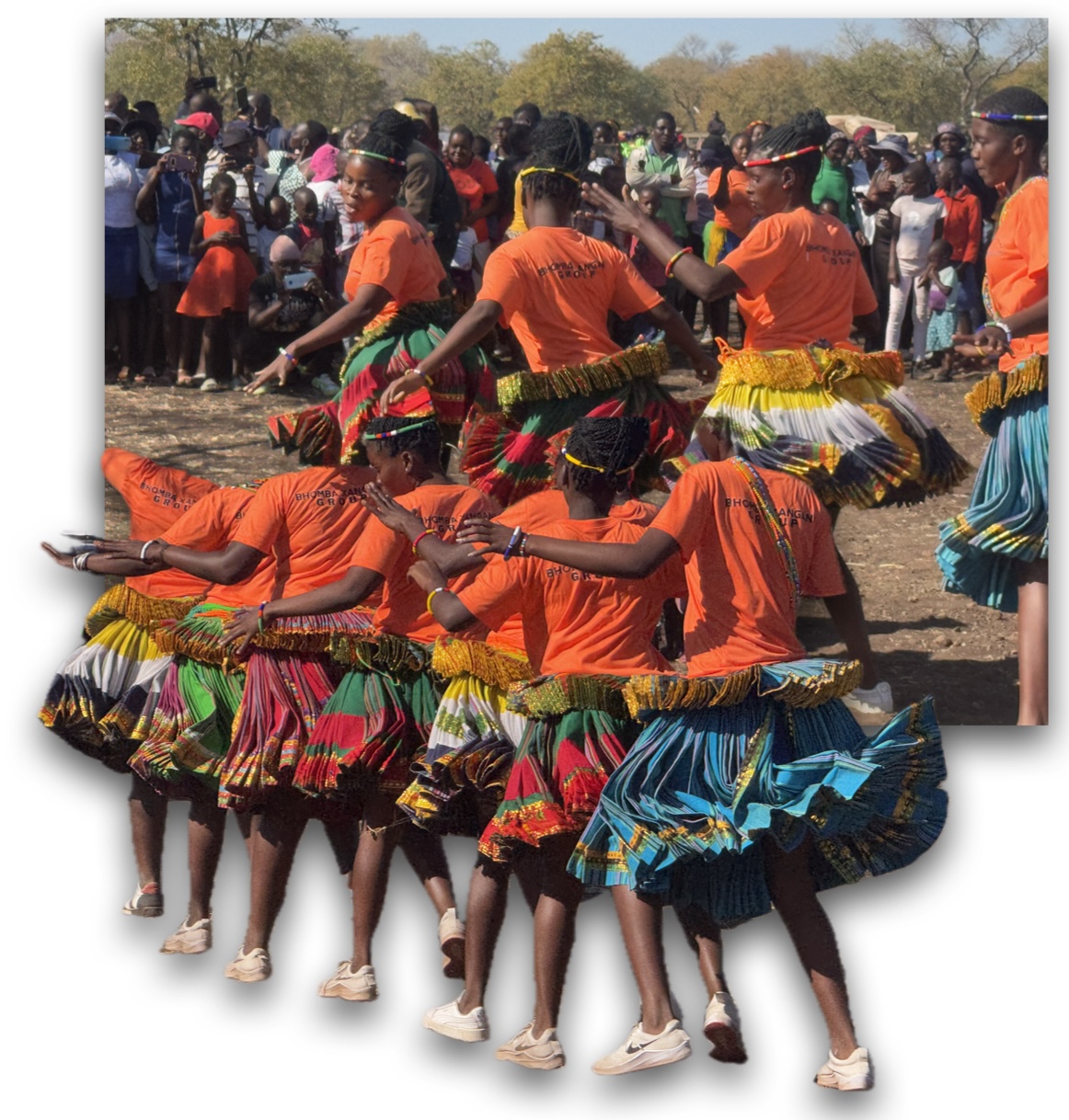
5. Chief Tshovani ….
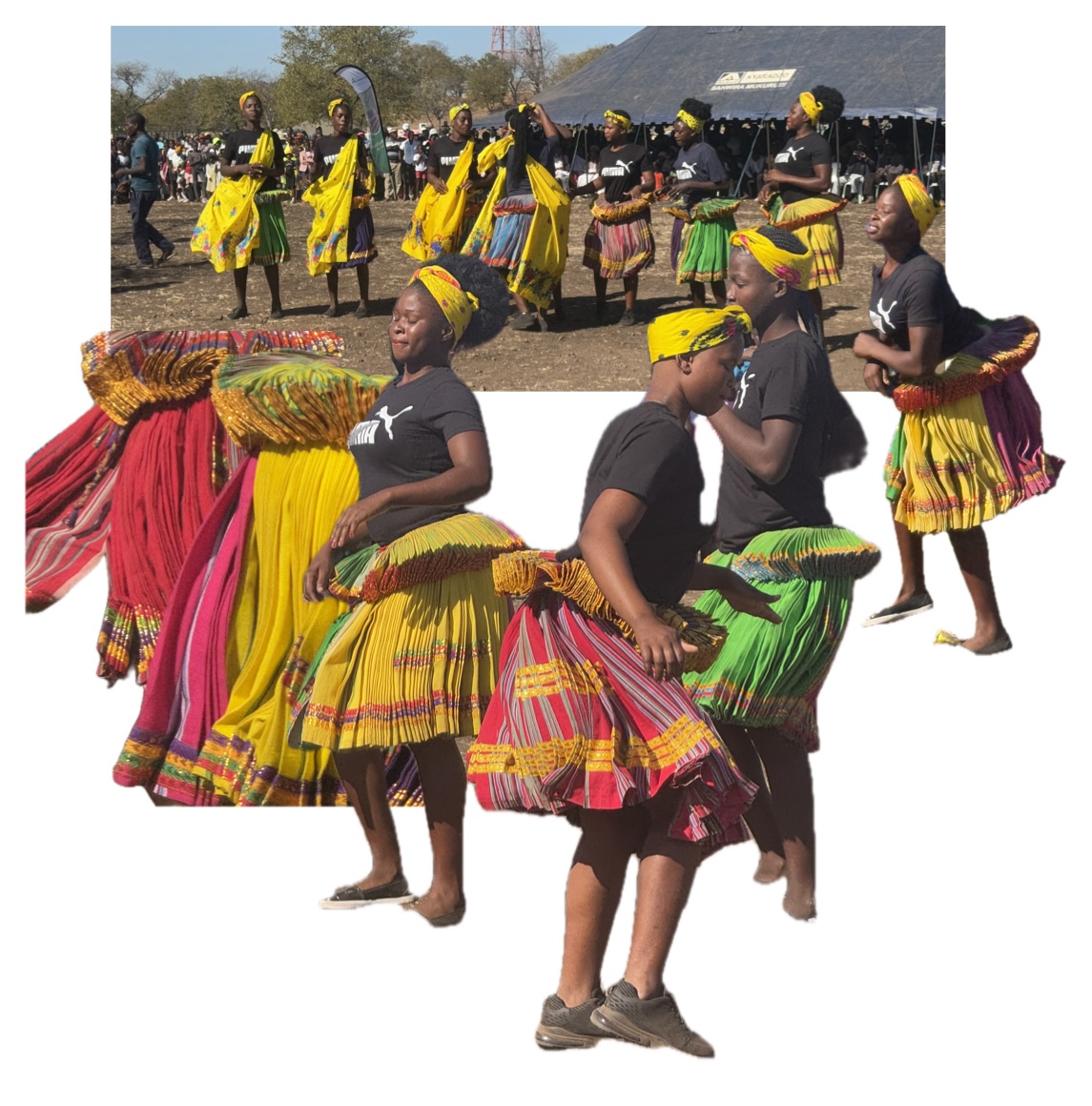
6. Chief Gezani
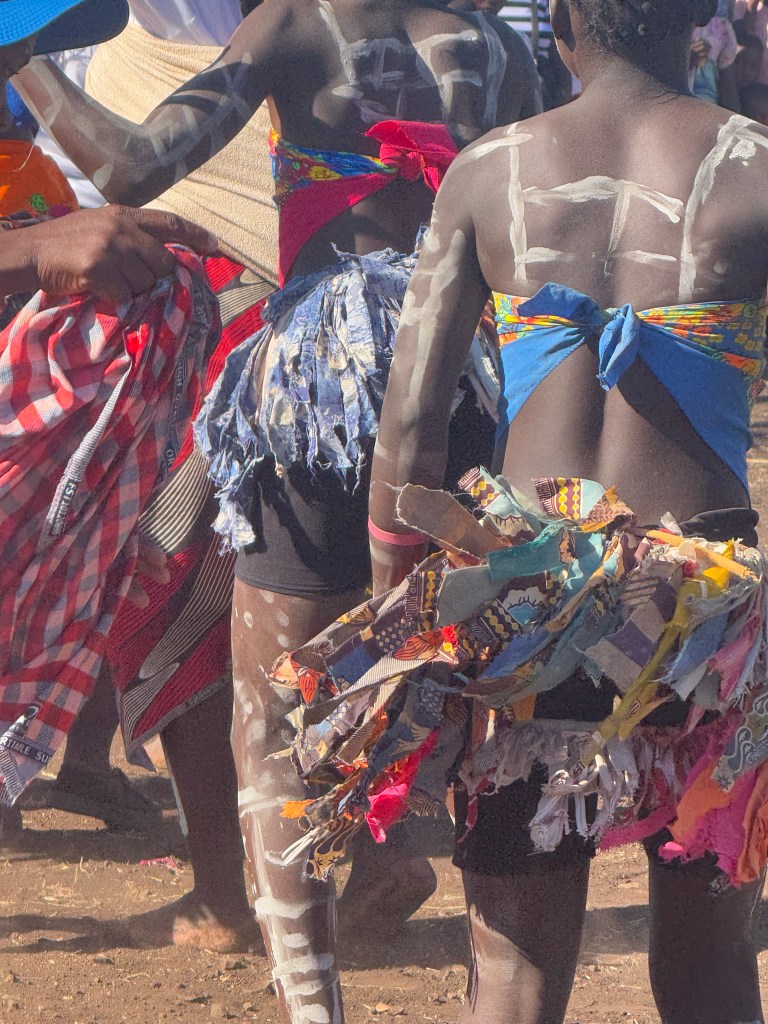
7. Chief Mahenye….. Magulegule – girls initiation dance, with kaolin painted body art…

8. Chief Sengwe
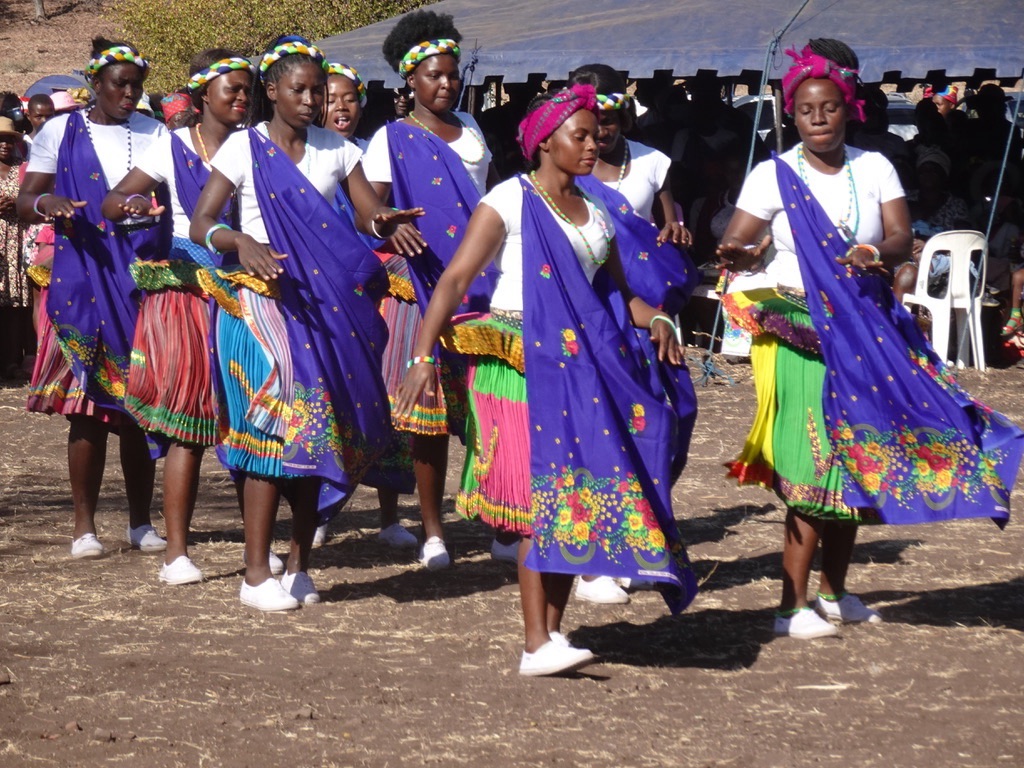
and here are Chief Sengwe’s dancers unwrapped!!!!….
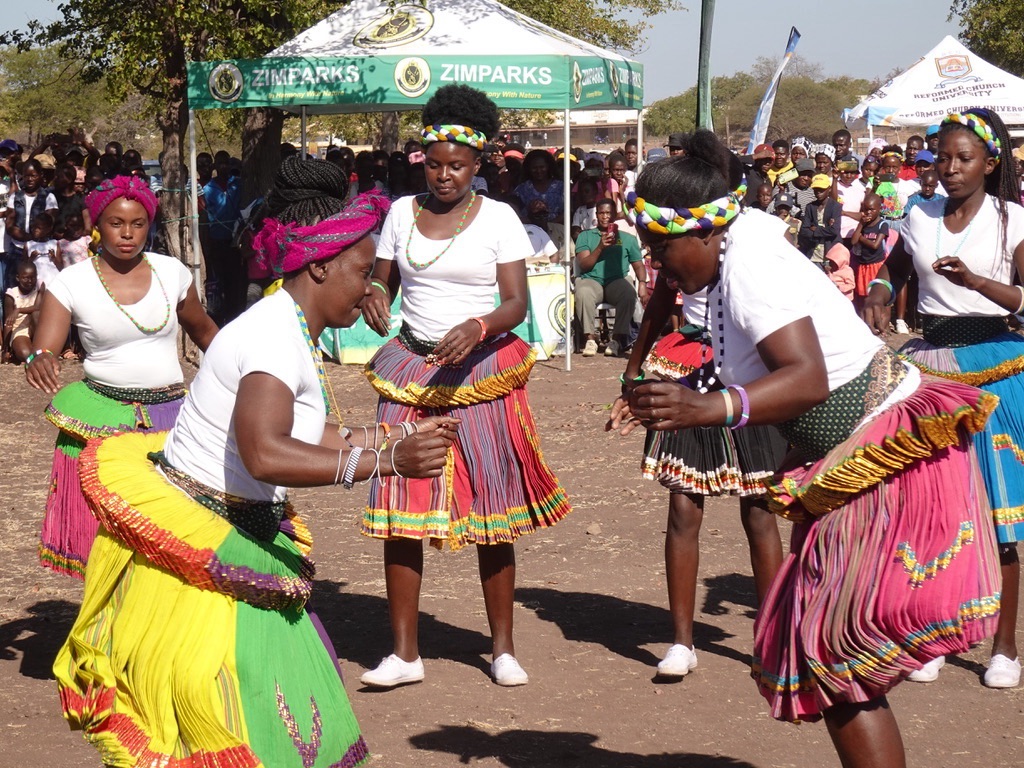
Chief Gudo, adjacent to the Save Valley Conservancy, provided a guest dance group…
Mahlanga Trust chairperson, Gift Machukele, and Guest of Honour Professor Never Mubuko (representing the Director General of Zimparks, Prof. Edson Gandiwa), present a Community Merit Award of Thanks from the honourable Chiefs of the area, to GCT co-founders Hugo and Elsabe Van Der Westhuizen
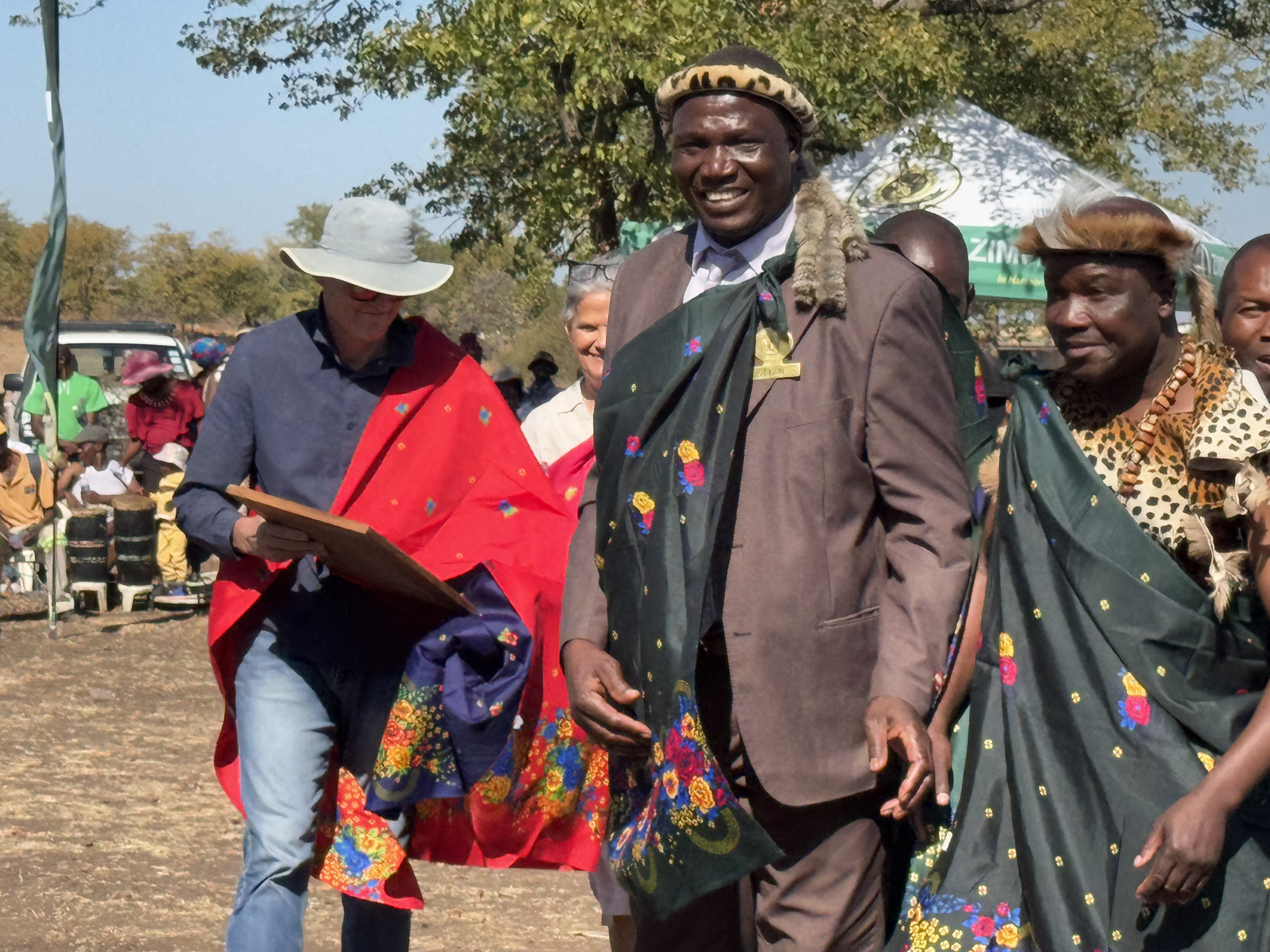

Guest of honour Professor Never Muboko, representing Professor Edson Gandiwe, DG of ZimParks
Prizes went to:
- Chief Tsovani dance group.
- Chilonga number 1 dance group
- Sengwe dance group

List of Exhibitors at the Budula Festival Launch 2025:
1. National Museums and Monuments
2. Econet Zimbabwe
3. Kingdom Blue Funeral Services
4. Nyaradzo Funeral Services
5. Agritex
6. Mahlanga Cultural Village Group
7. ZIMRA (Zimbabwe Revenue Authority)
8. ZimParks (Zimbabwe Parks and Wildlife Management Authority)
9. Gonarezhou Conservation Trust
10. Takaza Driving School
11. Joshua Mqabuko Technical College
12. Marondera University of Agricultural Sciences and Technology
13. Frankfurt Zoological Society
14. Lin Barrie Art
15. Mwenezi Development Training Center
16. The Malilangwe Trust
17. Reformed Church University
18. Masvingo Teacher’s College
19. ZBC TV
20. National FM
21. Lirhandzo School( Mrs Schimper)
22. Chiredzi RDC
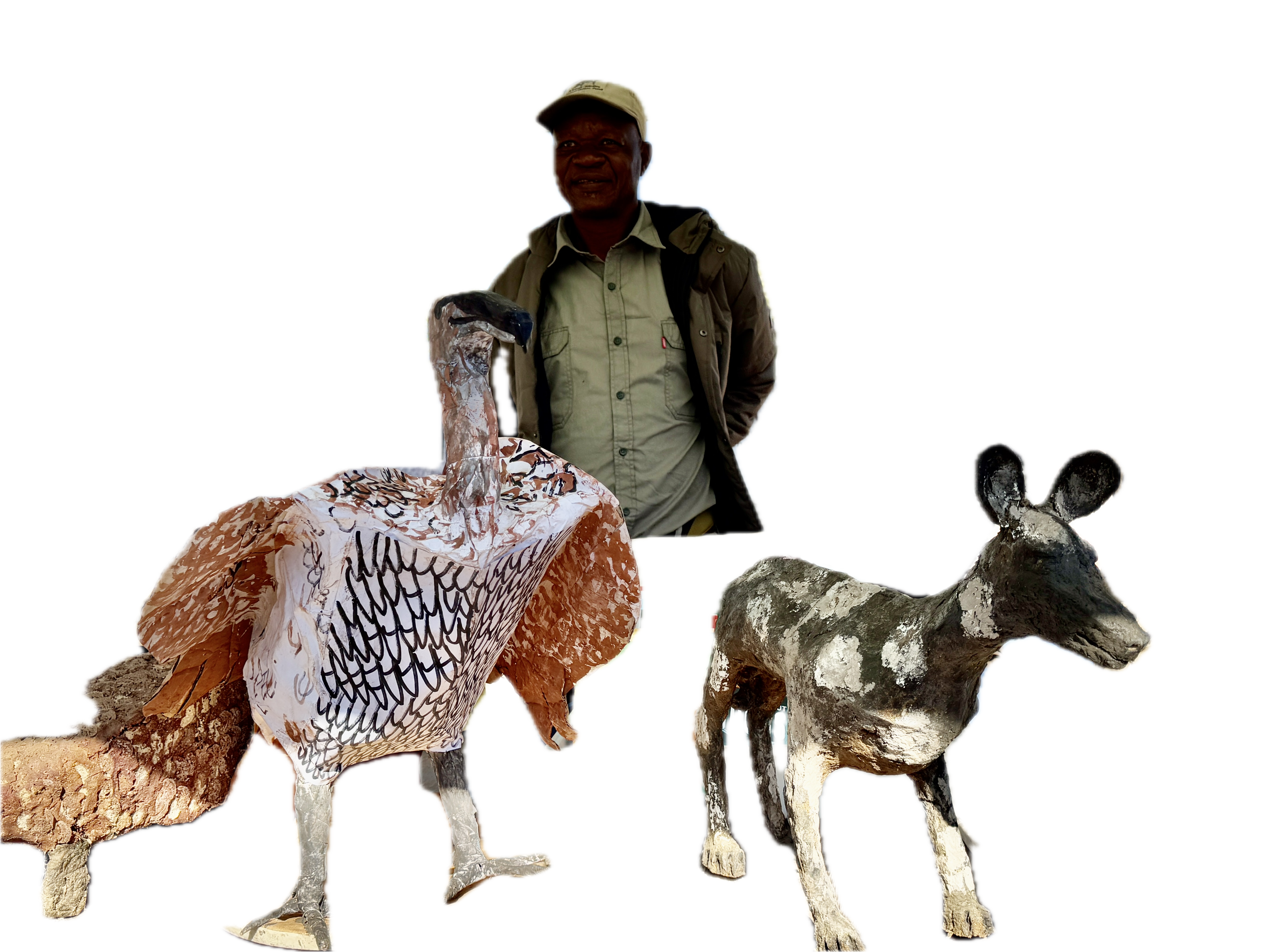
23. African Wildlife Conservation Fund (AWCF) ..Here we see Rueben, chief field manager of AWCF with delightful paper mache sculptures of endangered wildlife created during outreach programmes by schoolchildren from around the Gonarezhou National Park…
Some media present were:
Auxeni Radio Station, ZBC, (who captured great action as people danced along)!…..

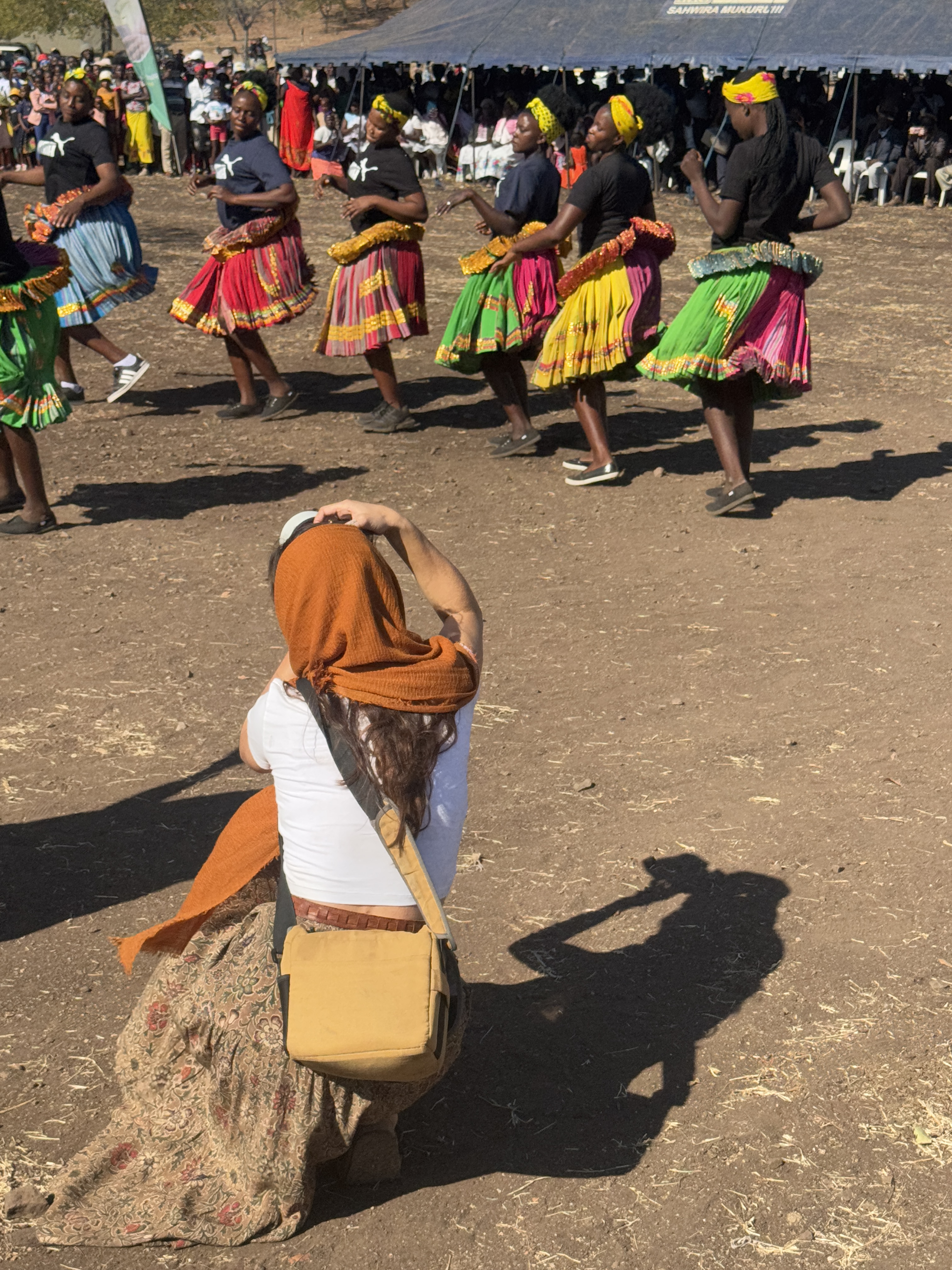
ZIMFM, Lowveld Media Trust, plus Kalai Faye Barlow, of Obscura Media seen here capturing the moves of Chief Tshovani’s dance team…
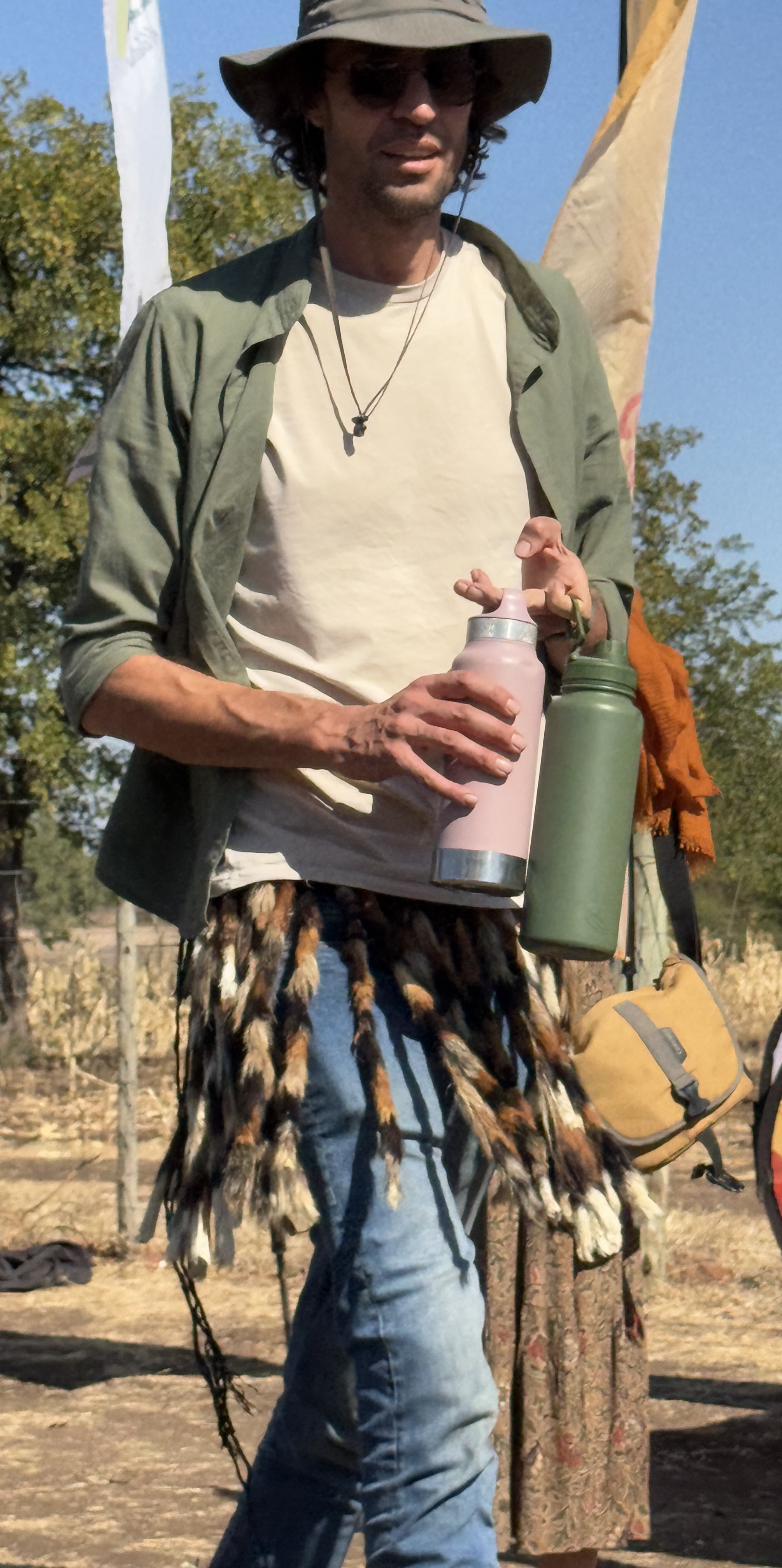
Dillon Ward – styling in a goatskin skirt at Budula….
Kelli Barker, make up artist, enjoyed the day, the colour, the people…
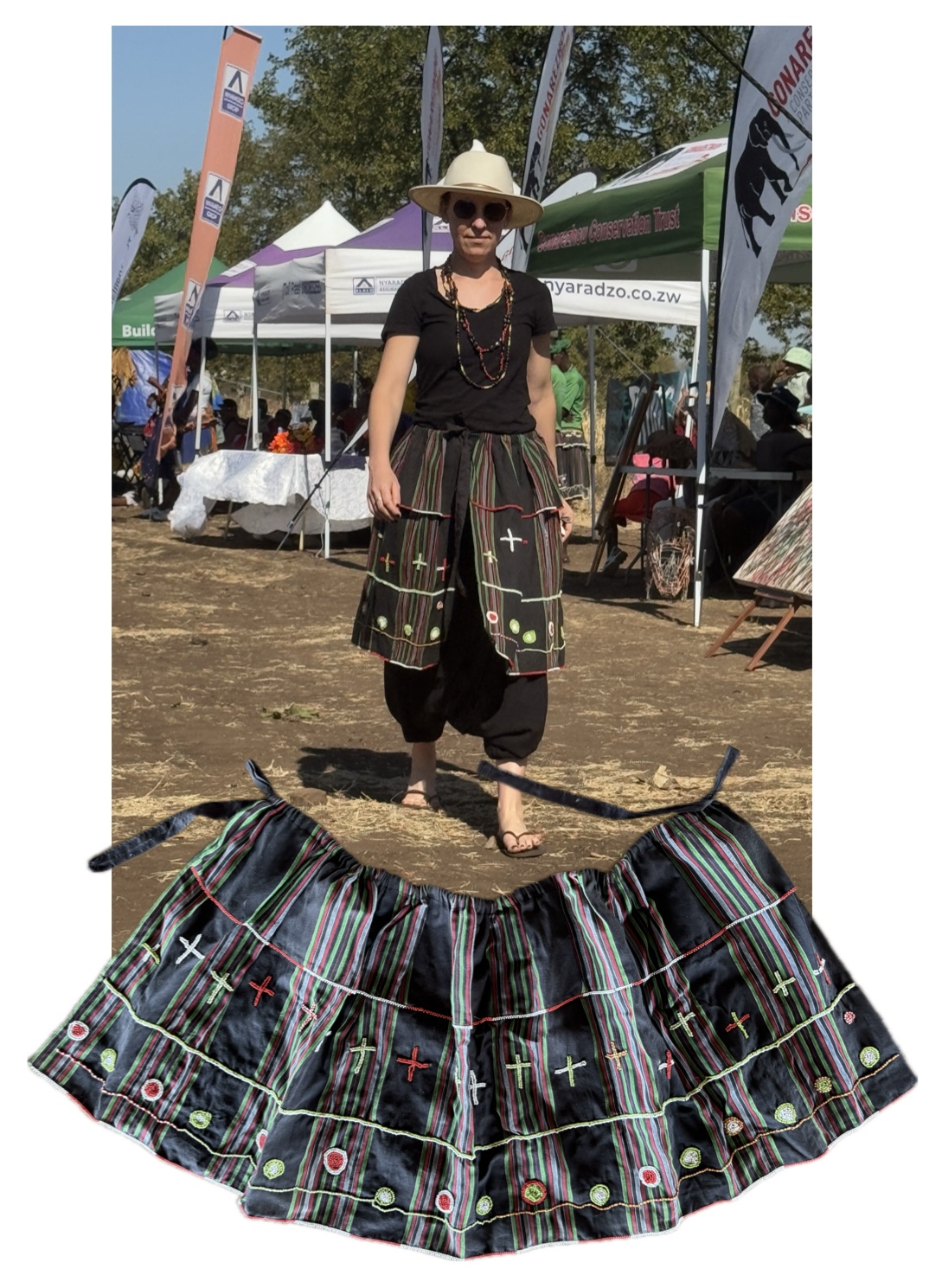
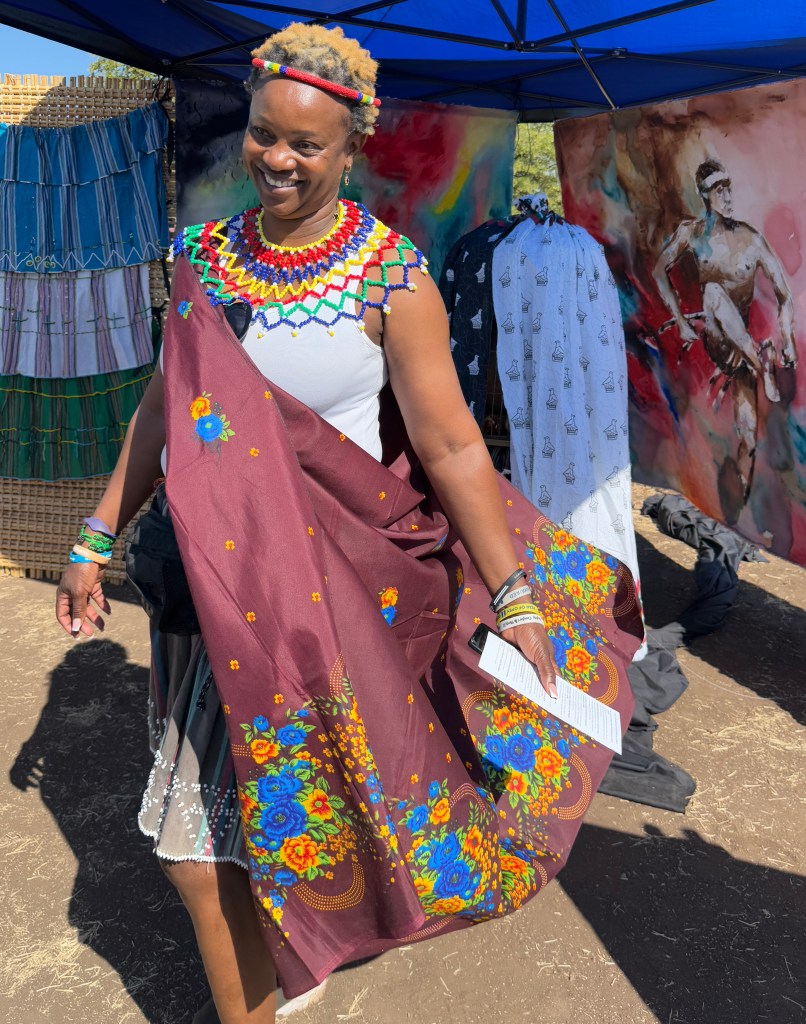
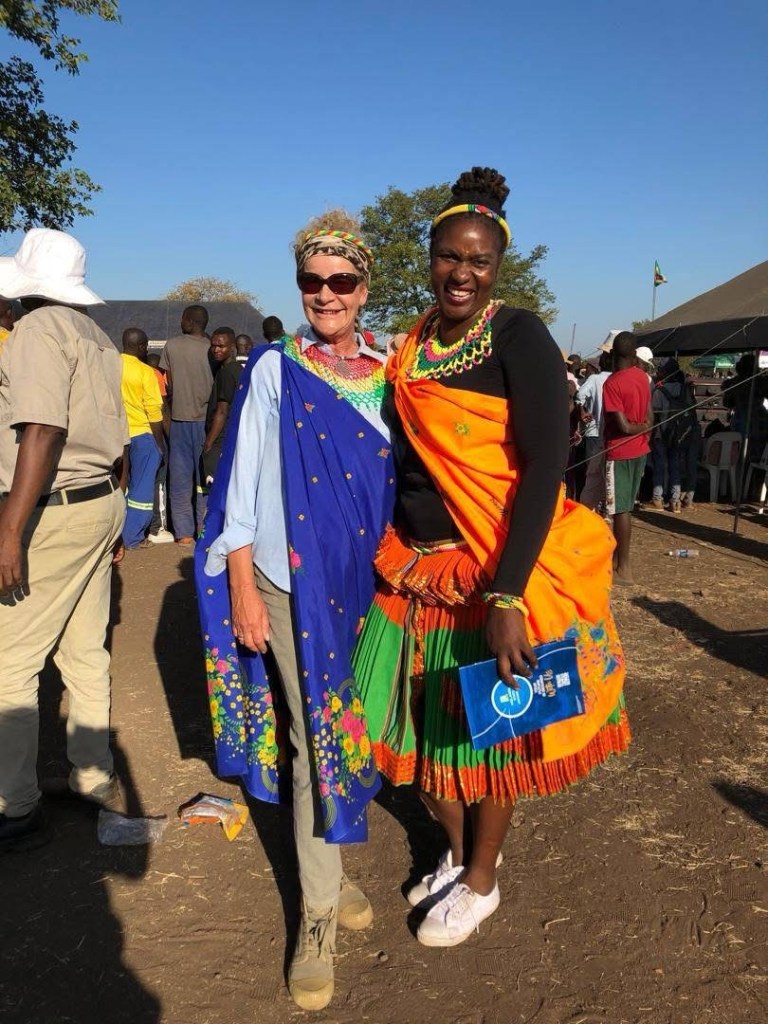
Beautiful ladies and fashions were in abundance …
Donors such as Gonarezhou Conservation Trust (GCT), Malilangwe Trust, Shangani Hunters and many many others committed towards making a success of the Budula Dance Festival, creating a Budula, a strong path, for the festival to move forwards in future, empowering TFCA communities in conservation of wildlife and conservation of culture.
Title: Wa Ni Bela Tingoma, by DJ Hope was the theme song for many of the dances.
Admirable conservation concepts in this lowveld transfrontier area, such as Peace Parks, Boundless Southern Africa, Campfire, Malilangwe Trust, Save Valley Conservancy, SatWild, Kruger2Canyon and others, are Connecting Corridors between wildlife areas and communities, going far to help address challenging community and wildlife issues…..
Art, Music, Fashion and Dance, a vital expression of humanity, can also play a part, can be a catalyst for conservation, for communities to express innovative ways of adapting to human wildlife challenges, creating dialogue and collaboration.
. My personal ongoing art journey over the last years, and onwards into 2026, is in investigating Dance, Movement and Music, as an abstract and figurative expression of the human psyche and culture worldwide , and most especially at the intersection of our xangana culture and other world cultures.
My art practice currently is themed around DANCE- dance across cultures.. collaboration across borders. “Caged culture” needs to be shared!
My art display at Budula Festival partly focussed on “Dancing with Elephants”… the co-existence of communities living with wildlife…. in this vast area encompassed by ‘Gazaland’, the Greater Limpopo Transfrontier Conservation Area (GLTFCA).
Forward plans into 2026:
In the Sengwe corridor, part of the GLTFCA, plans are afoot to collaborate with Midlands State University (MSU) in the creation of a cultural museum –watch this space!
Mahlanga Board and representatives from Midlands State University, Chief Mpapa, and Chief Gezani have met to discuss the establishment of an inclusive Vatsonga cultural village and museum, referred to as the Culture and Heritage Park. Midlands State University will take the lead in designing this park, with a proposal set to be presented to district stakeholders in November 2025.
The Culture and Heritage Park will be instrumental in the Mahlanga Centre’s commercial partnership initiatives and Boli, Muhlanguleni, serving as the primary draw for visitors.
It is planned to showcase the cultural village and museum at the upcoming Budula Festival 2026.
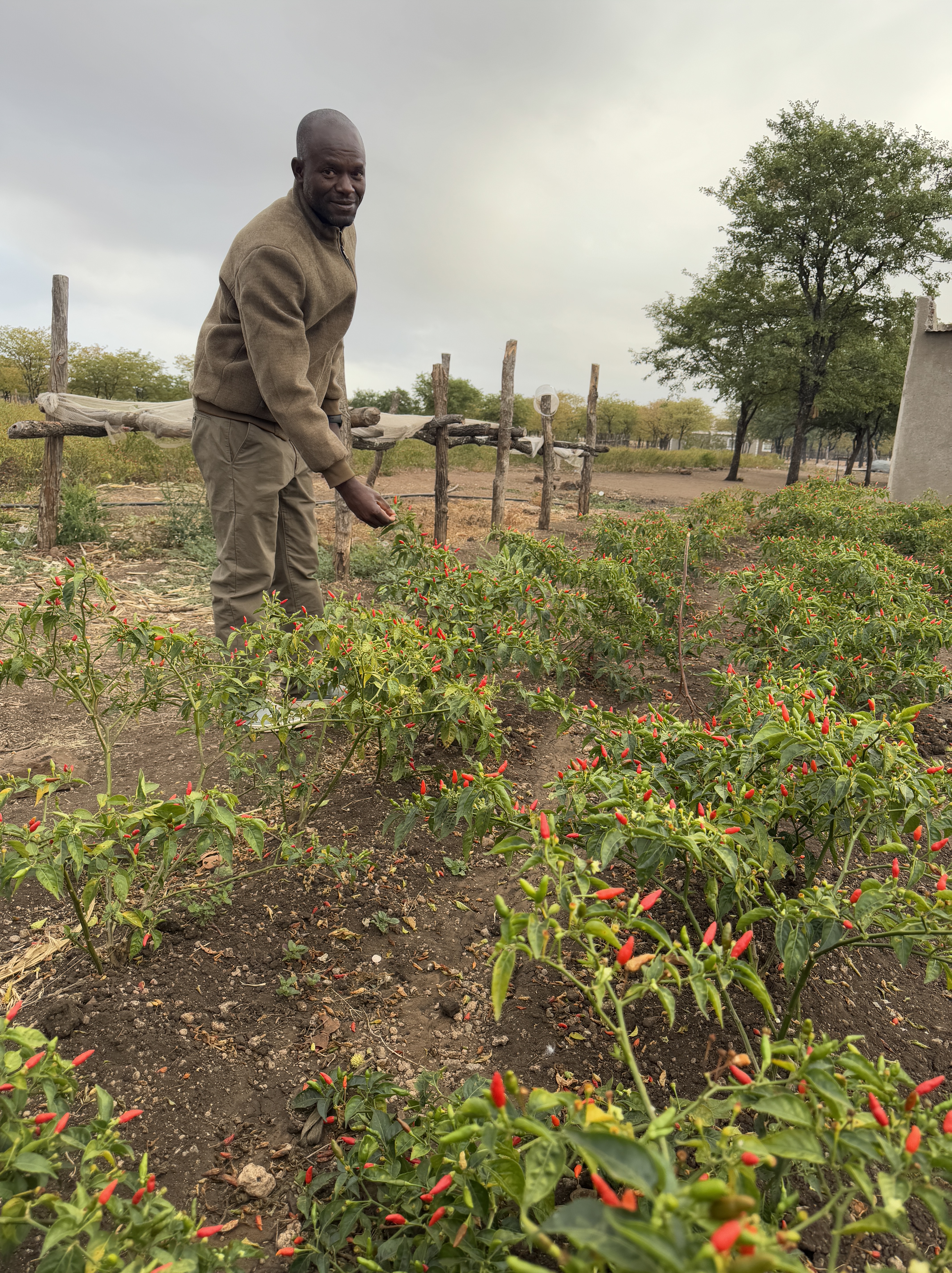
Meanwhile, the day after the Budula Festival 2025 and back to business as usual, visiting friend Hebert Phikela at his chilli field.. at Boli..
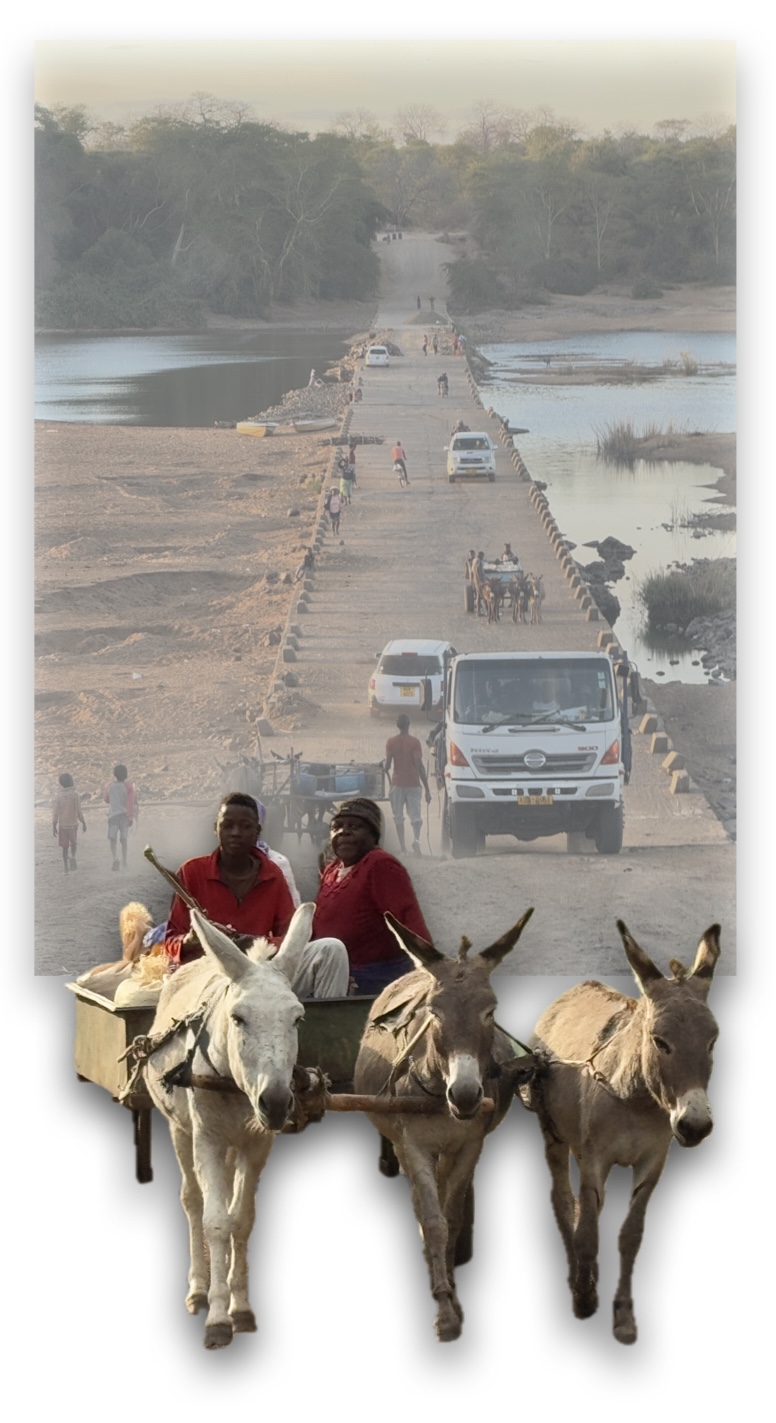
and heading homewards over the Chilonga Bridge…
The end of Budula Festivsl 2025, but we’ll keep dancing …

And dancing…
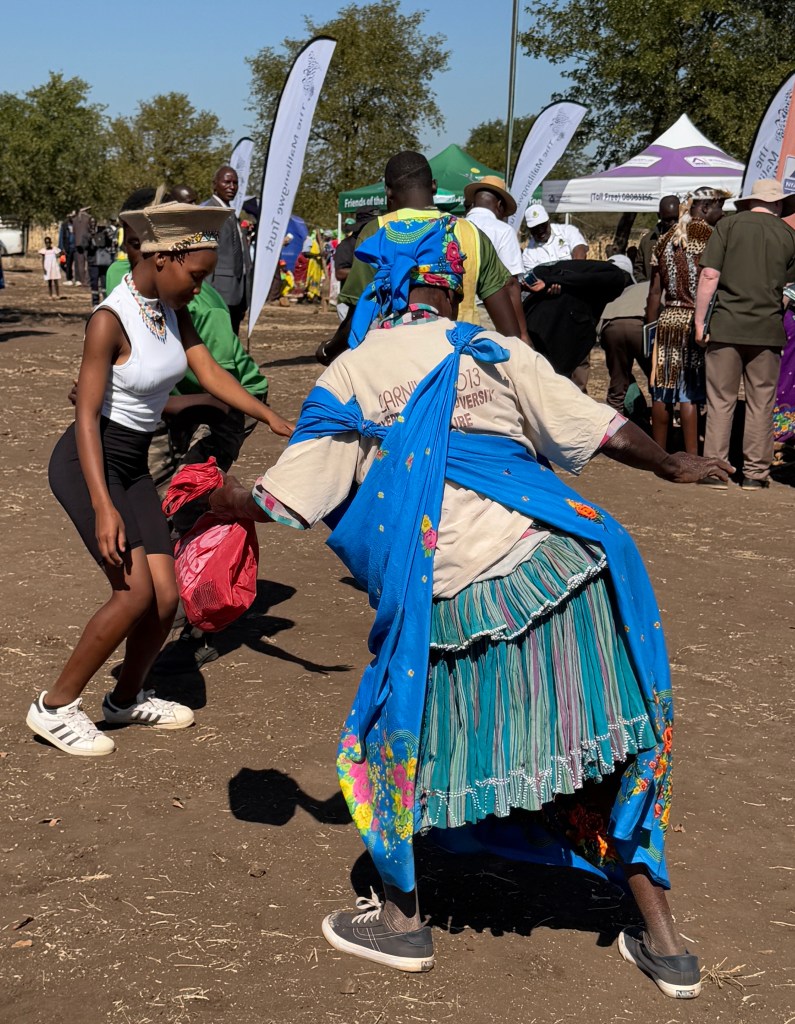
And dancing …young and old alike…
All photographs and opinions are mine unless otherwise stated


 wine and wild dogs