Deeper, and deeper, into Africa!

The HAC Caravan lifts effortlessly and we wing our way over the neat cluster of high rise buildings that puncture Harare’s CBD, surrounded in the south by sprawling fast growing hi-density suburbia- row upon row of little box houses standing in the baking sun- I hope the trees that were razed to accommodate them are soon replaced by home -owners with some vision of a greener shadier place for their children to play…

Flying low over patchwork green and tan centre pivots, I am inspired by the graphic circles – some functioning and some mere relics of intensive rich agriculture…..a few abstract paintings may result…..

Seemingly within minutes, riding higher and hardly noticing the turbulence of the puffy white clouds that we plunge through, we drop over the tumultuous Mavuradona Mountains and into an airstrip in Mana Pools, well kept, with impala waiting to greet us at the end of the runway! A safari vehicle is on hand to whisk some of our passengers to their safari camp and then we are on our way again, two masterful young pilots at the helm giving confidence as we wing our way over mopani scrubland and jutting baobabs. Up and out of the Mana flood plain and towards the Matusadona Hills. First sight of the giant inland Lake Kariba, winking at me on the horizon, is always a thrill. Memories and adrenaline on spotting that awesome body of water from a distance- evoking childhood train rides from Harare to the south coast of Durban and our first excited vision of blue ocean and white rollers.

A quick stop on Kariba airstrip to collect eggs and green vegetables and we take off again. Two stately baobabs, still in leaf from the late rains I guess, and lovingly preserved on the open airstrip, bid us Bon Voyage – underneath one of them two ground hornbills strut, unconcerned by our noisy passing…
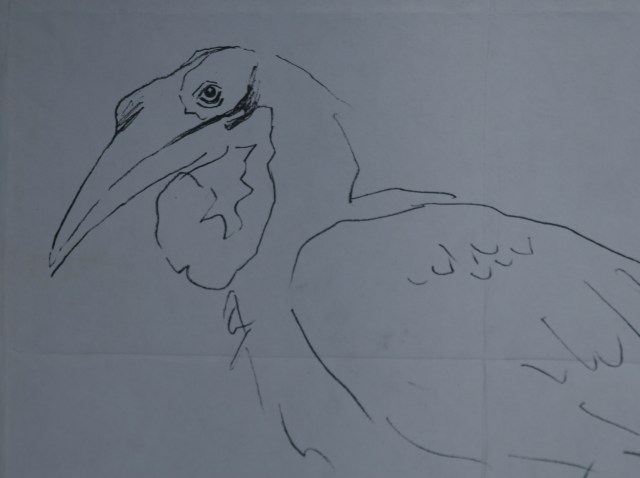
fascinating birds to sketch

fascinating birds to sketch

They intrigue and inspire me, whether on the ground or in magnificent white-tipped flight…

Southern ground hornbill

Southern ground hornbill -painting by Lin Barrie, acrylic on canvas,

Flying up the Kariba Lake, we pass Spurwing Island, Fothergill Island and the Sengwe Gorge. I am always enthralled by the vastness of this ‘inland sea’. Mopani-clad mountains flank the sea’s grassy shores, populated by elephants galore, and shallow waters where nurseries of baby fish, herons and crocodiles abound, in turn lead to deep mysterious water, home to Nyami Nyami the river God,

Nyami Nyami

Nyami Nyami

and home to the magnificent fighting tiger fish which set angler’s hearts racing…
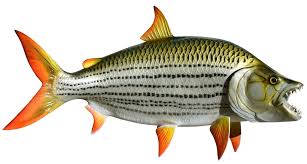
gorgeous and fierce tigerfish...

gorgeous and fierce tigerfish…

Bumi Hills Safari Lodge is set high on a hill and we circle around the magnificent view, above Starvation Island and past numerous elephants pottering on the foreshore, waterbuck and impala in deeper grass, to land on the well kept airstrip. Greeted by safari guides and vehicles, and with grateful farewell to our pilots Simon and Adam, we are whisked up to the lodge- I have visited many moons ago but am entranced anew by the warm welcome, the cool facecloth, the gorgeous entrance, and most especially the view forever over the infinity pool to the vast blue-grey lake spread below…

infinity....

infinity….

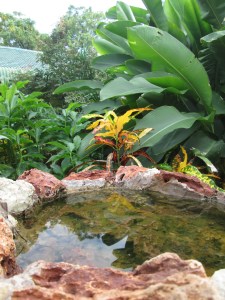
Tropical gardens and ambience are present in spades. Someone remarks that this could be Mexico!
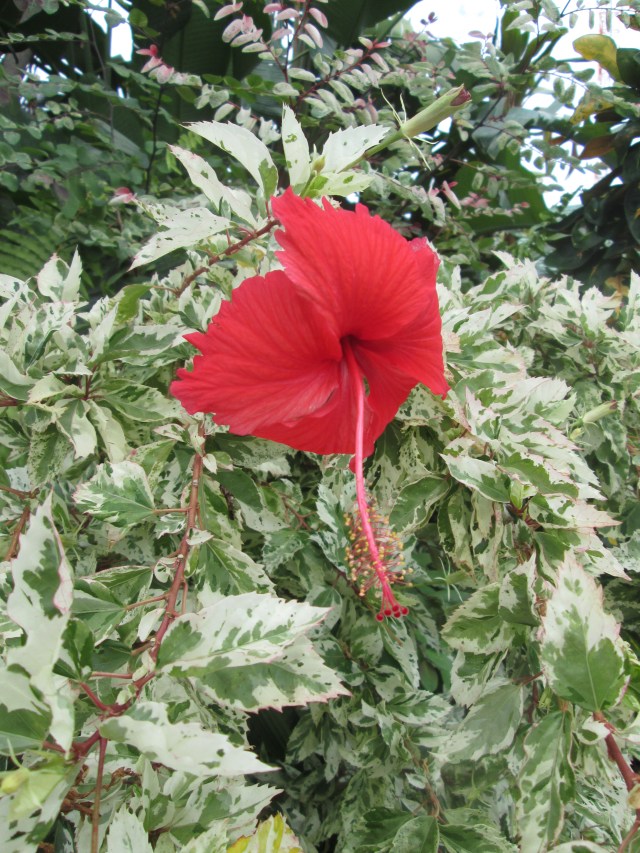
bright hibiscus at Bumi

bright hibiscus at Bumi

I get a feeling of some of the Florida gardens and poolsides I have seen in boutique hotels in Miami- this being a gentler, more subtle version complete with coconut palm and butterflies on the edge of infinity……

the edge of infinity...

the edge of infinity…

IMG_9146

But this is not Florida, these are African butterflies, dozens of species in one view, plus African vervet monkeys peering from leafy growth, baboons lurking with intent, and inquisitive tree squirrels..

…this is Deeper Africa!
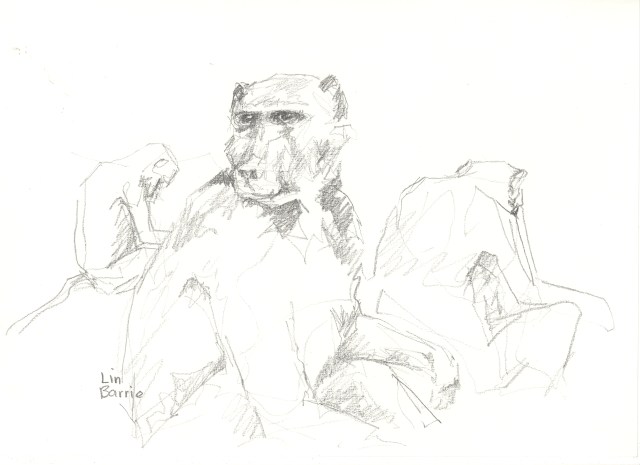
I never tire of sketching baboons...such characters...

I never tire of sketching baboons…such characters…

And the view past the palm tree is of quintessential Africa: herds of elephants on the edge of the lake water…

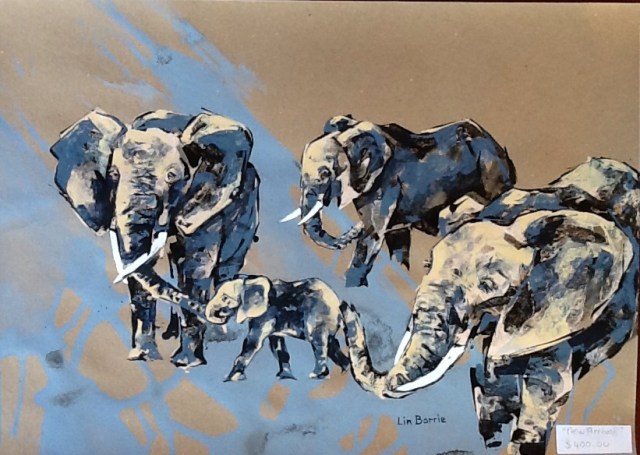
Elephant sketch by Lin Barrie

Elephant sketch by Lin Barrie


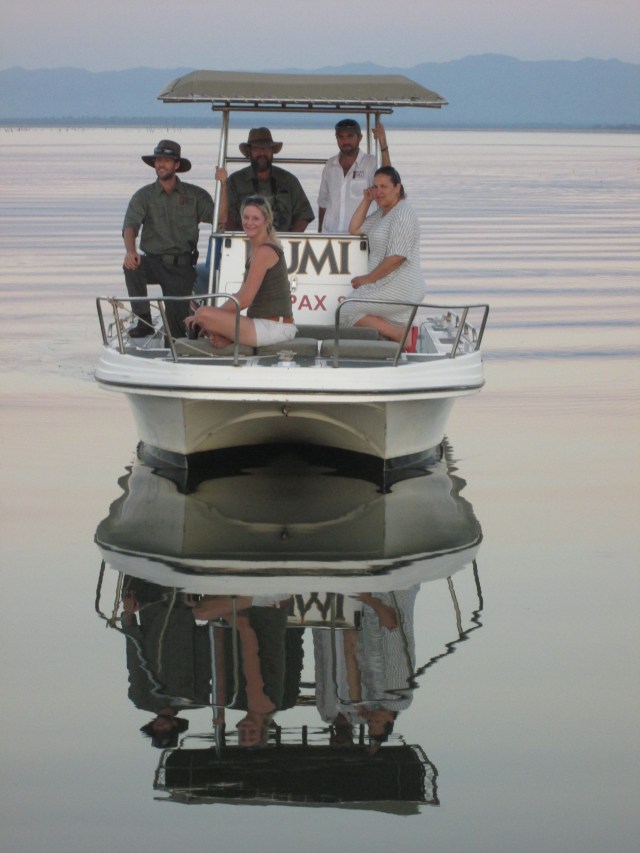
Entrancing as the view is and comfortable as the rooms are (each with individually spectacular views), after an anti-poaching debrief by Mark Brightman and his team from Bumi Hills Anti Poaching Unit (BHAPU), we can’t wait to board two boats back down at the waters edge to explore the inlets and submerged trees. Our crew includes Will Smith and Shelley Cox, part of a “Deeper Africa”  initiative called Zimbabwe: Conservation and Culture safari…They have already visited Somalisa Camp in Hwange National Park.

We are accompanied by a journey of journalists and publicists from USA – all part of a tourism initiative to market “Deeper Africa” to American guests who want to get more interest and value out of their African travel- emphasizing community conservation.

IMG_9077

As we leave the harbour a mother hippo and her tiny baby rise to blow and stare at us as we float past, seemingly unthreatened by a nearby crocodile, a LARGE one, who may or may not be watching us as well…..

a joy for me to be on the waters of Kariba again...

a joy for me to be on the waters of Kariba again…

Butterflies again, now a steady stream of golden and black beauties, African monarchs, flutters low over the calm water and all going one way.

htfal08.jpg

But to where I wonder…I know the Monarchs migrate vast distances in Northern and Central America, but here in Africa I think any migrations are more localized… And apparently there are some usurpers among them, the diadems, who robe themselves in the same vibrant colours to kid would-be predators that they too are poisonous!

Clive Stockil ,winner of the Prince William Award for a Lifetime Achievement in Conservation, takes time to answer penetrating conservation and community questions from the team;

Clive shares his thoughts on conservation...

Clive shares his thoughts on conservation…

Sundown brings cool glasses of wine…

IMG_9088


Fish catching is fun for all-some of us concentrate more on a good glass of wine than actually fishing….Cheers!

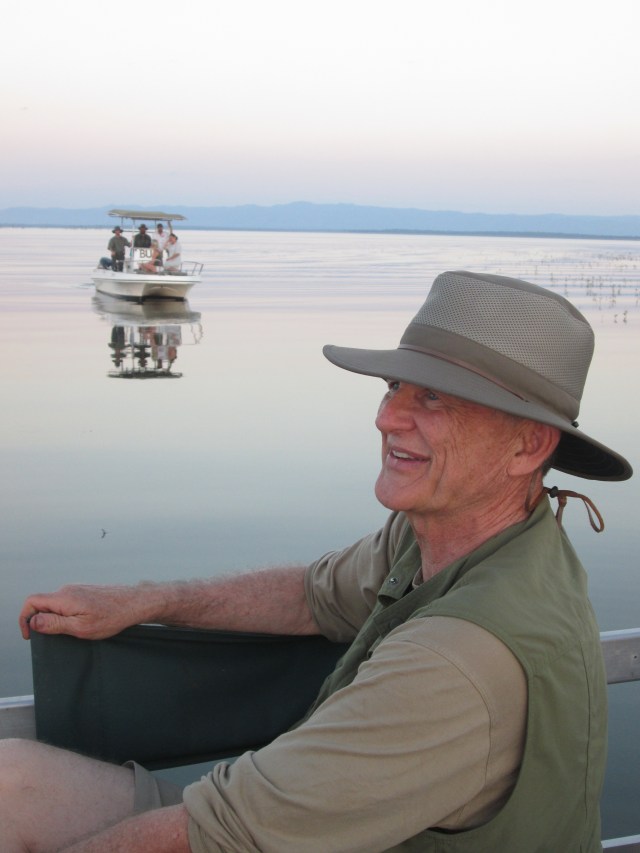
Will Smith, with Shelley Cox approaching over the lilac sunset waters…..Will Smith, with Shelley Cox approaching over the lilac sunset waters.....
reflections...

reflections…

My fish is the first of the day- a tiny bream smaller than the worm on my hook that it was trying to swallow! I am happy to see it easily swim away after I detach the hook.

Shelley totally upstages me and catches a large bream..

IMG_9110

After that squeakers galore are hauled in and cautiously released, respect being given to their fierce spines! Or is it always the same enterprising squeaker, returning again and again to the delicious worms offered?!
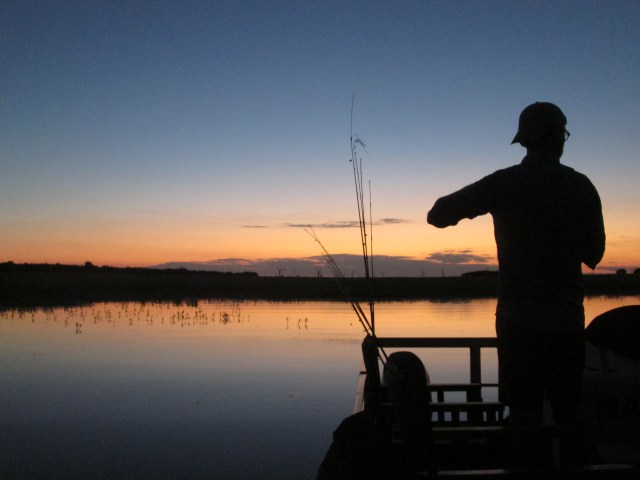
fisherman in the sunset..

fisherman in the sunset..


Goliath heron and a great white patrol the reeds nearby and a fish eagle perches in stately silhouette as the setting sun turns the water first lilac, then gold. As if by signal, as the sun expends its last glow, the surface of gold is suddenly punctuated by hundreds, thousands of tiny rises, kapenta fish leaping gently to break the surface and immediately packs of hunting dragon flies swarm above them. Are they all feeding on tiny gnats or other little things that we can not see?

The boat ride back to shore is in deep cool dusk, the Southern cross and my favourite star Sirius, the Dog Star, bright above us.

Morning brings a sweet sunrise view from my room balcony,

sweet sunrise

sweet sunrise

accompanied by a cup of fresh made filter coffee. Elephants are always visual on this shore in some form or another-a joy and a worry- endangered globally as they are. We need to responsibly protect and nurture these last great pockets of wild- living elephants.

The team dash off after breakfast to view three lions close by and then to walk with the Bumi Hills Anti Poaching Unit, to understand better how that crew of dedicated guys operate.

This is one of the male lions they found, interacting with a female and challenged by another male…..
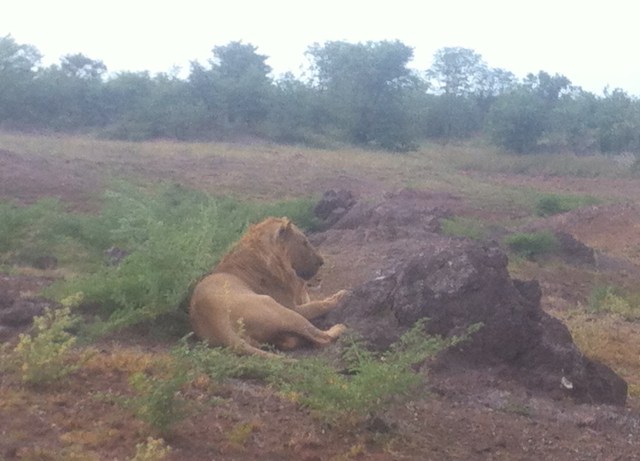
photo.JPG

I have a tension headache three days old, perhaps a come down after the intense efforts of my recent spray painting job on the aeroplane. So I opt for a neck and back massage, lying prone and listening to the ground hornbills in the distance as Rutendo eases the aches out of my muscles. Bliss.

After that of course I need to retire to my room and shower, and test the view from the bed in daylight…

IMG_9147

Wow! stunning- as I lie on my bed I can see elephants gathering on the foreshore and bathing in the lake. This is truly elephant paradise. Three young bulls spend at least an hour wallowing – I hear the splashing from my high balcony!

Then I jump up and run to the edge of the balcony to get a better look as a high pitched trumpeting announces the arrival of a cow herd. I know that pitch- likely they have a very new calf… And sure enough from the cover of the mopani trees breaks a party of elephants led by a tiny baby running fast! He is hotly pursued by a half grown sibling and his mum, with a dozen others trailing behind!

I realize he is making for two lone elephants who stand a way off towards the waters edge… And his mum seems intent on halting him! Which she soon does- she and the half grown catch up to him and wheel in front of him, blocking his path with their bodies and trunks as he skids to a halt. At the same time the two loners rapidly approach and an elaborate greeting takes place, all circling the little one in their midst and much touching of trunks…is this the first time since his recent birth that he has been introduced to them – or was he running so fast because he knew them from a previous meeting?

the tiny baby is visible in this group....

the tiny baby is visible in this group….to the right of the tight clump of elephants!

It soon becomes obvious that the protective circle will not be allowing him be allowing him near the water edge-they all stay well back and keep him playing in their midst.

I spend the whole morning watching and pondering elephants.

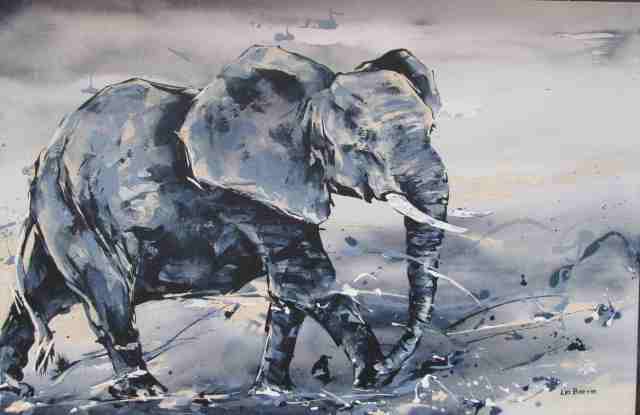
Elephants, elephants, elephants….

Loxodonti, acrylic on stretched canvas lo res.JPG

It seems to me that elephants are the really strong thread through the Deeper Africa community conservation theme that we are exploring…of course we are looking at whole ecosystems: wild dogs and baobabs, communities and culture, food and tradition, but in the eventual analysis it is all about SPACE for every link in the chain to exist, and no single animal or plant in that chain needs SPACE more than the iconic elephant.

It is indeed the ‘elephant in the room…!’
loxodontus, acrylic on stretched canvas lo res.JPG


BHAPU224158_181633288553163_3680696_n and VFAPU

are tirelessly protecting elephants…in Victoria Falls/Hwange and Kariba…victoria-falls-anti-poaching-unit-01.jpg

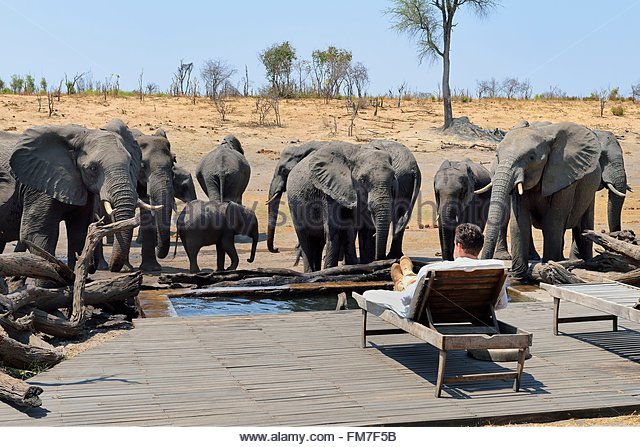
Somalisa Camp in Hwange National Park is known for up close and personal viewing of elephants…
zimbabwe-matabeleland-north-province-hwange-national-park-somalisa-fm7f5b.jpg

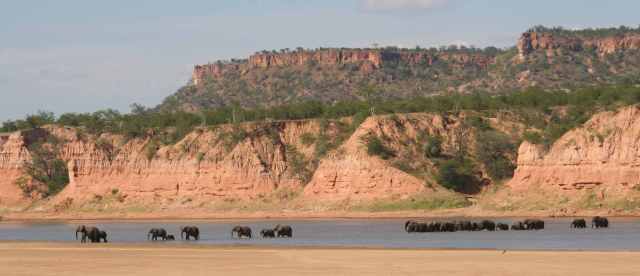
Gonarezhou National Park, encompassing the magnificent Chilojo Cliffs,  is truly “The Sacred Totem, or Amulet, of the Elephants” as suggested in its native name. Here elephants, giants in themselves, are dwarfed by the towering Chilojo Cliffs as they cross the Runde River…..
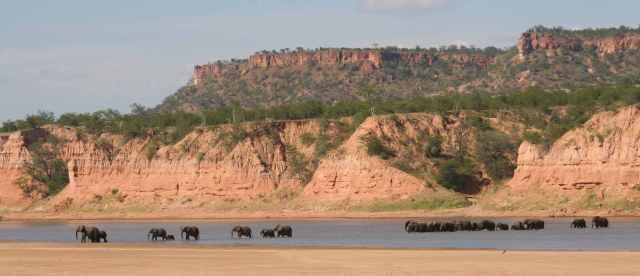
elephants crossing the Runde river -lo res.jpg


Anthony Kaschula of Gonarezhou Bushcamps gives guests in depth tracking and understanding of these gentle giants in Gonarezhou National Park, Gallery | Gonarezhou Bush Camps.jpg

and Frankfurt Zoological Society provides invaluable support systems to the park management…such as tracker dogs,scout training and field work..

frankfurt elephant.jpg

Chilo Gorge Safari Lodge sits high over the Save River on the edge of Gonarezhou National Park, on the edge of serenity…

Adenium multiflorum blooming at Chilo, Save River in background...

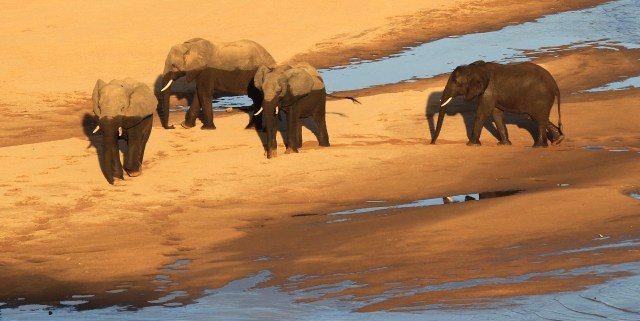
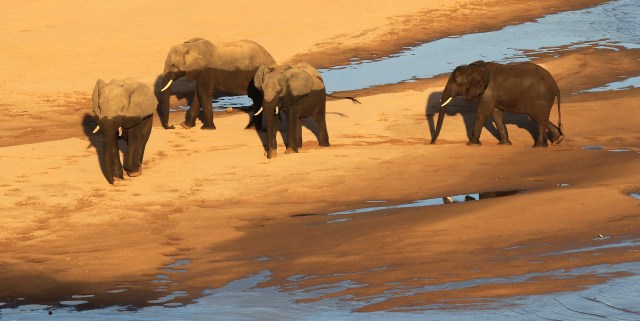
with surreal and fantastic views of elephants from the high decks….as in this photograph by Steph Walton at Chilo…
Kelli and Anton banner .JPG

This area, part of the Greater Limpopo Transfrontier Conservation Area (GLTFCA), belongs to Chief Mahenye, with a rich cultural history. His Changana Community have historically  been hunter/gatherers, efficient conservationists in their own right and protectors of a vibrant culture of music, dance. beadwork and hut painting.

Here is my large oil painting of a Changana man dancing…

Changana man- oil painting on canvas by Lin Barrie lo res.JPG

Changana people use the natural pigments found in the soil, and tree ash, to create stunning hut paintings…gltfca-hunter-hut-painting-lo-res

a traditional fish trap…

Changana fish trap lo res .JPG

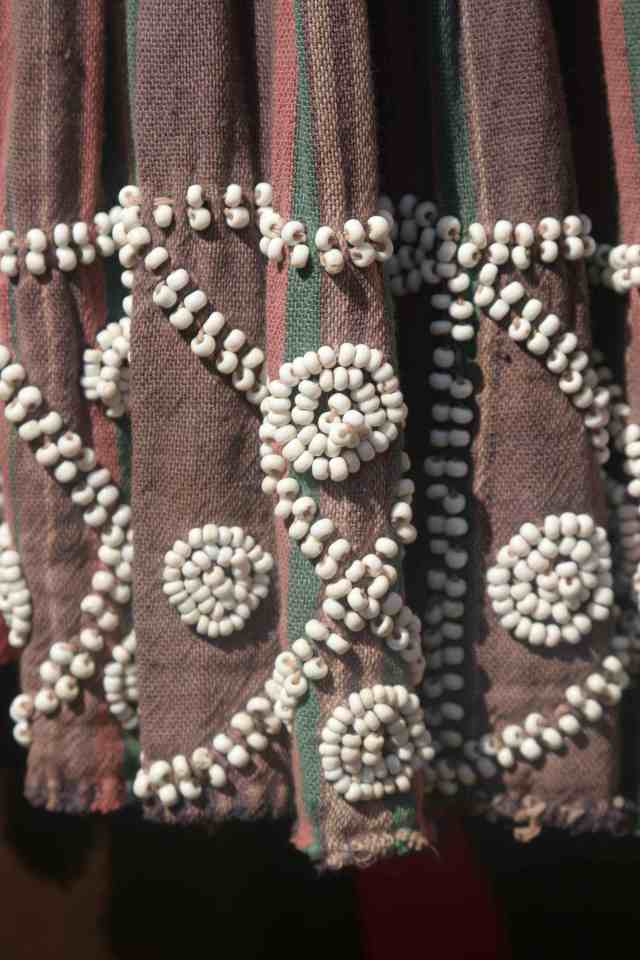
this is the gorgeous beadwork on their dancing skirts…
beadwork 1 -lo res.JPG


Chief Mahenye’s people live daily with elephants, and practice true community conservation..

Gonarezhou…and all our National Parks, are places of endless elephant footprints, elephant history, and hopefully a bright elephant future….!

elephant footprint.JPG

gona re zhou ele footprints.JPG


Posted in adventure travel, Aeroplane art, Africa, African child, African flora, African Safari, African wild dogs, african wildlife, african wildlife conservation fund, aircraft, animal rights, anti poaching, art, beauty, bio diversity, birding, birds, Black rhinos, boutique hotels, Chilo Gorge, Chilo Gorge Safari Lodge, chilojo cliffs, clive stockil, community conservation, conservation, conservation education, conservation news, conservation publication, cooking, culture, dance, eco-tourism, edible plant, education, elephants, endangered species, flowers, Flying Safaris, food culture, Frankfurt Zoological Society, gardens and flowers, gonarezhou national park, great limpopo transfrontier conservation Area, Greater Limpopo Transfrontier Park, Honey gatherers, Hunter gatherers, hunting, initiation rites, landscape, Lin Barrie Art, lowveld rhino Trust, painted Dogs, Painted Wolf Wines, painted wolves, Poaching, poison, predators, prey, Prince William, Prince William Award For Conservation, rhinos, rural school,, safari, Save River, travel, Tusk Trust, wetlands, White rhinos, wilderness, wildlife trade, zimbabwe, Zimbabwe Parks | Tagged , , , , , , , , , , , , , , , , , , , , , , , , , , , , , , , , , , , , , , , , , , , , , , , , , , , , , | Leave a comment

A Wild Dog takes to the air!

ane

A Wild Dog takes to the air!

DSC_0033 lo res

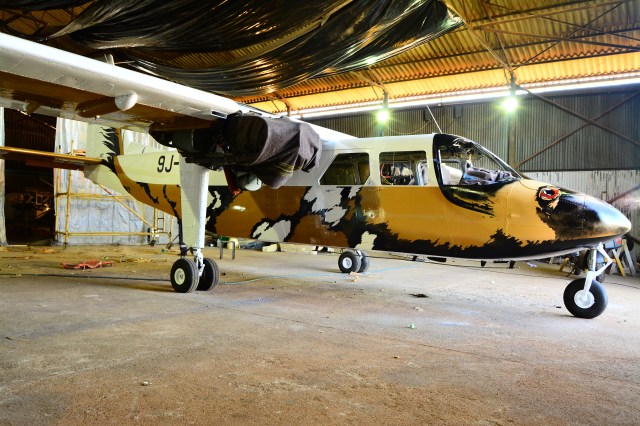
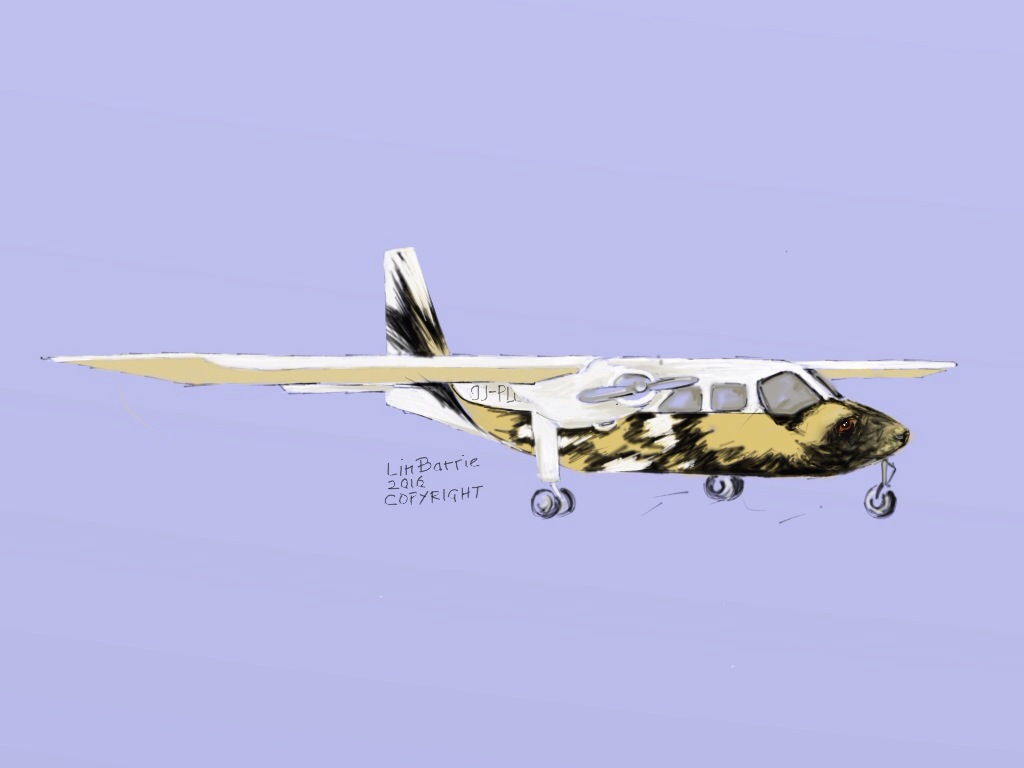
Months ago I was tickled to receive a request from Dora and Vaughan in Zambia for artwork, to transform their Britten Norman Islander into a flying wild dog!

Of course I said Yes!  What else would I say…

imageI did rough artwork, which looked doggy enough!

front view

This project ticks all my boxes:

*It is public and interactive art, (loving street art and graffiti as I do…)

*It is art that will stimulate discussion and promote tourism and conservation awareness in Southern Africa

*It is art that will indirectly but meaningfully support community development in a Zambian Game Management Area

*It is art in celebration of my favorite animal, the African Wild Dog!

The Islander will fly between Kantunta Lodge, a unique and beautiful spot on the great Kafue river, and Livingstone.

Kantunta-headers.png

katuntaKafue Wild Dogs….

kantunta dogs.jpg

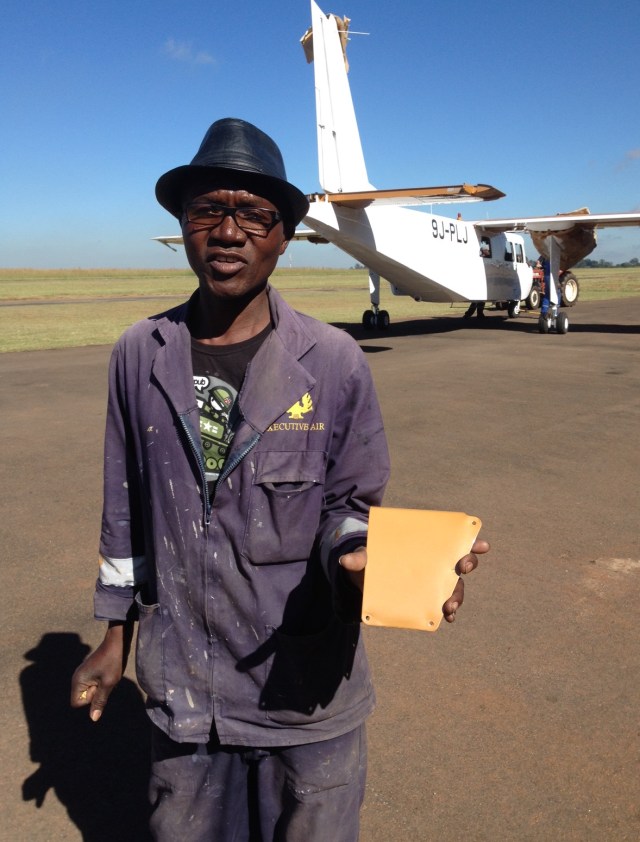
So, a few months later, here we are on the runway at Executive Air, Charles Prince Airport, in Harare…..towing the unsuspecting Islander to her painting hanger…

IMG_4528.JPG

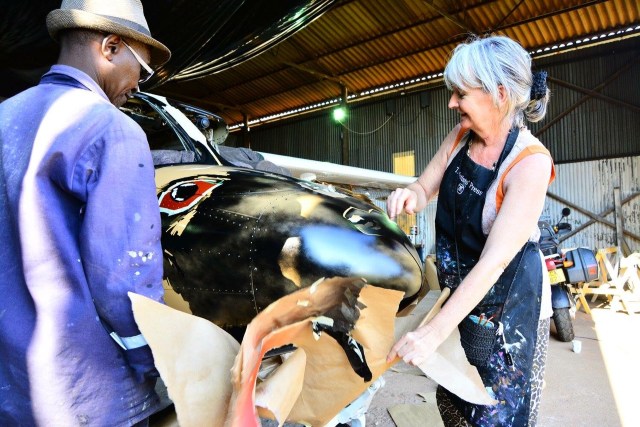
Javinos, the master spray painter at Executive Air, has matched a beautiful semi-metallic gold for the first coat of  the Britten Norman Islander..

image1.JPG

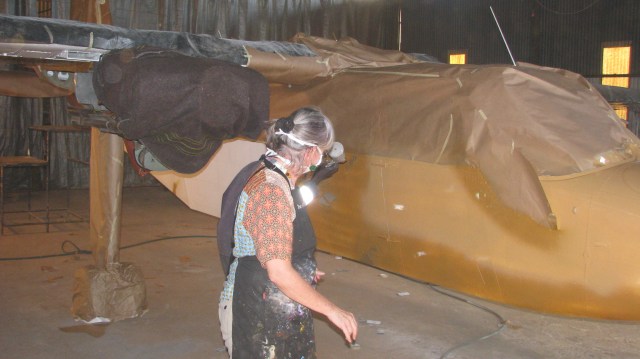
We complete the first masking, using thin masking tape, torn brown paper and torn strips of wide masking tape, allowing for the wonderful semi-metallic golden coat colour, and saving for the striking white markings that so many of our Zimbabwean and Zambian dogs have…

IMG_7272.JPG

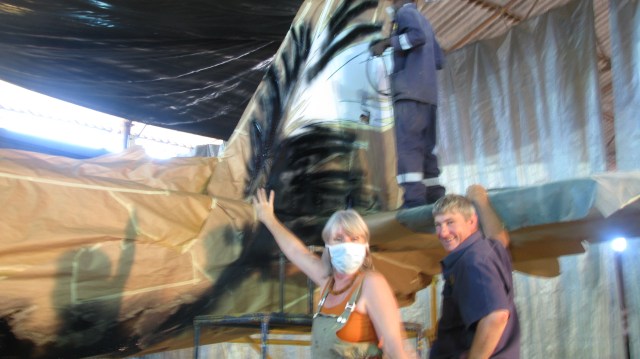
Javinos and I have been high on a scaffold masking the tail, and I have been on my back on a mechanic’s trolley underneath the plane masking the tummy area. Quite a task. (I want her tummy to look as good from underneath as her sides do…)

IMG_4600.JPG
Javi does all the bigger areas I have marked-the tail being a special challenge…eventually wrapping the plane totally in brown paper, like a little boy’s dream present! Hard work for the team!

IMG_7289.JPG

Javinos starts spraying smoothly from tail to nose tip…two coats of deep dramatic gold on each side of our wild dog plane.

FullSizeRender.jpg

I can’t wait to eventually unwrap her, but we have to let her first colour dry for more than 24 hours to be sure the base colour is well set for the next masking session by Javi and I …Patience is a virtue…Hunter, the Hanger Cat, hangs out on a tractor seat and waits with us….

FullSizeRender 7.jpg

At last, I am able to mask for the black areas…This next masking is a two day marathon…

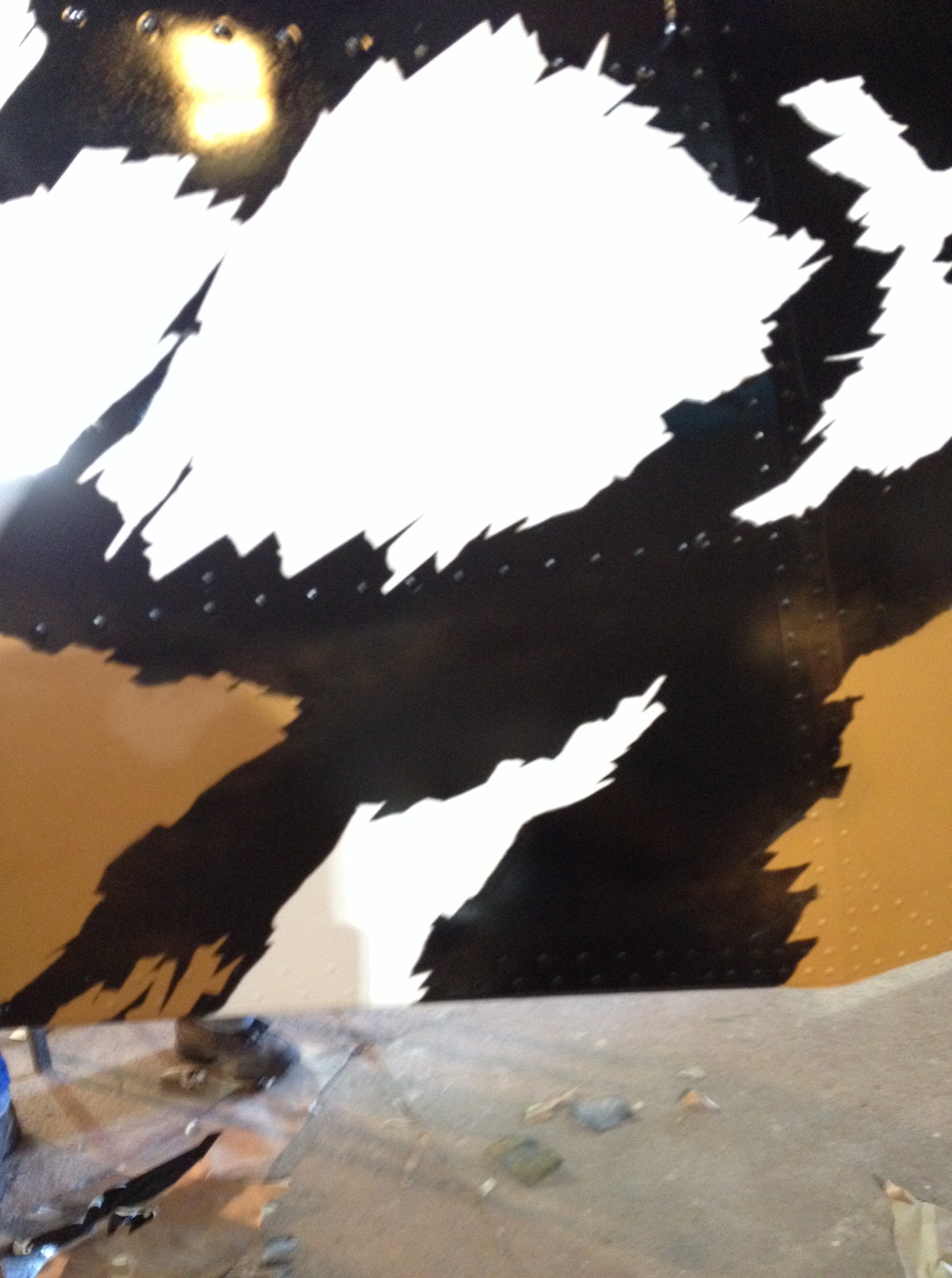
I have to do lots of CAREFUL planning of the black patches in our dogs coat, thinking about the lie of the fur- (and fondly remembering the gorgeous silky feel of a real wild dogs coat when I helped Clive and Graham remove a wire snare from the neck of our female dog ‘Snare”.….)

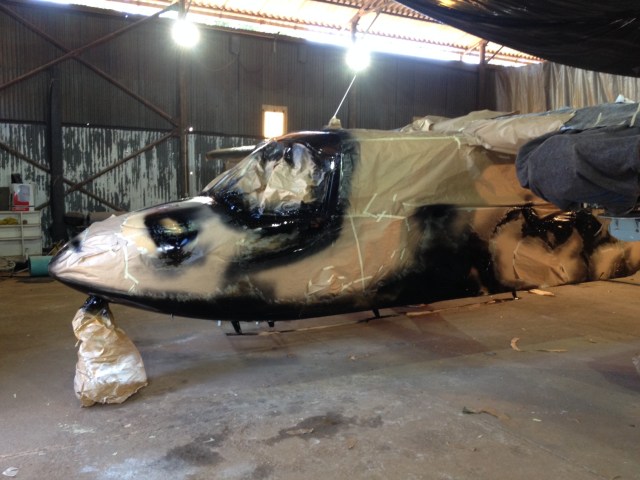
I lay torn masking tape strip by strip to get the effects I want (hopefully), and the plane looks like a huge golden parcel – no detail to be seen under the gold spray and the masking!

IMG_4644

The tail masking is very involved…

IMG_7335.JPG

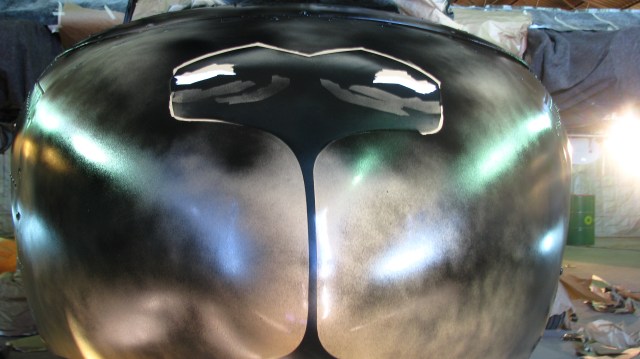
Then comes the jet black spray coat. Javi works on high, and Rob Demblon and I plan the flying flag of the dog’s tail!

IMG_7366.JPG

Black spray painting done…

IMG_4603.JPG
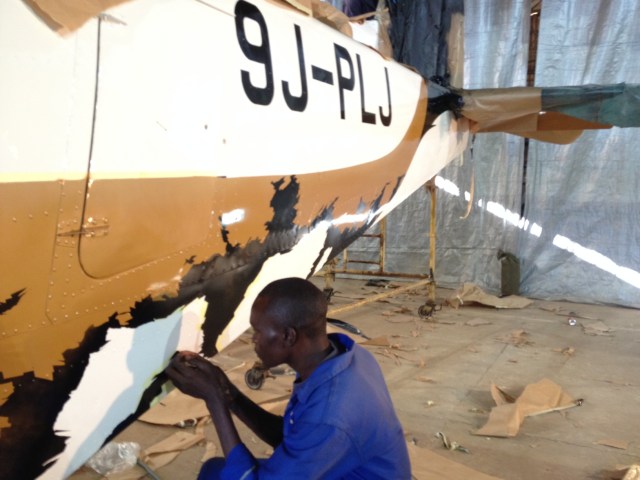
The masking comes off…a long and careful process,

IMG_4619.JPG

So exciting, as the dramatic black and white doggy shapes emerge out of the gold…

IMG_4608.JPG

We have done a softer gold colour on dogs head and neck – looks perfect!

IMG_4624.JPG

the tail looks magnificent!

IMG_9065 lo res

I have allowed nice large eyes for our wild dog since she is a girl…!

IMG_4626.JPG

Choosing a gorgeous deep red background for the eyes, I want them real, but DRAMATIC!…

eye masked.jpg

revealing the eye, very pleasing…

IMG_4649

Thrilling….

DSC_0011

and I am happy with the nose as well….

IMG_7417.JPG

What a great effort by Javinos, spray painter par excellence!DSC_0024 lo res

Our wild dog exits the spray painting hanger, ready for her next adventure…

IMG_4640

She’s off to the main hanger for her final fittings….

IMG_4641

The plane is owned by four lodges: Kaingu, Kantunta, Konkamoya and Mukambi.

Check out SafariTalk for more on the lodges…

The main flying routes will be Lusaka – Chunga, and Livingstone – Ngoma/Chunga. But it will be available for other routes (Lufupa for J&M Safaris) and Busanga for the plains camps. On demand it will also be available for other routes on a charter basis.

The owners of “Wild Dog” are involved in the Kafue Conservation Hub , which seeks to develop the Kafue National Park through a sustainable development strategy that incorporates social and economic development with environmental sustainability. The greater Kafue National Park is one of Africa’s last remaining great wildlife wildernesses. So she is going to have many many adventures……

Kafue Conservation Hub

Posted in adventure travel, aeroplane, Aeroplane art, Africa, African flora, African Safari, African wild dogs, african wildlife, african wildlife conservation fund, animal rights, anti poaching, art, art collaboration, art exhibition, beauty, bio diversity, bush camps, community conservation, conservation, conservation education, conservation news, conservation publication, culture, eco-tourism, education, endangered species, Flying Safaris, Kafue National Park, Kantunta Lodge, landscape, Lin Barrie Art, Lin Barrie publication, painted dog conservation, Painted Dogs, painted Dogs, Painted Wolf Wines, painted wolves, predators, rural school,, safari, travel, Uncategorized, wall art, wilderness, Zambian Safaris, zimbabwe | Tagged , , , , , , , , , , , , , , , , , , , , , , , , , , , | 6 Comments

Tracker Dogs in Gonarezhou, protecting our elephants…

Chilo Gorge Safari Lodge has a wonderful variety of elephant sightings to offer guests…
From the Lodge and room balconies we often see these gorgeous animals crossing the great Save River….often with tiny babies helped along through deep water by Mum’s or Auntie’s trunk…

One of my sketches, elephants seen on the Save river bank….

eles1

In Gonarezhou National Park (GNP), Zimbabwe, elephant poaching needs to be carefully monitored and managed, since we have seen increased losses of elephants to poachers throughout Zimbabwe.

We want to see the sun keep rising on our elephants, here on the great rivers of Gonarezhou…

Stunning light in this photo by Steph Walton…on the sands of the Save River…….

Kelli and Anton banner


Frankfurt Zoological Society has decided to deploy tracker dogs in the field, to track down poachers and help combat elephant poaching.
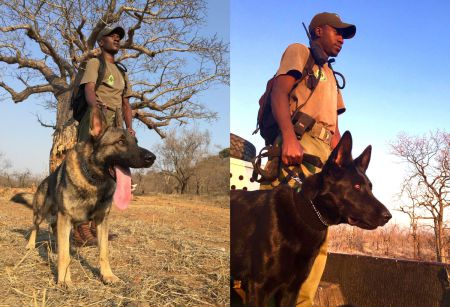
Edward Hlatshwayo, Promise Kanuka, and Daison Hlelelwa successfully completed a challenging training course, and are now the first three professional dog handlers specialized to track down poachers in Zimbabwe. All three originate from communities adjacent to Gonarezhou. They have formed a great team with dogs Roxy and Samy.
https://fzs.org/en/news/anti-poaching-dogs-introduced-gonarezhou-nationalpark/

Daison Hlelelwa (with Samy) and Edward Hlatshwayo (with Roxy)

Daison Hlelelwa (with Samy) and Edward Hlatshwayo (with Roxy)


Excerpts from the Greater Limpopo Transfrontier Conservation Area newsletter:

“Gonarezhou’s elephant population is doing well, management is tackling the potential threat of poaching head on. The budding ranger corps is growing and growing; rising stronger every day to the challenge of protecting Zimbabwe’s iconic wildlife.

IMG_4468.JPG

Already, over half of neighbouring Mozambique’s elephant population has been lost in the past five year. Furthermore, the 2014 Pan-African elephant survey revealed a 40% and 70% reduction in elephant numbers in the Mana Pools and Sebungwe Areas of Zimbabwe. Yet, the Gonarezhou National Park (GNP) has shown a 130% rise in elephant numbers during the same period.

Unfortunately, poachers seem to be turning their gaze to this protected area. In 2015 more poached elephants were encountered than ever before, though management cautions that this rise can be partly attributed to increased patrols by more rangers, who are better skilled than ever.

The potential threat is not being taken lightly. Patrol strategies are constantly being adapted and the Mozambique Border Unit was deployed in December 2014, operating from two permanent bases close to the border. The following year saw the implementation of a deployment system which allows for the entire western boundary to be patrolled on a daily basis by dedicated Fence Units on foot and on bicycle. They are now also able to operate from ranger pickets that have been constructed over the last two years. A Quick-Reaction Unit has also been formed, and was assigned a dedicated vehicle. They are now able to support the units on the park boundaries.

Much effort has also been spent on ranger recruitment and training. Out of 200 prospective applicants, 22 students from five communities surrounding the park completed a training course at the dedicated training camp established in the centre of the park in 2015. They are reported to be of the best calibre yet, which was proven when they arrested eight poachers and recovered 15 pieces of ivory as well as snares, skins and dried meat while on patrol exercises during the course. The total number of cadets employed now stands at 62.

Further strength is being lent to the cadets by a newly established canine unit. With support from the Save the Elephants’ Crisis Fund (and training by Invictus K9), two canines from proven blood-lines were hand-picked from a specialist breeder in Europe and shipped to Gonarezhou in July 2015. They will primarily be used to track poacher spoor in the field. The elongated shape of Gonarezhou means that virtually at all times one is within 20 to 30 km from one of the boundaries at all times, making it easy for poachers to exit before the rangers can reach them.

The conditions in Gonarezhou –with regards to terrain, distances and temperatures are all very challenging, and the next few months will tell whether the canine unit will be able to impact significantly on law enforcement success in the park. In order to maximise that probability, two months of follow-up and advanced training will be conducted in 2016.

The routine support of the Gonarezhou Conservation Project (GCP) to law enforcement patrols continued throughout 2015, with timely supply of fuel and rations for patrol deployments, vehicle maintenance and aerial support and surveillance.

With the support of the International Rhino Foundation, a third repeater station and antenna was purchased, and a mast has been constructed. This will consolidate park-wide digital radio communication.

Elephants cross the Runde river below Chilojo Cliffs……

elephants crossing the Runde river -lo res

extra reading on various conservation initiatives using tracker dogs:

Panthera -using dogs to save cats!

Richard Bonham article on tracker dogs and Big Life:

https://biglife.org/on-the-ground/dogs-save-elephants-big-life-s-tracker-dogs

Lewa Conservancy and tracker Dogs
http://www.lewa.org/wildlife-conservation/security/

various FZS stories from Gonarezhou:
https://fzs.org/en/projects-2/current-projects/gonarezhou-conservation-project/news-stories/

Posted in adventure travel, Africa, African Safari, African wild dogs, african wildlife, african wildlife conservation fund, animal rights, anti poaching, beauty, bio diversity, bush camps, Chilo Gorge, Chilo Gorge Safari Lodge, clive stockil, community conservation, conservation, conservation education, conservation news, conservation publication, eco-tourism, elephants, endangered species, Frankfurt Zoological Society, gonarezhou national park, great limpopo transfrontier conservation Area, Greater Limpopo Transfrontier Park, International rhino foundation, landscape, lewa conservancy, lowveld rhino Trust, Panthera, Poaching, rhinos, Richard Bonham, Rivers, safari, SAVE, Save River, Save Valley Conservancy, Tusk Trust, White rhinos, wilderness, wildlife trade, zimbabwe, Zimbabwe National Ballet, Zimbabwe Parks | Tagged , , , , , , , , , , , , , , , , , , , , , , , , , | 1 Comment

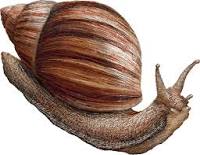
An amazing mollusk: the Giant African Land Snail, revered totem of the Chauke Clan…

I love sketching the shells of these snails, so sculptural….

Version 2

Achatina fulica is a species of land snail in the family Achatinidae, known commonly as the  giant African land snail.

snail

Wikipedia says:

Outside of its native range this snail thrives in many types of habitat in areas with mild climates. It feeds voraciously and is a vector for plant pathogens, causing severe damage to agricultural crops and native plants. It competes with native snail taxa, is a nuisance pest of urban areas, and spreads human disease. This snail is listed as one of the top 100 invasive species in the world!!! Native to East Africa, it has been widely introduced to other parts of the world through the pet trade, as a food resource, and by accidental introduction.

Achatina fulica shell

Achatina fulica shell


I have a very different view of this beauty, an artist’s and naturalist’s view, seen here photographed by me at Chilo Gorge Safari Lodge, in its home range- in the lowveld of Zimbabwe, where it fits so aptly into its environment…

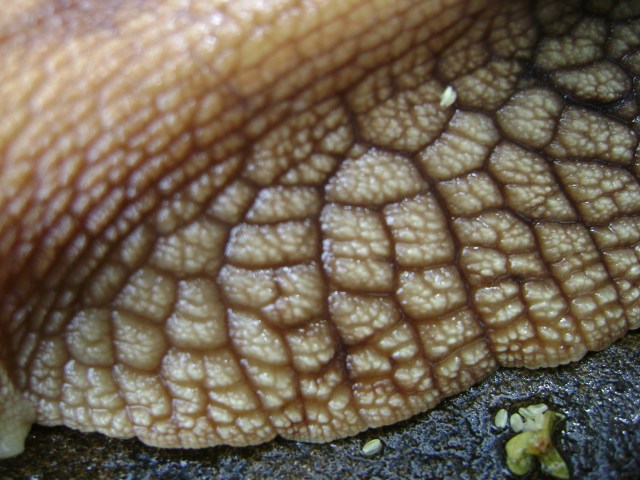
this fabulous creature has a persian carpet mantle……

gorgeous texture

gorgeous texture

a quizzically stunning face….

Stunning face...

Stunning face…

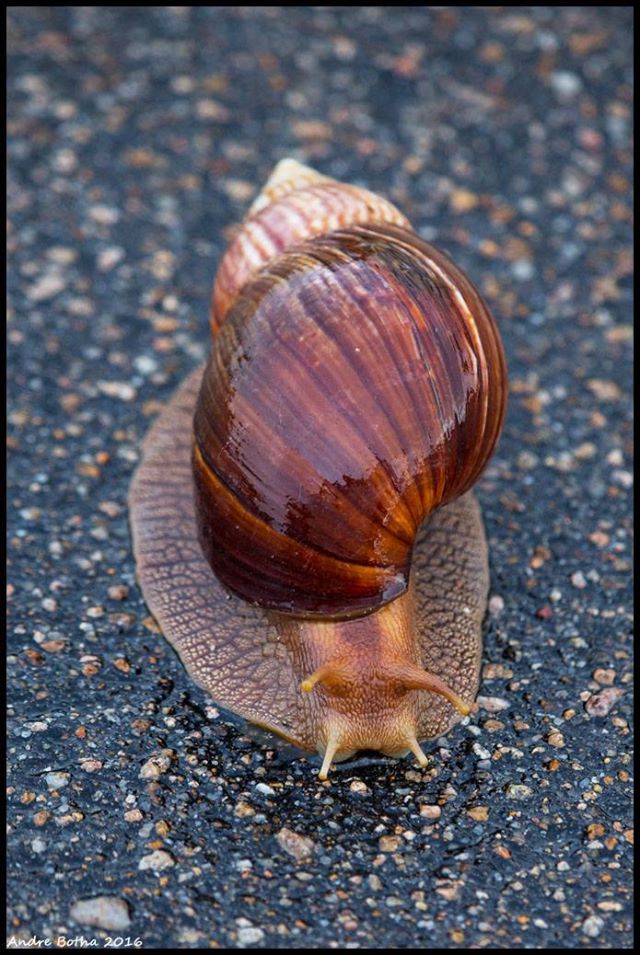
a glowing multi-hued shell…..

gorgeous snail by Andre Botha

gorgeous snail -Photograph by Andre Botha

and a rich history in the folklore and current clan beliefs of the Chauke Changana clan in our area. (Check out my next blog for THAT lovely story!)

Meanwhile, thinking sex (why not!), here is my awesome photo of two snails mating , taken on the footpath at Chilo on a rainy day….

mating snails, photo by Lin Barrie

mating snails, photo by Lin Barrie


This species is a simultaneous hermaphrodite; each individual has both testes and ovaries and is capable of producing both sperm and ova. (Instances of self-fertilization are rare, occurring only in small populations). They have intriguing mating behaviour, including petting their heads and front parts against each other. Cute! Courtship can last up to half an hour, and the actual transfer of gametes can last for two hours.

I watched these two for over an hour, and after mating these two just crawled away…

after the courtship..

after the courtship..


Transferred sperm can be stored within the body for up to two years. The number of eggs per clutch averages around 200. A snail may lay five to six clutches per year with a hatching viability of about 90%.

hatching snails...

hatching snails…

Juvenile snails are tiny, easy and tasty prey for any bigger animals…

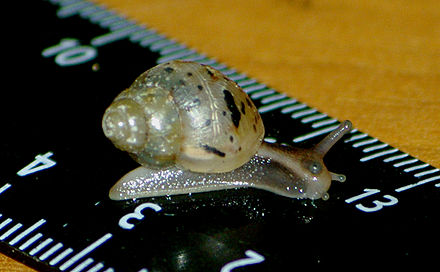
tiny achatina......

tiny achatina……


If they are lucky, dult size is reached in about six months, after which growth slows, but does not cease until death. Life expectancy is commonly five or six years in captivity, but the snails can live for up to ten years.

adult snail and baby

adult snail and baby

The giant African snail is capable of aestivating for up to three years in times of extreme drought, sealing itself into its shell by secretion of a calcerous compound that dries on contact with the air.

They are active at night and spend the day buried underground.

Is snail slime the next big thing in skincare? ….please don’t tell me that collagen-enhancing mucus is set to be a super-ingredient in mainstream cosmetics……they say the mucus is extracted and the snails live to tell the tale, but I hear it involves salt…hmmmmm.

And the latest facial massage in Russia is delivered by giant snails…

facial snail trail....

facial snail trail….

And of course, as much as Achinata likes to consume precious crops…

strawberry eater

it is also considered deliciously edible by various people…

devilled snail...

devilled snail…

Except by the local Xangana people, amongst whom the snail is honoured.

The Chauke Clan rever the Giant snail as their clan “totem”….never to be harmed.


Posted in adventure travel, Africa, African child, African flora, African Safari, african wildlife, art, art exhibition, baobab, beauty, bio diversity, bush camps, Chilo Gorge, Chilo Gorge Safari Lodge, conservation, conservation education, cooking, culture, eco-tourism, edible plant, fire, flowers, food, food culture, gardens, gardens and flowers, gonarezhou national park, great limpopo transfrontier conservation Area, Greater Limpopo Transfrontier Park, landscape, Lin Barrie Art, Machangana culture, molluscs, mozambique, photography, Rivers, Save River, Save Valley Conservancy, slow food, wetlands, wilderness, wildlife trade, zimbabwe, Zimbabwe Parks | Tagged , , , , , , , , , , , , , , , , , , , , , , , , , , , , , , , , , , , | 2 Comments

Cleome by any other name would taste as sweet…..good ‘slow’ food at Chilo Gorge!

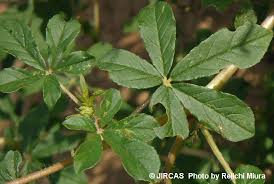
Beautiful Cleome Gynandra is growing fast in our Gonarezhou area with the recent rain.

Cleome gynandra

Cleome gynandra

Thomas Mutombeni, head guide at Chilo Gorge, says:

“it is a food plant, the leaves of which the Shangaans cook and eat like spinach. Shangaans call it bangala while the Shona refer to it as nyevhe. Common names include Shona cabbage, African cabbage, spiderwisp, and cat’s whisker.!”

P1040831

The leaves are taken off the plant individually, leaving the whole plant to continue growing…This is a “weed” of cultivation, growing in sandy areas on abandoned village sites within the Gonarezhou National Park, in disturbed places, along road sides ….

images

All the women of the village, and our staff from Chilo Gorge Lodge, are rushing to harvest it.

harvesting..

harvesting..

Collecting with great delight, everyone looking forward to tasty  relish with their next meal…

Happy chilo staff

Happy chilo staff

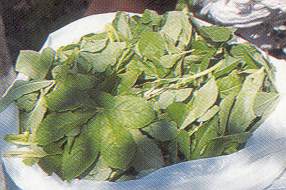
freshly harvested leaves

freshly harvested leaves

Thomas and I had some cooked with a touch of peanut butter, for our dinner, Yum! and then tried it cooked straight, oil and salt, pungent and delicious. The chefs then got creative and produced a plateful cooked with garlic!

Now much of it will be blanched and dried, to supply tasty food to numerous families throughout the next few months…

even the leaf stalks are tasty...

even the leaf stalks are tasty…

Very rich in vitamins, it is a great health food.

Postscript: the gorgeous Cleome species we see around us are perhaps not edible…don’t try any till you check with a botanist such as Bart Wursten..on his Flora of Zimbabwe website…

Species of Cleome grow in the rocky areas of Chilo gardens…exquisite flowers…

Here is Cleome macrophylla……..

gorgeous Cleome macrophylla, photograph by Bart Wursten

gorgeous Cleome macrophylla, photograph by Bart Wursten

A Cleome by any other name might NOT taste as sweet…….!?

Posted in adventure travel, Africa, African flora, African Safari, beauty, bio diversity, bush camps, Chilo Gorge, Chilo Gorge Safari Lodge, community conservation, conservation, conservation education, conservation news, cooking, culture, eco-tourism, edible plant, education, flowers, food, food culture, gardens, gardens and flowers, gonarezhou national park, great limpopo transfrontier conservation Area, Greater Limpopo Transfrontier Park, home grown food, homegrown, landscape, organic slow food, sharing, slow food, taste, travel, treasure, wilderness, zimbabwe, Zimbabwe Parks | Tagged , , , , , , , , , , , , , , , , , , , , , | Leave a comment

“That Lonely Thorn Tree” revisited…where to from here for African rhinos?

In 2008, my story “That Lonely Thorn Tree” was published by Dr Clarissa Pinkola Estes, (she who wrote that awesome book, Women Who Run With The Wolves”…).

SADLY, not much has changed since I wrote this story (reproduced in bold type below) in 2008- we still lose rhinos in the ongoing tide of greed surrounding their horn…more blogs (and updates from the Lowveld Rhino Trust) to follow!

Clarissa wrote then:

“That Lonely Thorn Tree”:

An Asian Obsession Funds Killing in Zimbabwe
http://themoderatevoice.com
 
December 3rd, 2008 
By DR. CLARISSA PINKOLA ESTÉS, Assistant Editor.
From Lin, who is trying to survive in Zimbabwe. Along with others on that patch of earth, with few resources, defending against men with rifles who lust for money offered by those who sell, not cocaine, not opium, but another addictive substance: rhino horn…..
Her story arrived in my mailbox via a friend who has been to Zimbabwe many times, and knows Lin and her husband, Clive…
“That Lonely Thorn Tree”


by Lin Barrie


Tuesday 11th November, 2008.

Sometimes the hardest stories to write are the very ones that need desperately to be told,
no matter the difficulties of trying to balance emotion and fact…
Ice, the five year old daughter of Natalia, was gunned down in broad daylight yesterday.
Her mother was shot to death last year….
No, these are not family members of ours, although they are as important– these are two of the many precious black and white rhinos we have lost in the Save Valley Conservancy in Zimbabwe over the last few years.
At nine thirty am on Monday the 10th, automatic rifle fire was heard by the pump house attendant on Arda Ranch, neighbouring Senuko Ranch in the Conservancy.
George Hulme and his scouts mobilized a field search to discover what they could, as did the Senuko scouts. Hours of tracking and backtracking led them onto at least six different sets of recent spoor-all illegal poachers and itinerants on Arda. They came across a freshly butchered impala in a snare and picked up numerous wire snares in their ongoing search…..
Clive, after having had no choice but to spend an infuriating morning in his office trying to manage pressing money, staff and administrative issues, all the while with his heart out there in the bush with the scouts and his distracted mind running through all the possible terrible scenarios, eventually managed to escape paperwork and meetings and traversed the Arda area in the afternoon.
Before running out of light, he found himself standing over a young buffalo, newly strangled in a snare. Probably one of the very large, tame herd of over 200 animals that we are privileged to have drinking at our water hole nightly…
Nothing conclusive was found regarding the rifle shots that day.
A total of two zebra, two buffalo and three impala, all dead in wire snares, were found by the search team.
 Clive came home with a murderous look in his eye…
Frustrated and deeply pessimistic about what he would find, Clive went out again early today, Tuesday, and began to systematically work out where the shots were heard from and triangulate back to areas where he knew the habitat was suitable for Black rhino…
Knowing that Sarah, a mature female who was the first Black rhino born on the Conservancy, had been seen in this area with a young calf, his dread was that he would find her, the “flagship rhino” of the Conservancy, poached and her calf dead, abandoned or mutilated….
Joined by his son Glenn and the Senuko scouts, shortly before midday they had discovered spoor of a running rhino, overlaid with blood spots and yet again overlaid by human tracks.
Within 800 metres they came upon the grisly murder scene, a female rhino crumpled onto her chest near a lone thorn tree, legs buckled under her and her face obliterated by the hacking cuts of the poachers who had removed her horns after mowing her down with automatic fire.

No sign of a calf……..and the poachers long gone on the next leg of their journey to pass the horn on to couriers who would then spirit it across the border.
Was this Sarah? She looked to be a young animal and Clive took note of her ear notches, of which Graham Connear, the Conservator, has records, enabling identification of each individual rhino.
Coming home saddened and distraught, Clive rested himself for half an hour and then we drove to meet Mark Brightman and Graham Connear on the boundary road between Senuko, Hammond and Arda, together with details of Support Unit and Chiredzi police whom Mark had picked up.
Graham confirmed that, from the ear notch data, this was not Sarah who was killed but Ice, a young female, who had not yet been known to have a calf.
Small consolation-this was not beloved Sarah, and I could see that register in Clive’s eyes, but this was still an irreplaceable loss-a young female who could have borne many babies in her lifetime. She was the daughter of Natalia, who herself was killed by poachers last year.
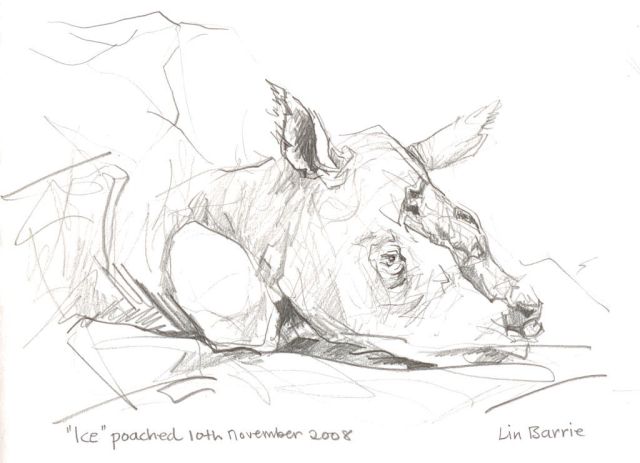
We drove into thorn scrub and when we reached the clearing with the one lone tree, where her body lay, I subdued my emotions, clambering out of the vehicle with heavy heart to take photographs, to sketch and to try to understand the process of what had happened in this lonely space under a thorn tree; the last breaths of a rare and special animal, the triumphant antics of the killers who had chopped out the object of their greedy desire, her horn.

'ICE' poached -Nov 2008

‘ICE’ poached -Nov 2008

Her open, staring eyes and intact ears were all that was left of her face, the rest a gaping hole of tattered flesh and busy flies. Apart from the carnage of her face, her body had been attacked… the horn poachers, or perhaps some others who had followed, had flayed sheets of skin off her forequarters and rump and buttocks to harvest meat in large quantities, leaving exposed, sun-darkened flesh, and her pathetic tail hanging intact. She lay chest down, legs crumpled beneath her, one eye hardened and sun scorched, the other eye unglazed, still seeming almost aware, protected as it was in the shade of her head.

Poor Ice....

Poor Ice….

With subdued and sad murmurings the team set to work to photograph her ear notches, locate bullet wounds and check the two microchips implanted at different times, once when she was dehorned*** last year and before that, when she was ear notched as a very young rhino.
All the while I squatted in front of her and drew her poor sad head, my mind determinedly in numb mode and my fingers moving the pencil automatically to record the tragic mess.
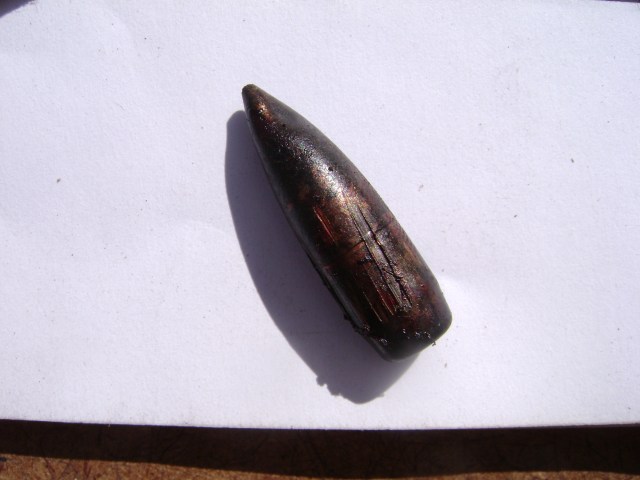
Graham and Mark located and followed bullet tracks with the metal detector, whilst the rest of the team cut, pushed and pulled the body as necessary to enable them to retrieve the bullets-five in all they found-two in her fore quarters and lung and three in her intestines.

the end of Ice....

the end of Ice….

The team then decided to return to where they had originally picked up her running tracks yesterday and to back track from there until they found the place where the poachers had initially confronted her. They all departed. I remained.
As silence descended I climbed onto the bonnet of the cruiser, parked under the same thorn tree that Ice lay under. As I lay there staring up through the branches into a clouded and bird less sky, I listened to the buzzing of the flies attending to the feast, smelt slow whiffs of her as yet untainted flesh, and began to let myself mourn this tragic waste, this terrible tribute to greed.
After what seemed like hours of weeping slow tears through closed eyes, drifting in and out of stressed sleep, listening to distantly approaching thunder and the twittering of Little bee eaters arriving to hawk flies at the carcass, letting my surroundings absorb me, I eventually opened my lids and stared straight up into gathering grey cumulus clouds.
Vultures had arrived. A wheeling vortex of more than forty circled, the closest, a White backed vulture, soaring at tree height over me and the furthest I could see being nearly invisible, pepper-grain specks against the massed clouds high above. A strange and enlightening sensation– I felt as if I was the object of their intent as the first bird whistled at speed in to perch on a neighbouring thorn tree, and pretended to preen busily eyeing me all the while.

This image by Andre Botha seems to capture that mood....

This image, (thanks to  Andre Botha) seems to capture that mood….

I pursued my depressed thoughts, while the vulture waited and watched…no others came down, staying high aloft-were they awaiting a signal from the first? The wind freshened to a stiff breeze, scattered raindrops fell and the Vulture, buffeted about on a flimsy branch, gave up and flapped silently away. If I had not been there would they have all descended to begin their task of clearing up the remains of Ice? Perhaps the lateness of the afternoon and the threatening lightening also put them off…
European bee eaters arrived en masse, briefly dipping and chirruping above me as they picked flies out of the air and then, as quickly as they had arrived, they were gone again.
I pondered so many things lying there under that lonely tree-
–the inability of our follow ups to secure convictions of known poachers,
–the desperate need for information which could be served by being able to offer a reward to informers and scouts,
–the dearth of effective scout bases and lack of presence on the ground in vulnerable areas,
–the sheer inability of paying and feeding the extra staff needed to mount more intensive patrols and follow ups….
Dusk began to fall under that lonely thorn tree, and voices betrayed the slow steps of the returning trackers. They had found the place in thick scrub where the poachers had discovered Ice dozing peacefully, had sneaked closer, disturbed her so that she panicked and fled a short way, to stand and short-sightedly search the air for the cause of her alarm as is the wont of Black rhinos. While she stood there, undecided, confused and vulnerable, they opened murderous fire on her. Ten cartridge shells were found on that killing ground.
Then, mortally wounded, she ran until she could run no more and, giving up, she collapsed under that lonely tree……..
We have lost over 30% of our breeding female Rhinos to poaching in the Save Valley Conservancy and the statistics of losses country wide are no more encouraging…….
The African Wild Dog population in the Conservancy has been very badly impacted by snaring as has every other species of game such as Impala, Kudu and Wildebeests-even Giraffes and Elephants have fallen foul of indiscriminate snaring methods……Where to from here?

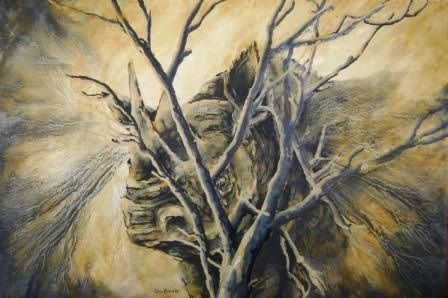
This oil painting of mine, on canvas, is titled “That Lonely Thorn Tree”,  in response to that sad sad day……

That Lonely Thorn Tree

That Lonely Thorn Tree, by Lin Barrie

CODA
*** dehorned; this is a practice of removing the horn of the Rhino surgically, literally with a chainsaw, thereby saving the rhinos from poachers. The horn grows back. One wonders why poachers don’t develop their own herd of rhinos and harvesst the horns every year.
See below, from “Dehorning Black Rhinos,” by Brice Eningowuk
Dehorning black rhinos helped save them from extinction in the early 1990s from poachers because the armed guards patrolling the National Parks did not prove to be effective. Another way to preserve the rhino is to find substitutes for the horns.
Black rhinos, also known as the hooked-lip rhino, were poached mainly for their horns in the early 1990s, which led to the rhinos near extinction. The black rhino once roamed the extent of Africa’s sub-continent. Now the rhinos are primarily found in Kenya, Tanzania, South Africa, Nimibia and Zimbabwe because of the demand for the horns. The rhino population has declined in those countries from 65,000 in the 1960s to 25,000 today (Rhino, Internet).
Rhino horns are used for pharmaceutical and ceremonial reasons in countries such as China, Taiwan, South Korea, and Thailand (Rhino, Internet).
Rhinos are also hunted for other reasons besides their valuable horns. The skin is used for skin disease, the bones are used for bone disorders, the blood is used for women with menstrual problems, and the penis is used as an aphrodisiac (Tudge, 1991, 34).
The main importing countries of rhino horn include South Korea, China, Thailand, and Taiwan. In 1987 China paid about $16,000 per kilogram, in 1988 South Korea paid $4,410 per kilogram, in 1990 Taiwan paid $4,221 and Thailand paid $10,284 per kilogram of horns (Rhino, Internet).
The Chinese have been using rhino horns for medical purposes for about 2,000 years to make remedies for flu, fever and convulsions (Tudge, 1991, 34). Chinese studies have shown that rhino horns reduce fevers in lab rats, but rhino horn does not compare to aspirin (Tudge, 1991, 38).
In Yemen the horns are carved into ceremonial dagger handles, also known as a jambiya, that men acquire after reaching manhood (Johannesburg, 1997). The country of Yemen imports 1,500 kilograms of horn each year, about half of which is used to fashion the dagger handles. Dagger handles would not seem to be a practical use because the horns are composed of hard protein and keratin compounded by hair, but when the horns are polished, they look like grained, dark, translucent, amber (Tudge, 1991, 34).
Dehorning is one method to prevent poachers from shooting a rhino. Dehorning, the process of removing the front and rear horns of a rhino (Wright, 1991, 36), is a simple procedure, although only trained professionals are allowed to practice it because of the safety for both the rhino and veterinarian. If the safety of both the rhino and the veterinarian is low, it is pointless to dehorn if the species is harmed (Atkinson, Internet). For maximum safety, veterinarians tranquilize the rhino with a tranquilizer dart fired from a rifle with the correct dosage for the size and weight of the rhino. Two veterinarians then use a handsaw or a chainsaw to cut just above the rhino’s snout to remove the horns. The veterinarians coat the remainder of the horn with tar to prevent infection. After the dehorning process there is a regrowth of the horn, so the process has to be repeated every 12-18 months (Atkinson, Internet).
The rhino is not harmed during or afterwards and no side effects have been reported (Atkinson, Internet).

Posted in Africa, African child, African Safari, African wild dogs, african wildlife, african wildlife conservation fund, animal rights, anti poaching, art, beauty, bio diversity, Birdlife Zimbabwe, birds, Black rhinos, bush camps, clive stockil, community conservation, conservation, conservation education, conservation news, conservation publication, eco-tourism, education, endangered species, International rhino foundation, lewa conservancy, Lin Barrie Art, Lin Barrie publication, Lowveld Rhino Trust, lowveld rhino Trust, Poaching, safari, Senuko, Uncategorized, zimbabwe, Zimbabwe Parks | Tagged , , , , , , , , , , , , , , , , , , , , , , , , , , | Leave a comment

Long distance flyers honour us with their gentle presence for a few months of our wilderness year…

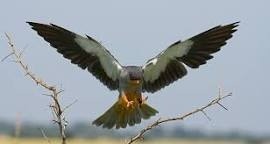
Falco amurensis breeds in South Eastern Siberia and Northern China

Here at Chilo Gorge Safari Lodge, we watch these gentle raptors wheel in their dozens, sometimes hundreds, above our decks….chasing the seething masses of flying ants that erupt with good rains…this year is different…
Poor rains, less flying ants…will our Amurs leave earlier than normal for their far away breeding grounds in Siberia and China?

20160228-102650.jpg

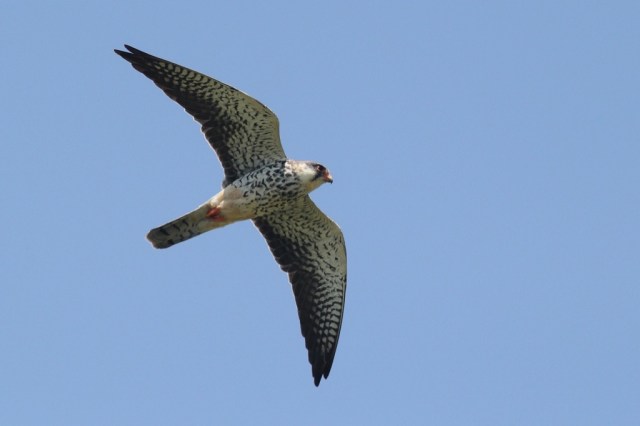
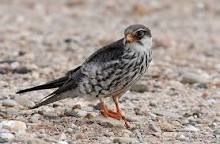
An Amur falcon is about the size of a Merlin, but is even more stunning! The female of the species has a slate-colored back and a heavily-spotted underside. The male has a slate-blue back and a solid, slate-colored breast. Both sexes show an orange-ish bill and eye-ring, and of course, both male and female, show bright reddish feet! This species is a summer visitor to southern Africa from its breeding grounds in northern and eastern Asia. Throughout the day in most grassland habitats you can see loads of these falcons hover-hunting for grasshoppers and other large insects.

Female Amur falcon

Female Amur falcon

Amur falcons brave mass capture in nets to migrate yearly from their breeding grounds to Southern Africa……

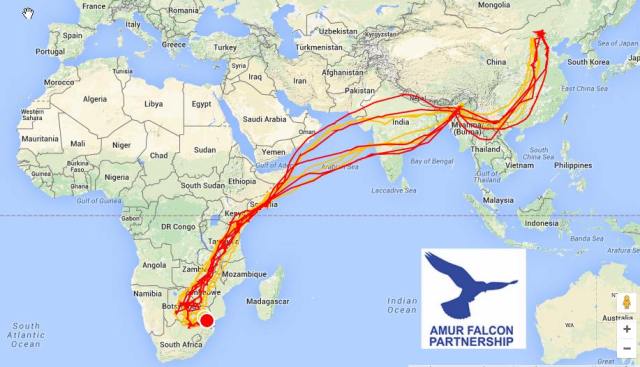
The Amur falcons start their annual migration from south-eastern Siberia and Northern China to Northeastern India, and roost in Nagaland and some adjoining Assam districts before leaving for southern Africa where they spend the winter. The most amazing part of their flight is the three-and-a-half days non-stop flight across the Arabian Sea.
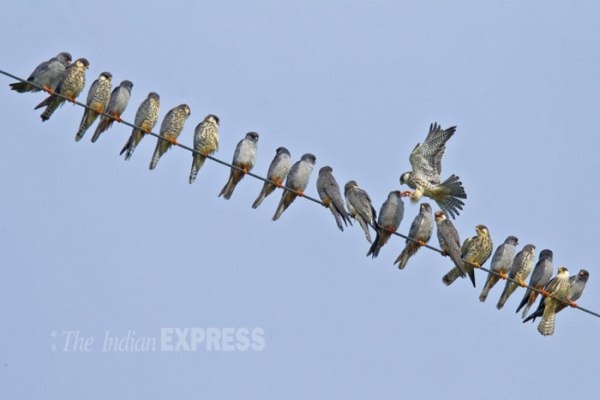
Amur Falcons would arrive from Mongolia, Siberia Northern China and Japan, would stay in Wokha district and adjoining areas for about two months, and then take off for South Africa. Netting for food was a huge problem as seen from the excellent video above….

Birds on the wire!!!!! (Photo: Ramki Sreenivasan/Conservation India)

20160228-103603.jpg

Now, the admirable conservation efforts of the people of Nagaland, more particularly of Wokha district have brought them laurels, and the department of posts agreed to release a special postal cover to mark the conservation effort.

Three falcons were fitted with satellite-tracking chips in 2013, two being named Pangti and Naga – Pangti being one of the first Wokha villages to have initiated the conservation programme.

amur migration route

Interestingly, while the birds make a cycle of 44,000 kms annually from Siberia, through Nagaland to southern Africa, they take a different route during their return journey, touching Maharashtra and Gujarat.

People in Wokha district in Nagaland, now drop their nets and instead prepare to not only welcome the avian visitors, but also hundreds of tourists and bird-watchers from different parts of the globe. “People in Wokha have set up home-stay facilities for tourists and bird-watchers. Till four years ago many people were killing the birds for their meat. But today not a single bird is touched,” said Bano Haralu, journalist-turned-conservationist whose NGO Nagaland Wildlife and Biodiversity Conservation Trust (NWBCT) is among several groups that have ensured that the birds are safe in Nagaland.

20160228-103219.jpg

Posted in adventure travel, Africa, african wildlife, animal rights, bio diversity, birding, Birdlife Zimbabwe, birds, Chilo Gorge Safari Lodge, chilojo cliffs, community conservation, conservation, conservation education, conservation news, culture, endangered species, gonarezhou national park, Greater Limpopo Transfrontier Park, Hunter gatherers, hunting, insects, landscape, predators, prey, travel, Uncategorized, wilderness, wildlife trade, Zimbabwe Parks | Tagged , , , , , , , | Leave a comment

Cozumel and manatees, turtles

Kelli and Anton cruise the Caribbean as a start to their married life….

20160227-153839.jpg

A life on the ocean sounds romantic, but they are going to be a support for each other under tough working conditions!

20160227-154035.jpg

20160227-154141.jpg

Long hours and constant guest care are not for the faint hearted- but these two have staying power….!

20160227-154346.jpg

Here is a guest blog from the Allure of the Seas….a different world!
http://www.royalcaribbeanblog.com/2016/02/26/allure-of-the-seas-live-blog-day-6-cozumel

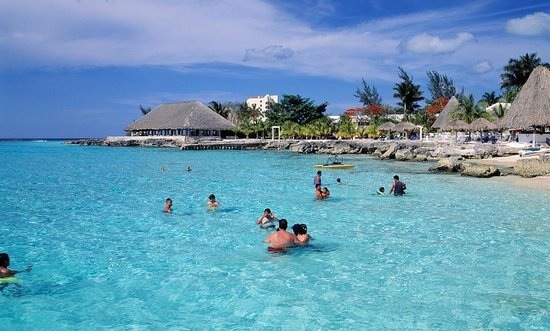
Cozumel, a mostly undeveloped Mexican island in the Caribbean Sea, is a popular cruise ship port of call famed for its scuba diving.

20160227-171445.jpg

At Arrecifes de Cozumel National Park, divers can explore a section of the Mesoamerican Reef and Museo Subacuático de Arte’s submerged sculptures.

20160227-210518.jpg

Chankanaab is an eco park surrounding a lagoon with underwater caverns, home to dolphins, manatees and sea turtles.

20160227-210935.jpg

Cozumel is fortunate to play host to thousands of sea turtles coming ashore to nest each year.

20160227-211245.jpg

Posted in adventure travel, African child, animal rights, beauty, bio diversity, Caribbean travel, conservation, conservation news, cruise ships, culture, endangered species, Florida Keys, Iguanas, landscape, manatees, Mexico, pelicans, travel, turtles, Uncategorized | Tagged , , , | Leave a comment

I LOVE canvas of course, but Alternative things to paint on excite me…!

I LOVE canvas of course,

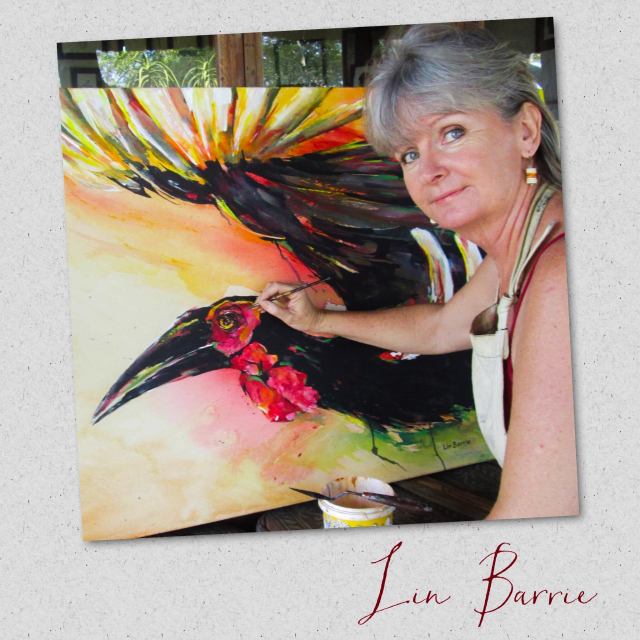
Lin Barrie at Work

Lin Barrie at Work

and although I will always enjoy using  my stretched, bouncy canvas as a base for my paintings…….

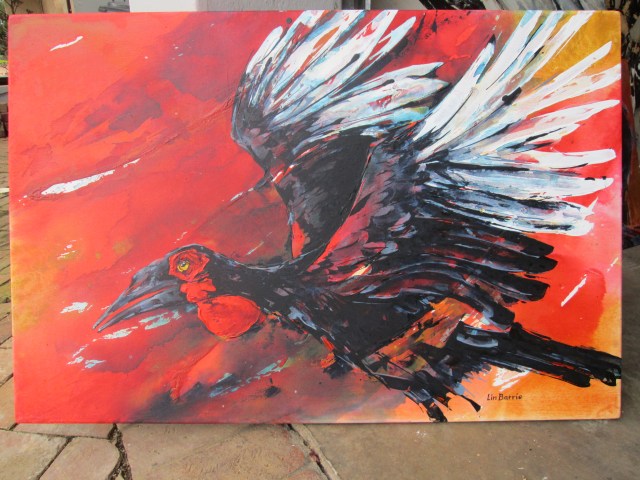
Flight 2-acrylic on stretched canvas-61 x 92 cm

Flight 2-acrylic on stretched canvas-61 x 92 cm

I am excited by all the other applications my art can be pushed to….

wild dog t shirt worn by Lin

wild dog t shirt worn by Lin

such as the T Shirts being produced be Canned Clothing ..such fun…

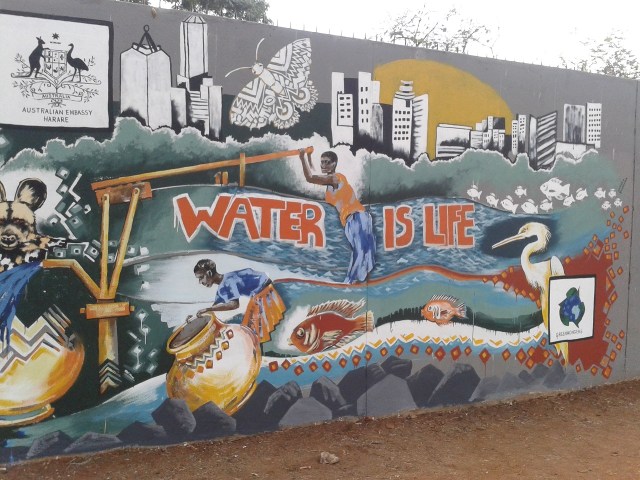
The crazy Water-themed Pomona Art Wall that I worked on recently…Together with Miracle Missions, The Australian Embassy and  the Greenmongers sponsored myself and student Chiedza Bvundura of School of Visual Art & Design…..

Lin working on the wall

Lin working on the wall

the completed result….

Water is Life!

Water is Life!

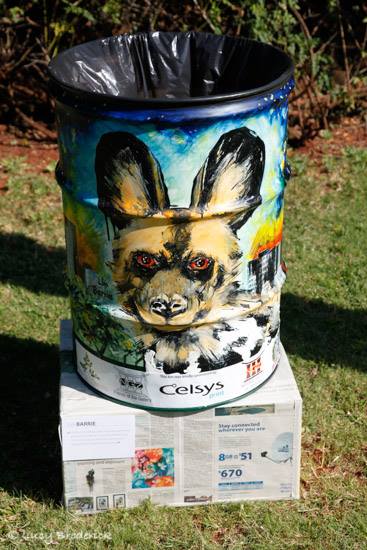
Dustbins are not too crazy to paint on either, especially when one is trying to green up the Harare city environment….such as for the Waste no Waste exhibition of bins painted by various Zimbabwean artists and sponsored by the Italian Embassy in Harare…

lin dustbin art

lin dustbin art

A burnt door, remnants of our house fire, has become something else…..

lin barrie burnt door

lin barrie burnt door


such amazing texture...

such amazing texture…

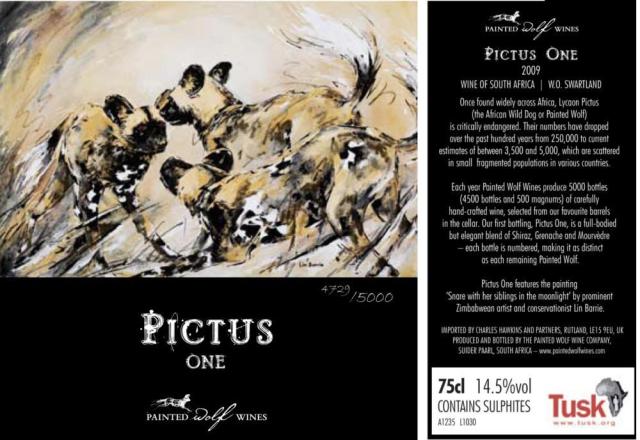
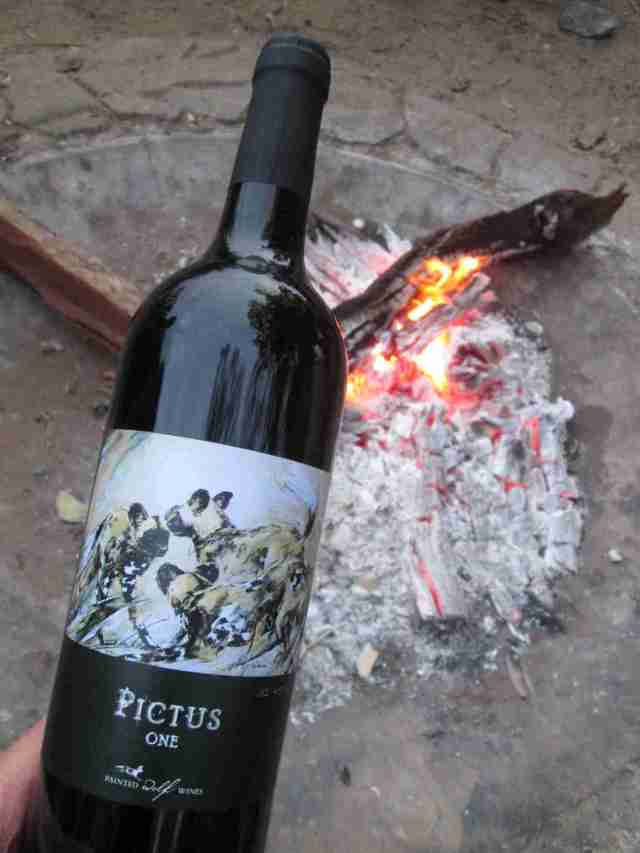
Wine labels are wonderful things, and I am honored to have had two of my paintings used for such by Painted Wolf Wines, with the added bonus that wines themselves are delicious!

lin barrie wine label

lin barrie wine label

Pictus One

lin barrie wine label 2

to be enjoyed especially in the very place I often see and sketch African wild dogs…Gonarezhou National Park and Chilo Gorge Safari Lodge!

pictus-wine-at-chilojo-camp-

pictus-wine-at-chilojo-camp-

A very exciting collaboration with Spanish Fashion Art Designer, Manuel Fernandez, is happening …

a sneak preview of me at work on ideas for the end result.....

a sneak preview of me at work on ideas for the end result…..

a few lucky Zimbabwean artists have been invited to createart for his dramatic collection of art dresses, an exhibition to be held initially in Zimbabwe, which will then tour the world!

Plus, HOT off the press:

I will shortly commence work on a “flying” wild dog….watch this space…..

  
And read my future blogs to find out more!


Posted in Africa, African child, African wild dogs, african wildlife, animal rights, art, art collaboration, art exhibition, art on clothes, beauty, bio diversity, birds, childrens art, cityscape art, community conservation, conservation, conservation education, conservation news, conservation publication, culture, dustbin art, eco-tourism, education, fashion, Fashion Art Institute, fashion magazine, FashionArt, interior decor, landscape, media, re-cycled products, recycled art, Trash, wall art, wall murals, Waste no Waste, wetlands | Tagged | Leave a comment

Pangolins galore! Pangolin Art, Pangolin food…the edible kind…..at Chilo Gorge Safari Lodge

Chilo Gorge Safari Lodge held a fun “Focus on Kids” weekend, also focussing on endangered Pangolins!

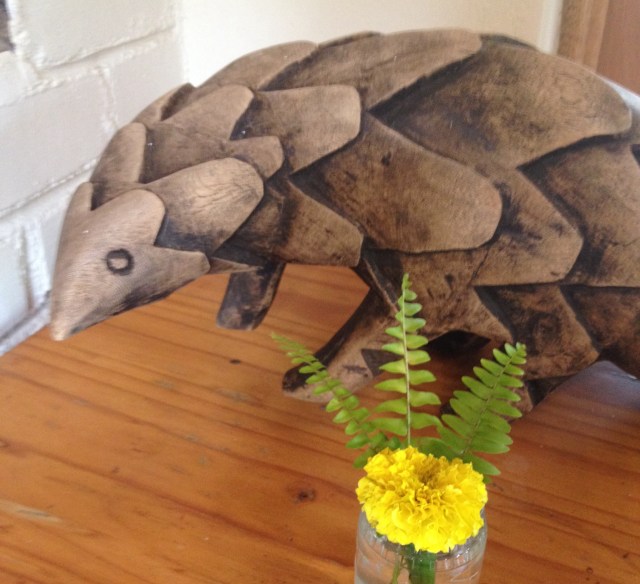
Pangolin sculpture

Pangolin sculpture

Sarah Savory has written a fabulous book….

What on Earth is That?

What on Earth is That?

Guests at Chilo love that pretty theme food that the Chilo chefs come up with…….!

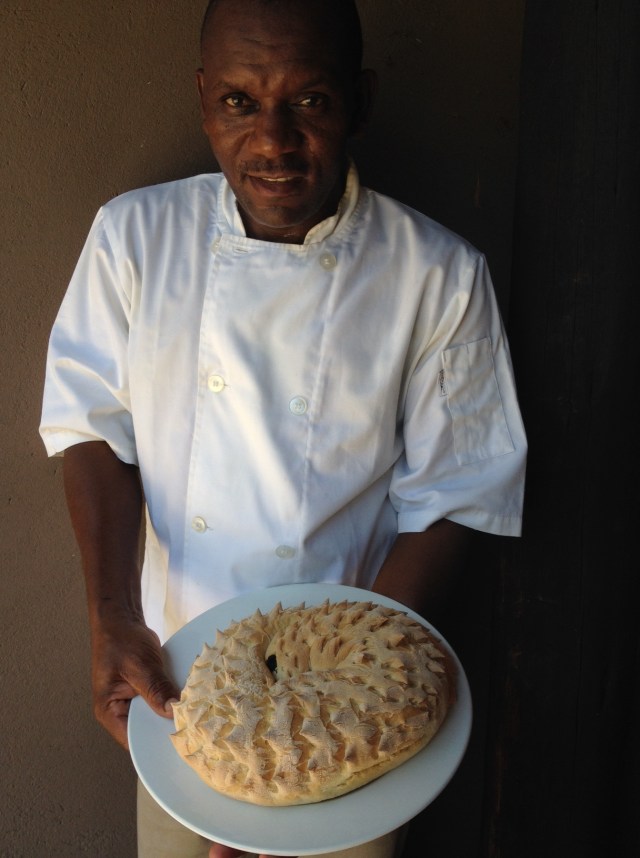
Chef Peter.

Chef Peter Chauke

Pangolin Bread:

Pangolin bread....

Pangolin bread….

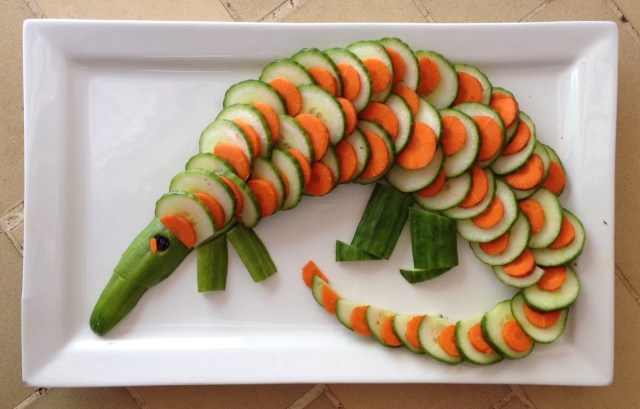
Cucumber carrot pangolin salad…the only type of pangolin that should be eaten…!!

Cucumber carrot pangolin

Cucumber carrot pangolin


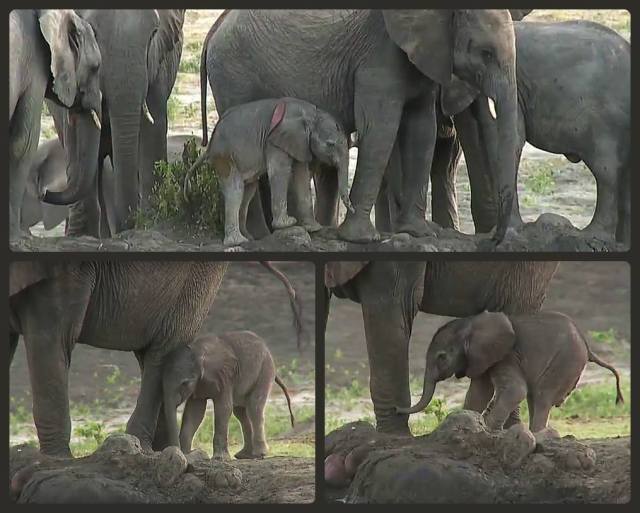
Kids and parents went on safari in the gorgeous Gonarezhou, and met many elephants….
12401799_1084025141648195_6992757806662158966_o.jpg


Thomas did a great quiz. Lionel did a great treasure Hunt.

Kids had to dive deep for clues on the treasure hunt.....

Kids had to dive deep for clues on the treasure hunt…..


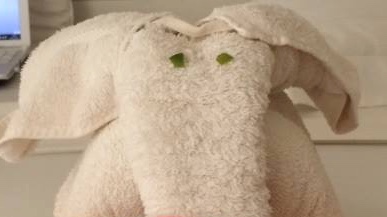
Andy inspired housekeeping to produce fantastic elephant shaped folded towels for all children beds,

The elephant towel

The elephant towel


Thomas and  Lionel worked tirelessly all weekend to give the guests and kids true value and fun…including the local mahenye school children as well…

IMG_9879

children all on a log…


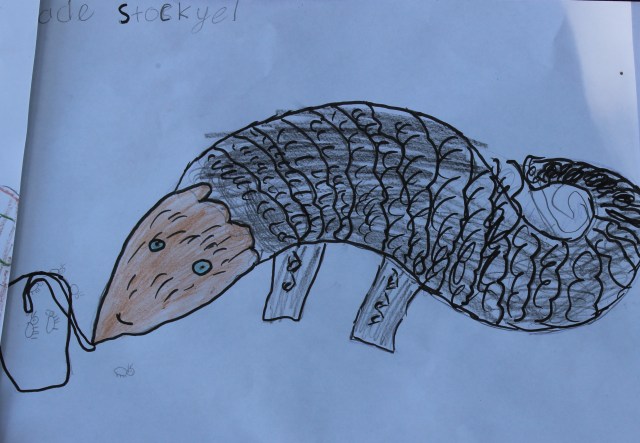
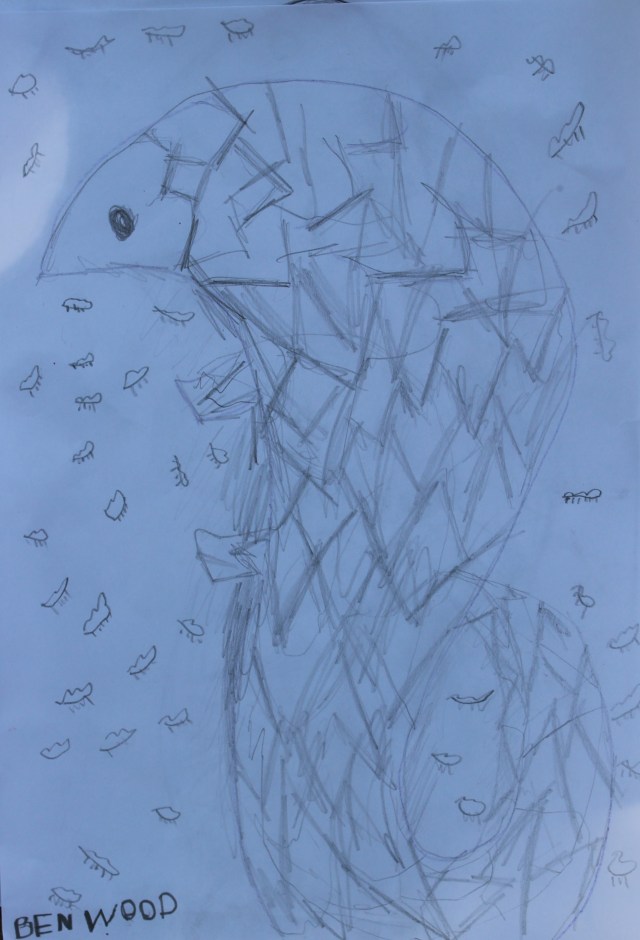
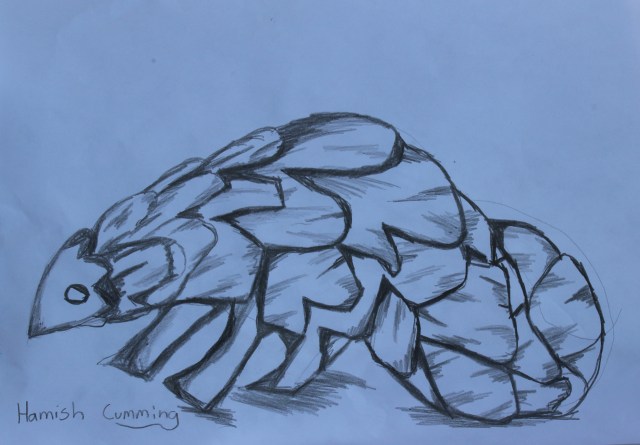
we did pangolin art…

IMG_9918

Gorgeous artworks……purely pencil sketches from the wooden pangolin….

IMG_9939

IMG_9940

IMG_9941

IMG_9942

IMG_9943


IMG_9944

IMG_9946


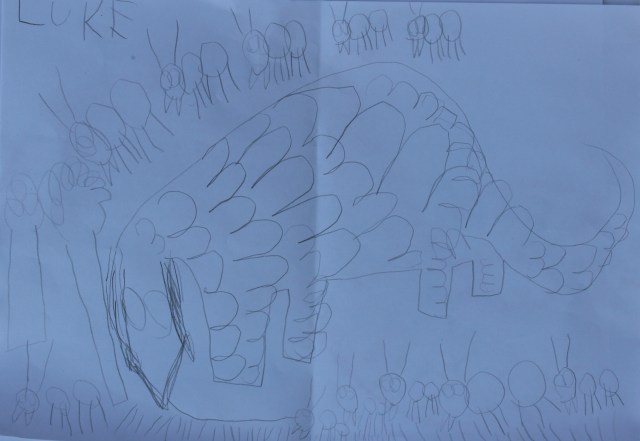
and we  handed out “Pangolin Protector “ certificates….
IMG_9925

a new generation of “Pangolin Protectors!”

pangolin by lin


Happy and exhausted children……

DSCF0508

Sarah Savory  presents her story telling to the Mahenye junior school, arranged by Lionel and Thomas…

sarah at mahenye

Eager learners….

eager to learn

Mahenye Primary School now at least has basic classrooms…this little forest below was the original classroom and this tree the “blackboard” (greenboard?!) a few years ago…., before the Campfire project was able to raise funds in conjunction with Chilo and Clive Stockil, to build classrooms…

the original classroom and tree board!

The African Wildlife Conservation Fund and Frankfurt Zoological have teamed up to create The Chilojo Club…education outreach for schools around the Gonarezhou and GLTFCA..

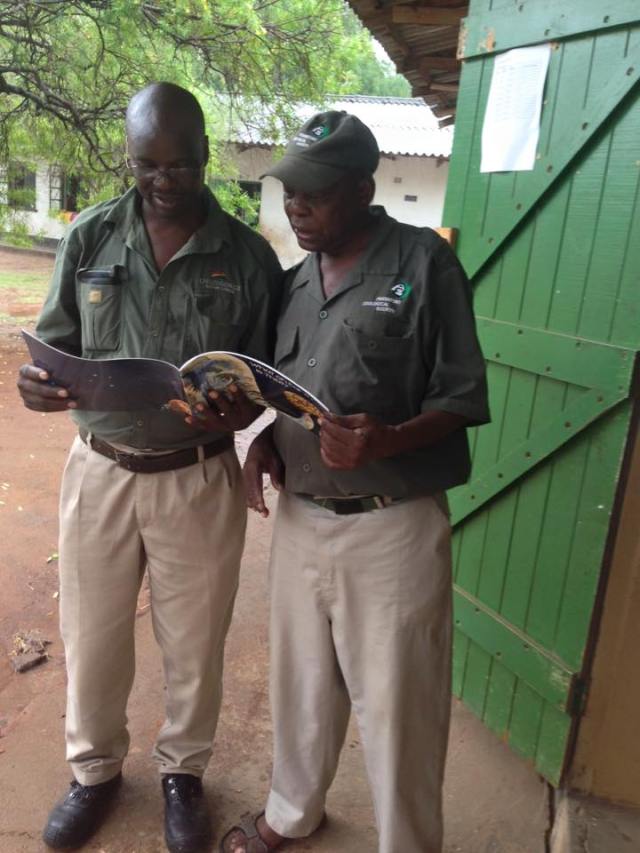
thomas and Victor browse What on Earth is That?

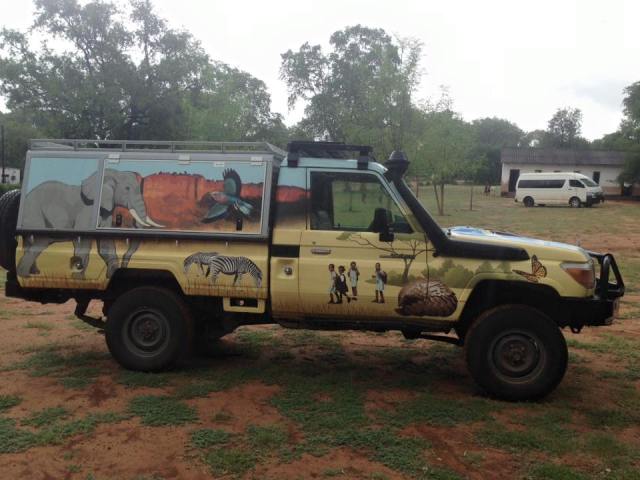
Here is the education outreach vehicle from African Wildlife Conservation Fund, gorgeous transport!

education outreach vehicle 3

education outreach vehicle 2

African Wildlife Conservation Fund have a fabulous education outreach team…look at their vehicle! note the wild dog…

education outreach vehicle


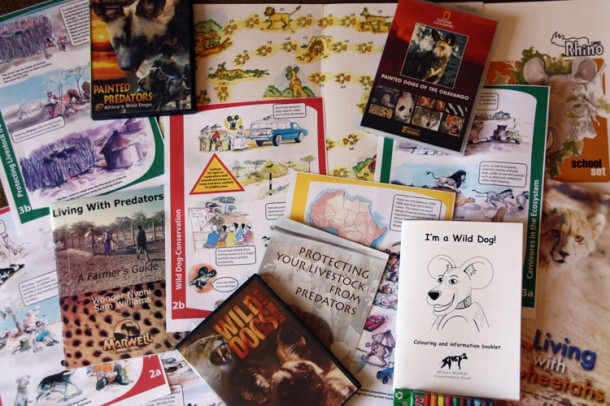
fantastic publications by AWCF….

Education-materials-610x406.jpg


Posted in adventure travel, Africa, African child, African flora, African Safari, African wild dogs, african wildlife, african wildlife conservation fund, animal rights, anti poaching, art, art collaboration, beauty, bio diversity, books, childrens art, Chilo Gorge, Chilojo Club, community conservation, conservation, conservation education, conservation news, conservation publication, cooking, crafts, culture, dance, elephants, endangered species, family, flowers, food, food culture, Frankfurt Zoological Society, full moon, gardens and flowers, gonarezhou national park, great limpopo transfrontier conservation Area, home grown food, landscape, Lin Barrie Art, moonrise, photography, Poaching, Prince William, rural school,, safari, travel, treasure, Uncategorized, wilderness, wildlife trade, wood sculpture, world pangolin Day, zimbabwe | 2 Comments